Which Countries Own 90% of the World’s Nuclear Weapons? 2026 Update
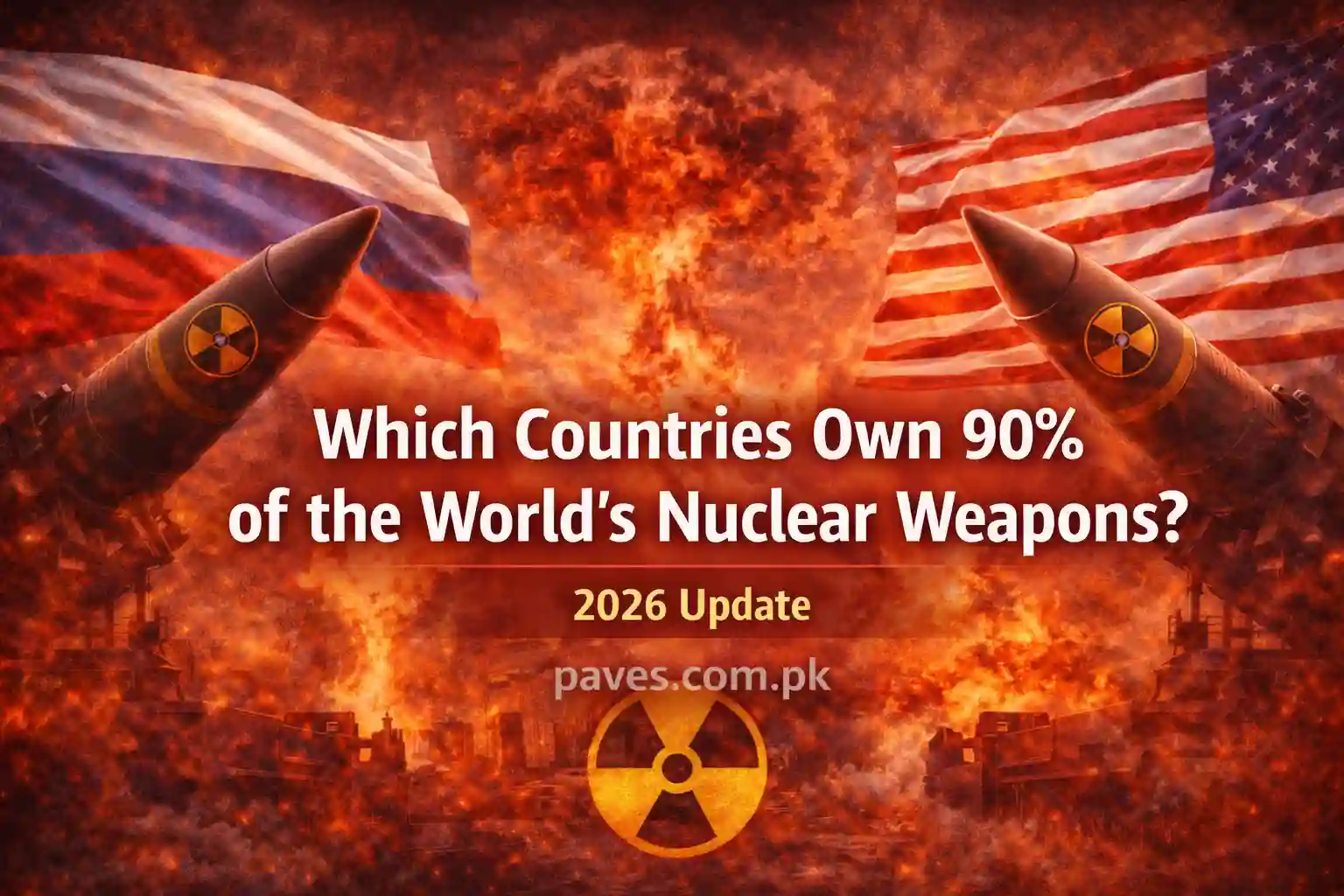
Nuclear weapons remain the most powerful military technology ever developed. In 2026, only a small group of countries possess nuclear arsenals, yet these weapons shape global security, military strategy, and international diplomacy.
Despite the end of the Cold War, nuclear weapons still play a central role in global deterrence policies. Recent data shows that two countries alone control nearly 90% of the world’s nuclear weapons, while several other nations maintain smaller but strategically significant arsenals.
This guide explains which countries possess nuclear weapons, the global nuclear ranking, Pakistan’s nuclear capability, and whether new countries such as Iran may develop nuclear weapons in the future.
Who Owns 90% of the World’s Nuclear Weapons
Two superpowers dominate the global nuclear landscape.
The United States and Russia together possess roughly 86–90% of the world’s nuclear weapons.
Their nuclear arsenals were built during the Cold War and remain significantly larger than those of any other country.
Approximate global nuclear inventories show:
- Russia holds the largest nuclear arsenal
- United States holds the second largest nuclear arsenal
Even after decades of arms reduction treaties, these two countries still maintain thousands of nuclear warheads.
Many of these weapons are deployed across land, sea, and air-based systems known as the nuclear triad.

Countries That Currently Possess Nuclear Weapons
As of 2026, nine countries are known or believed to possess nuclear weapons.
These nuclear-armed states include:
- Russia
- United States
- China
- France
- United Kingdom
- India
- Pakistan
- Israel
- North Korea
These countries either developed nuclear weapons independently or acquired them through national weapons programs.

Nuclear Bomb Country Ranking (Estimated 2026)
Based on available data from global nuclear monitoring organizations, the approximate ranking of nuclear arsenals looks like this:
| Rank | Country | Estimated Warheads |
|---|---|---|
| 1 | Russia | ~5,459 |
| 2 | United States | ~5,177 |
| 3 | China | ~600 |
| 4 | France | ~370 |
| 5 | United Kingdom | ~225 |
| 6 | India | ~180 |
| 7 | Pakistan | ~170 |
| 8 | Israel | ~90 |
| 9 | North Korea | ~50 |
Although Russia and the United States dominate the numbers, other countries maintain smaller arsenals designed primarily for regional deterrence.

Top Nuclear Power Countries
When analysts discuss the top nuclear powers, they usually consider not only the number of warheads but also the sophistication of delivery systems.
The strongest nuclear powers typically include:
- Russia
- United States
- China
- France
- United Kingdom
These nations possess advanced nuclear delivery platforms including:
- intercontinental ballistic missiles (ICBMs)
- submarine-launched ballistic missiles
- long-range strategic bombers
Together, these capabilities form the nuclear triad, which ensures a country can retaliate even if one part of its arsenal is destroyed.

Which Country Has the Most Powerful Nuclear Weapons
Russia and the United States possess the most powerful nuclear weapons in terms of explosive yield and delivery systems.
Their arsenals include:
- high-yield thermonuclear weapons
- advanced missile systems capable of traveling thousands of kilometers
- submarine-based nuclear launch systems that can remain hidden underwater for months
These systems provide both countries with global strike capability.
What Are the Seven Nuclear Countries
Sometimes discussions refer to the seven nuclear states outside the original nuclear treaty powers.
These countries include:
- India
- Pakistan
- Israel
- North Korea
- China
- France
- United Kingdom
However, the official Nuclear Non-Proliferation Treaty (NPT) recognizes only five countries as original nuclear weapon states:
- United States
- Russia
- China
- France
- United Kingdom
Other countries developed nuclear weapons later outside the treaty framework.
Who Decides Which Countries Can Have Nuclear Weapons
The global nuclear system is largely governed by the Nuclear Non-Proliferation Treaty (NPT).
This international agreement was created to prevent the spread of nuclear weapons.
The treaty works through three main goals:
- preventing nuclear proliferation
- promoting peaceful nuclear energy use
- encouraging nuclear disarmament
Countries that signed the treaty agree not to develop nuclear weapons if they do not already possess them.
However, enforcement relies on diplomatic pressure, inspections, and international cooperation.
Does Iran Actually Have Nuclear Weapons
Iran’s nuclear program has been one of the most debated security issues in the world.
As of 2026, international monitoring agencies state that:
- Iran has advanced uranium enrichment capabilities
- Iran has stockpiles of enriched uranium
- Iran has not been confirmed to possess nuclear weapons
Experts often describe Iran as a nuclear threshold state, meaning it has the technical knowledge and materials that could potentially allow weapon development in the future.
However, no verified nuclear warhead or nuclear test has been confirmed.
Which Countries May Develop Nuclear Weapons in the Future
Several countries are sometimes discussed as potential future nuclear powers due to their advanced nuclear technology.
These include:
- Iran
- South Korea
- Japan
However, these countries remain under international nuclear agreements and have not announced plans to develop nuclear weapons.
Developing nuclear weapons involves complex technological, political, and diplomatic challenges.
Pakistan Nuclear Weapons Program
Pakistan is currently one of the major nuclear powers in South Asia.
The country developed its nuclear weapons program during the late twentieth century as part of its national defense strategy.
Pakistan conducted its first confirmed nuclear tests in 1998, becoming the seventh country to demonstrate nuclear weapons capability.
Since then, Pakistan has maintained and expanded its nuclear deterrent.
How Many Nuclear Bombs Pakistan Has
Estimates suggest that Pakistan possesses around 170 nuclear warheads.
This number places Pakistan among the top nuclear weapon states globally.
Pakistan’s nuclear program includes:
- land-based ballistic missiles
- cruise missile systems
- nuclear-capable aircraft
These weapons are designed primarily for deterrence within the South Asian region.
Pakistan Nuclear Deterrence Strategy
Pakistan’s nuclear doctrine focuses on maintaining a credible deterrent against potential threats.
Key elements of this strategy include:
- maintaining a survivable nuclear arsenal
- developing multiple missile delivery systems
- ensuring rapid response capability
Pakistan has also invested in short-range tactical nuclear systems designed to deter conventional military threats.
Global Nuclear Trends in 2026
Although the total number of nuclear weapons worldwide has declined since the Cold War, recent trends show increasing modernization.
Major developments include:
- modernization of nuclear arsenals by Russia and the United States
- rapid expansion of China’s nuclear forces
- continued nuclear development by North Korea
- strategic competition between nuclear powers
These developments have raised concerns that a new global arms race may be emerging.
Final Overview of the Global Nuclear Landscape
The global nuclear balance remains dominated by two superpowers: Russia and the United States, which together control nearly 90% of the world’s nuclear weapons.
Several other countries maintain smaller nuclear arsenals designed for regional deterrence.
Despite ongoing international agreements aimed at reducing nuclear weapons, modernization programs and rising geopolitical tensions continue to shape the future of nuclear strategy.
Countries such as Pakistan, India, China, and North Korea play important roles in regional security dynamics, while nations like Iran remain closely monitored due to their nuclear technology capabilities.