
Sindh vehicle Transfers Mobile App launched by Nadra 2026 Step by Step Guide
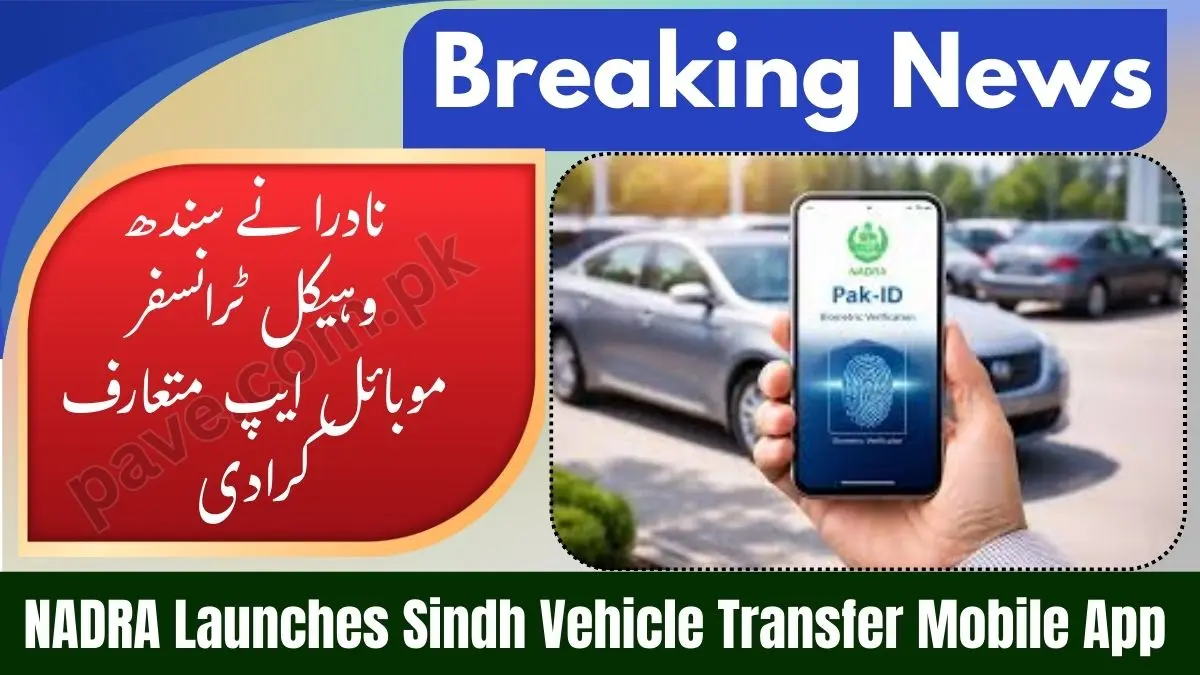
In a landmark move toward digital governance and citizen convenience, the National Database and Registration Authority (NADRA) has introduced mobile app–based biometric verification for vehicle ownership transfers in Sindh. The new facility allows buyers and sellers to verify their identity remotely through the Pak-Identity App, eliminating the need for repeated physical visits to NADRA or e-facilitation centres.
This initiative has been launched in collaboration with the Government of Sindh and the Sindh Excise and Taxation Department, marking a significant step in Pakistan’s transition toward fully digital public services.
🚗 What Has Changed in Vehicle Transfers?
Previously, biometric verification was mandatory for vehicle ownership transfer, but both parties were required to physically visit NADRA centres to complete fingerprint verification. Under the new system:
- Biometric verification can now be completed at home
- Verification is done using the Pak-Identity App
- Only the remaining documentation and processing require a visit to the excise office
This upgrade dramatically reduces queues, delays, and inconvenience for citizens—particularly senior citizens, women, and working professionals.

📱 How the Pak-Identity App Biometric Verification Works
The process has been designed to be simple, secure, and user-friendly:
- Download Pak-Identity App from official app stores
- Create/Login using your CNIC details
- Select Biometric Verification option
- Scan fingerprints using the mobile device
- Verification is securely transmitted to NADRA systems
- Once approved, proceed with vehicle transfer at the excise office
Officials confirm that NADRA’s encryption and identity security standards ensure data safety at every step.

🧾 Updated Vehicle Ownership Transfer Process (Sindh)
After online biometric verification, the remaining steps include:
🔹 Step-by-Step Transfer Procedure
- Biometric Verification: Completed via Pak-Identity App
- Sale Agreement: Prepared on stamp paper and signed
- Application Submission: Token obtained at excise office or civic centre
- Document Verification: Submission of required documents
- Fee Payment: Transfer fee and token tax
- Receipt Issuance: Official confirmation provided
- Smart Registration Card: Issued within 5–15 working days
📄 Documents Required
For Seller
- Original registration book or smart card
- CNIC copy
- Signed application form
- Sale agreement
- Clearance certificate
- Passport-size photograph
For Buyer
- CNIC copy
- Passport-size photograph
- Vehicle tax certificate
- Proof of residence
- Vehicle inspection certificate

🔐 Why This Initiative Matters
Authorities highlight several key benefits of the new system:
- ✔ Reduced fraud and fake transfers
- ✔ No unnecessary visits to NADRA offices
- ✔ Faster processing time
- ✔ Greater transparency and traceability
- ✔ Improved citizen trust in digital systems
The move directly addresses long-standing complaints related to vehicle fraud, impersonation, and ownership disputes, particularly in urban centres like Karachi.
🏛️ Government’s Digital Vision
According to NADRA officials, this facility aligns with Pakistan’s broader agenda of:
- Digital public services
- Paperless verification
- Smart governance
- Reduced human interference
Sindh is currently the first province to implement mobile biometric verification for vehicle transfers, with expectations that the model will soon be expanded to other provinces.
🔚 Conclusion
The introduction of mobile app–based biometric verification for Sindh vehicle transfers is a transformative step in Pakistan’s digital journey. By leveraging the Pak-Identity App, NADRA has simplified a critical civic process, saving time, reducing fraud, and improving service delivery.
As digital adoption grows, initiatives like this are setting new standards for efficiency, transparency, and citizen convenience—bringing Pakistan closer to a modern, tech-driven governance framework.