
Sindh Schools Face Infrastructure Crisis Amid Budget Imbalance
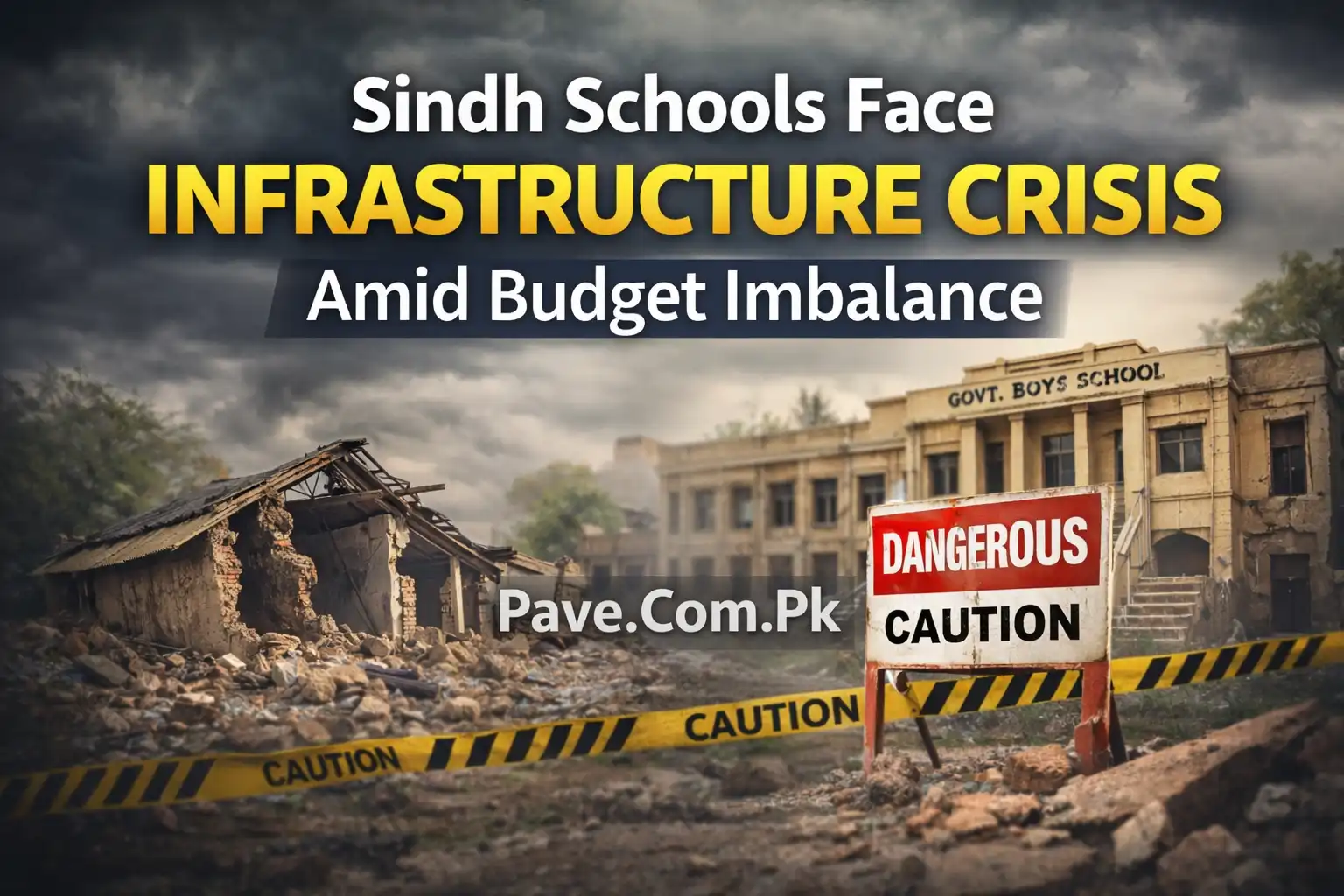
Sindh Education Minister Syed Sardar Shah has revealed that 92 percent of the school education budget in Sindh is being spent on salaries and pensions, raising serious concerns about the future of public education in the province.
Speaking in the Sindh Assembly, the minister warned that the education sector is increasingly becoming an employment structure rather than a system focused on quality learning outcomes.
This statement has sparked debate among lawmakers, educators, and parents searching for:
- Sindh education budget breakdown
- 92 percent salary education budget
- Sindh school funding crisis
- Karachi schools dangerous buildings
- Teacher recruitment Sindh 2026
In this detailed article, we examine the full situation, budget challenges, school infrastructure problems, teacher recruitment figures, and what this means for students across Sindh.
92% Budget Spent on Salaries – What It Means
According to Syed Sardar Shah, the majority of the education budget is allocated to:
- Teacher salaries
- Administrative staff salaries
- Pensions
- Employment-related expenses
This leaves only 8 percent for:
- Infrastructure improvement
- Classroom facilities
- Libraries and labs
- Repairs and maintenance
- Learning materials
When most of the budget is consumed by salaries, development work suffers significantly.

Teacher Recruitment Numbers Raise Questions
The minister shared major recruitment figures in the Sindh Assembly:
- Initially planned recruitment (2021): 50,000 teachers
- Offer letters issued: 95,000 teachers
- Candidates still awaiting recruitment: 31,000
These numbers show that recruitment exceeded initial plans.
While hiring teachers is important, the imbalance between salary spending and development funding creates financial pressure.

Rs. 18 Billion Allocated for Schools
The provincial government has allocated more than Rs. 18 billion for schools and authorized principals to use funds for daily needs.
This includes:
- Minor repairs
- Utility bills
- Operational costs
- School maintenance
However, critics argue that operational funding is not enough when major structural problems exist.

Karachi Schools Infrastructure Crisis
One of the most alarming revelations concerns Karachi’s school buildings.
Primary Schools in Karachi:
- Total: 1,236
- Schools with buildings: 1,194
- Buildings reported as dangerous: 1,589 (including multiple structures)
Secondary Schools:
- Total: 375
- Declared dangerous: 41
Overall, 233 primary and secondary schools in Karachi are considered unsafe.
Estimated repair cost: Rs. 4,156 million

Dangerous School Buildings – A Serious Concern
Several lawmakers raised concerns about:
- Roof collapses
- Unsafe classrooms
- Lack of safety inspections
- Delayed repairs
The minister admitted that reports on dangerous schools are three years old and confirmed that no teaching is taking place in unsafe buildings.
Safety remains a major issue.
Libraries and Science Labs Scarcity
Another key issue highlighted is the lack of:
- School libraries
- Science laboratories
- Modern teaching equipment
This is particularly severe in primary schools.
Without proper learning facilities, education quality declines.
Private Schools vs Public Schools – A Comparison
The minister stated that around 30 million children nationwide attend private schools, where teachers earn between Rs. 10,000 to Rs. 12,000 per month.
This highlights:
- Salary disparities
- Quality differences
- Pressure on public education system
- Parental shift toward private schools
Many parents prefer private institutions despite higher fees.
Girls’ Enrollment at 42%
Girls’ enrollment in Sindh stands at 42 percent, which raises concerns about gender equality in education.
Barriers include:
- Cultural norms
- Infrastructure issues
- Safety concerns
- Limited school access
Improving female enrollment is crucial for social development.
Opposition Lawmakers Raise Concerns
Members of Muttahida Qaumi Movement – Pakistan (MQM-P) questioned:
- School safety
- Recruitment transparency
- Infrastructure neglect
- Cross-city teacher postings
One lawmaker reported roof collapses in two schools within his constituency.
Is Education Becoming an Employment Sector?
The minister’s statement that the sector is becoming “an employment source rather than a learning system” reflects deeper issues:
- Political recruitment pressures
- Budget imbalance
- Focus on staffing over student outcomes
- Weak monitoring systems
This raises policy questions about sustainability.
Budget Structure – Why Development Suffers
When 92% of funds go toward salaries:
Remaining funds must cover:
- Construction
- Technology upgrades
- Digital classrooms
- School furniture
- Training programs
This creates long-term stagnation.
Impact on Students
Students suffer due to:
- Poor infrastructure
- Limited resources
- Lack of labs and libraries
- Unsafe buildings
- Overcrowded classrooms
Education quality directly affects career opportunities.
Possible Solutions for Sindh Education Crisis
Experts suggest:
1️⃣ Balanced budget allocation
2️⃣ Infrastructure audit and repair plan
3️⃣ Teacher performance evaluation
4️⃣ Investment in digital education
5️⃣ Public-private partnerships
Structural reforms are necessary for sustainable improvement.
National Education Spending Debate
Across Pakistan, education budgets face similar issues:
- High salary expenditure
- Low development spending
- Infrastructure shortages
- Poor learning outcomes
Sindh’s situation highlights a national challenge.
Future Outlook
If reforms are introduced:
- Budget allocation may be restructured
- Development spending could increase
- School safety may improve
- Female enrollment may rise
- Education quality could improve
Without reform, challenges may continue.
Conclusion
The revelation that 92 percent of Sindh’s education budget is spent on salaries highlights serious structural challenges within the education system. While teacher recruitment is important, infrastructure, safety, and quality learning resources must also receive adequate funding.
Without balanced financial planning, the education system risks prioritizing employment over student outcomes. The government now faces the critical task of reforming budget allocations to ensure that schools are safe, well-equipped, and focused on learning excellence.
Education reform remains essential for the province’s long-term development.