
Saudi Arabia Announces New Medical Rules for Hajj 2026 Pilgrims
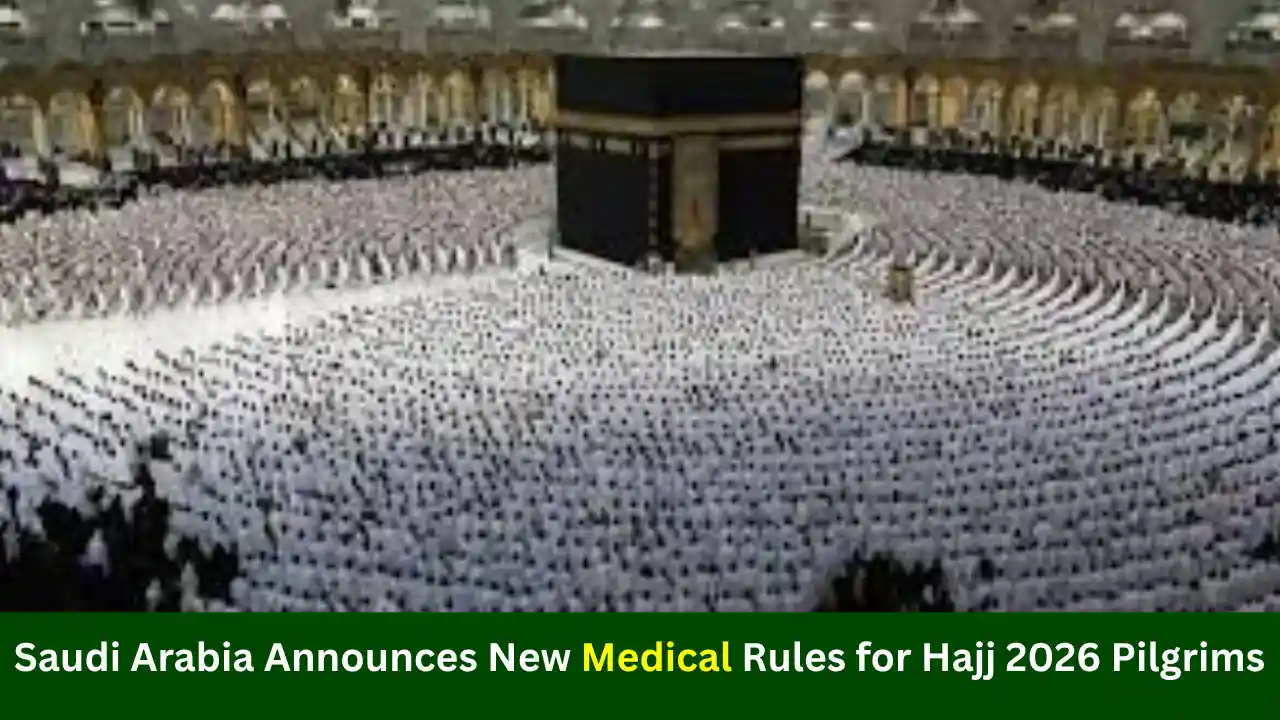
Saudi Arabia has officially released a new set of medical rules for Hajj 2026, introducing strict eligibility criteria for all international pilgrims. The policy aims to protect public health, ensure pilgrim safety, and manage the overwhelming number of applicants each year by setting clear medical fitness standards.
The Saudi Ministry of Religious Affairs stated that anyone arriving in the Kingdom without meeting the required medical conditions will be sent back to their home country, with all repatriation costs borne by the pilgrim.
Officials emphasized that these guidelines are part of Saudi Arabia’s ongoing commitment to organizing a safe, healthy, and spiritually fulfilling pilgrimage experience for millions of Muslims around the world.

Overview of the New Medical Rules
The Saudi Ministry of Health has issued detailed health requirements that all applicants must fulfill before they can receive a Hajj visa. These rules are mandatory for both local and international pilgrims.
Saudi authorities clarified that pilgrims who conceal serious illnesses or obtain false medical certificates will be denied entry or deported upon arrival. Strict penalties will also apply to doctors issuing fake fitness certificates to unfit applicants.
These steps are being taken to minimize the risk of medical emergencies during Hajj — a physically demanding journey involving long hours of walking, heat exposure, and crowded conditions.
Read Also: Latest China Fully Funded Scholarships for Pakistani Students 2026–27 – Apply Now via HEC
Diseases and Conditions Declared Ineligible for Hajj 2026
The official circular lists several medical conditions that disqualify applicants from performing Hajj in 2026.
| Category | Ineligible Conditions |
|---|---|
| Kidney Diseases | Kidney failure, chronic kidney disease, dialysis patients |
| Heart Diseases | Severe heart failure, post-bypass complications, inability to withstand exertion |
| Liver and Lung Diseases | Cirrhosis, chronic hepatitis, chronic obstructive pulmonary disease (COPD), emphysema |
| Neurological Disorders | Epilepsy, Parkinson’s disease, dementia, Alzheimer’s, severe memory loss |
| Psychiatric Conditions | Major depression, schizophrenia, bipolar disorder, severe anxiety |
| Physical Disabilities | Major mobility impairments, paralysis, dependence on medical support equipment |
| Infectious Diseases | Tuberculosis, whooping cough, viral hemorrhagic fever, cancer, other contagious diseases |
| Pregnancy | Women in any stage of pregnancy |
Saudi Arabia has also requested that elderly citizens with advanced age-related ailments avoid applying, as the pilgrimage’s extreme weather and physical challenges could endanger their lives.
Purpose Behind the New Health Policy
Saudi officials explained that the updated health standards were introduced after detailed consultations with the World Health Organization (WHO) and international medical experts.
The objectives include:
- Preventing deaths or medical emergencies during Hajj.
- Reducing crowd-related health risks such as heatstroke, dehydration, and respiratory diseases.
- Ensuring that limited medical facilities in Makkah and Madinah remain available for critical cases.
- Protecting the wellbeing of other pilgrims by preventing the spread of infectious diseases.
The policy also aligns with Saudi Arabia’s long-term plan under Vision 2030 to provide world-class health and safety infrastructure for all major religious gatherings.
Mandatory Medical Fitness Certificates
Every Hajj applicant will be required to submit a verified medical fitness certificate issued by an authorized hospital or clinic before visa processing.
Key requirements include:
- A full physical check-up covering cardiac, respiratory, and neurological functions.
- Laboratory tests for blood sugar, kidney, and liver profiles.
- Vaccination proof for meningitis, seasonal flu, and COVID-19 (if required).
- A written statement from a registered doctor confirming that the applicant is medically fit for strenuous activity in hot weather.
Saudi authorities have instructed all participating Hajj missions to verify certificates before forwarding applications to the Saudi Embassy.
Read Also: Breaking News: PPSC Announces New Merit Policy 2026 – Academic Marks No Longer Count in Selection
Pre-Departure and On-Arrival Screening
To strengthen enforcement, medical teams will examine pilgrims twice — once before departure from their home country and again upon arrival in Saudi Arabia.
Any individual found medically unfit during either stage will be barred from entering the holy sites. Repatriation expenses, including airfare and accommodation, will be deducted from the pilgrim’s own funds.
Officials also confirmed that special health counters will be established at major Saudi airports to screen incoming flights from South Asia, Africa, and Southeast Asia, where the majority of pilgrims originate.
Consequences for False Declarations
The Saudi Ministry of Religious Affairs has issued a strong warning to both pilgrims and medical professionals.
- Pilgrims providing incorrect information on their health forms may face lifetime bans from performing Hajj or Umrah.
- Doctors and health centers found issuing false medical certificates will face legal action, including possible suspension of licenses.
- Hajj agents and group organizers must ensure all their applicants meet medical requirements or risk cancellation of their Hajj quota.
Saudi Arabia’s Broader Health and Safety Vision
Over the past decade, Saudi Arabia has invested heavily in expanding Hajj medical facilities, including air-conditioned tents, emergency hospitals, and 24-hour ambulance services.
The new medical policy builds on these improvements by ensuring that only physically capable pilgrims undertake the journey.
In 2025, more than 2.3 million pilgrims visited the Kingdom for Hajj, including 180,000 from Pakistan. Authorities reported hundreds of hospitalizations caused by chronic illness and heat exhaustion — incidents the new policy hopes to reduce drastically.
The Kingdom has also adopted AI-based health monitoring systems that use wearable technology to track pilgrims’ heart rate, hydration levels, and movement in real time.
Pakistan’s Response to the New Rules
The Ministry of Religious Affairs and Interfaith Harmony Pakistan has acknowledged the Saudi announcement and instructed all Hajj Group Organizers (HGOs) and medical boards to review the new standards immediately.
Pakistani pilgrims are now required to undergo comprehensive medical testing at government-approved centers before submitting their applications.
Officials said that pilgrims with chronic conditions who insist on applying despite ineligibility will be denied approval at the Hajj Directorate level, preventing financial loss and last-minute cancellations.
The ministry will also launch awareness campaigns on TV, radio, and social media to educate citizens about the new Saudi health protocols.
Importance of Medical Preparedness for Hajj
Performing Hajj is a physically intensive journey that requires walking long distances, often in extreme temperatures exceeding 45 °C. Many rituals — including Tawaf, Sa’i, and Rami al-Jamarat — demand significant endurance.
Medical experts recommend that intending pilgrims start preparing at least six months in advance by:
- Following a balanced diet and maintaining fitness.
- Completing all vaccinations and medical check-ups.
- Learning about preventive care such as hydration and rest management.
- Consulting doctors regarding medication schedules, especially for diabetes or hypertension.
Read Also: Punjab Government Builds 30,600 Homes Under Apni Chhat Apna Ghar Scheme – Check Latest Progress 2025
A Step Toward Safer, Smarter Pilgrimage
Saudi Arabia’s decision to enforce medical eligibility reflects a growing emphasis on safety, health, and responsible travel during Hajj.
While the rules may limit participation for some applicants, they ultimately aim to protect lives and maintain the sanctity of one of Islam’s greatest obligations.
Officials stress that these measures should not be seen as restrictions but as necessary steps to ensure that pilgrims can complete Hajj with peace of mind and minimal risk.
Conclusion About Saudi Arabia Hajj 2026 medical rules:
The new medical rules for Hajj 2026 reflect Saudi Arabia’s strong commitment to health and safety during the world’s largest religious gathering. By screening pilgrims thoroughly and enforcing strict medical standards, the Kingdom aims to create a safer, more organized, and spiritually focused pilgrimage experience.
Pilgrims are encouraged to undergo early medical assessments, follow all official instructions, and travel only when physically and mentally prepared. These preventive steps ensure that every believer can perform Hajj with dignity, devotion, and good health.
FAQs – Saudi Arabia’s New Medical Rules for Hajj 2026
1. What are the new medical rules for Hajj 2026?
Saudi Arabia has introduced strict health eligibility standards. Pilgrims with severe heart, kidney, liver, neurological, or psychiatric diseases — as well as pregnant women — are not permitted to travel.
2. Will unfit pilgrims be deported from Saudi Arabia?
Yes. Any pilgrim arriving without meeting health requirements will be sent back, and repatriation costs must be paid by the pilgrim.
3. Can elderly people with mild conditions still apply?
Elderly pilgrims may apply if certified medically fit by an authorized doctor, but those with advanced age-related illnesses like Parkinson’s or Alzheimer’s are ineligible.
4. What actions will be taken against doctors issuing false fitness certificates?
Saudi authorities will take legal action, including license suspension, against medical professionals or organizations found issuing fake certificates.
5. Are the rules applicable to Pakistani pilgrims as well?
Yes. All countries, including Pakistan, must follow these new medical standards. Pakistan’s Hajj Ministry has already begun implementing them for Hajj 2026 applications.