
Ramadan 2026: Powerful Iftar Dua with Translation and Explanation
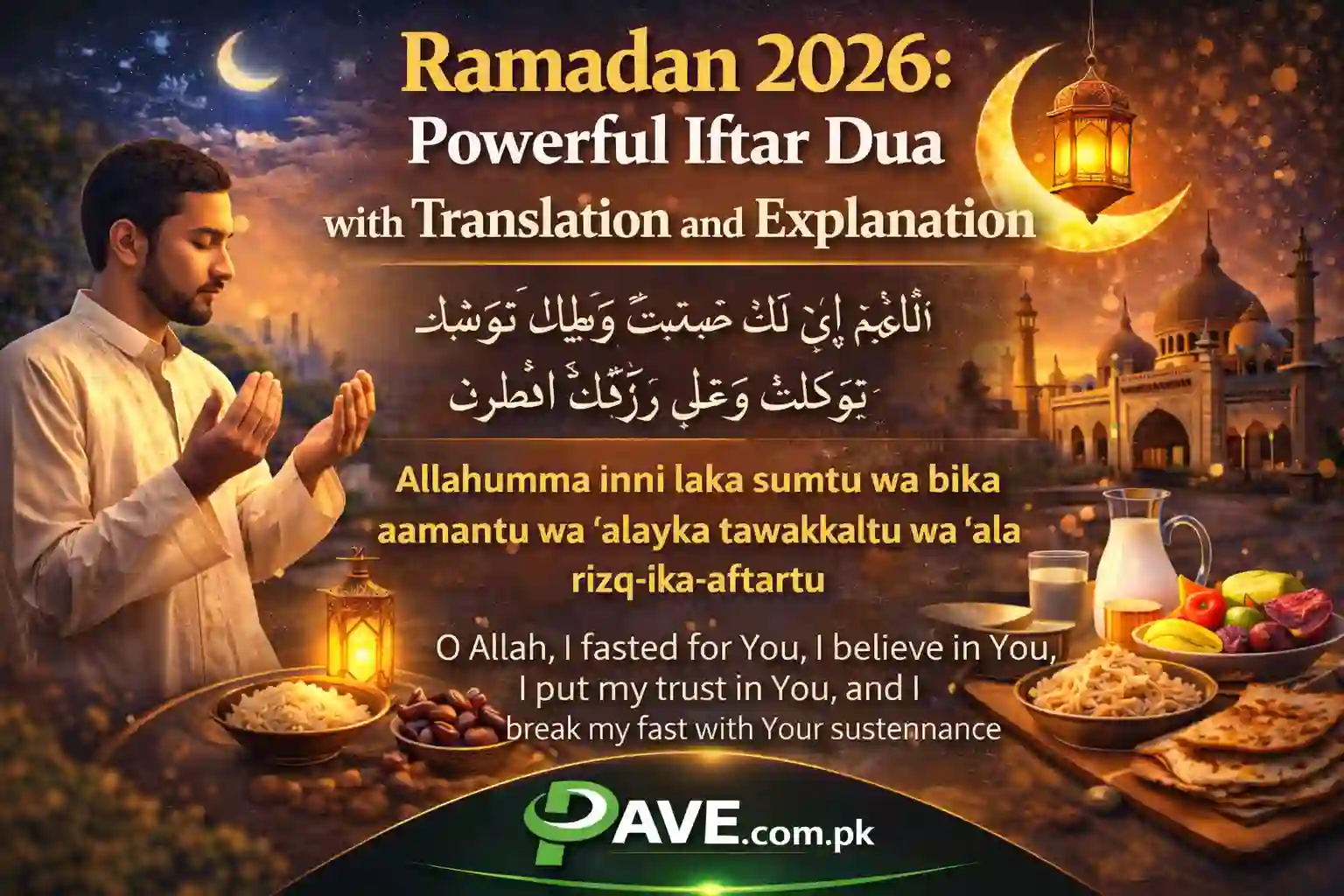
As we enter Ramadan 1447 AH (February 2026), the moment of Iftar becomes one of the most spiritually powerful times of the entire day. The Prophet Muhammad ﷺ said:
“There are three whose supplication is not rejected: the fasting person when he breaks his fast…” (Tirmidhi)
This makes the minutes around Maghrib a true Golden Hour of Acceptance.
Below is a complete, authentic, and detailed guide covering:
- Correct Iftar duas (Arabic + Urdu + English)
- Which dua is most authentic
- Spiritual explanation
- Iftar dua without Ramadan
- Roza rakhne ki dua
- Shia perspective
- Why this moment is so powerful
Which Iftar Dua Is Correct?
Both commonly recited duas are permissible. However, from a Hadith authenticity perspective:
- The “Dhahaba az-zama’u” narration is considered more authentic (reported in Sunan Abu Dawud).
- The second dua is widely recited and acceptable as a declaration of gratitude.
You may recite either. Many scholars recommend reciting both.

1️⃣ Most Authentic Sunnah Iftar Dua (Recite After First Sip)
Arabic
ذَهَبَ الظَّمَأُ، وَابْتَلَّتِ الْعُرُوقُ، وَثَبَتَ الأَجْرُ إِنْ شَاءَ اللَّهُ
Transliteration
Dhahaba az-zama’u, wabtallatil-‘urooqu, wa thabatal-ajru in sha Allah
English Translation
“The thirst has gone, the veins are moistened, and the reward is confirmed, if Allah wills.”
Urdu Translation
پیاس ختم ہوگئی، رگیں تر ہوگئیں، اور اجر ثابت ہوگیا اگر اللہ نے چاہا۔
Spiritual Explanation
“The thirst has gone”
This acknowledges the physical struggle of the day. It reminds us that hardship is temporary.
“The reward is confirmed”
This reflects Husn al-Dhan (good expectation of Allah). You end the fast with hope, not doubt.
This dua beautifully captures relief, gratitude, and certainty of reward.

2️⃣ Commonly Recited Iftar Dua (Before Breaking Fast)
Arabic
اللَّهُمَّ اِنِّى لَكَ صُمْتُ وَبِكَ اَمَنْتُ وَعَلَيْكَ تَوَكَّلْتُ وَعَلَى رِزْقِكَ اَفْطَرْتُ
Transliteration
Allahumma inni laka sumtu, wa bika aamantu, wa ‘alayka tawakkaltu, wa ‘ala rizqika aftartu
English Translation
“O Allah! I fasted for You, I believe in You, I trust in You, and I break my fast with Your provision.”
Urdu Translation
اے اللہ! میں نے تیرے لیے روزہ رکھا، تجھ پر ایمان لایا، تجھ پر بھروسہ کیا، اور تیرے رزق سے روزہ افطار کیا۔
Spiritual Meaning
This dua is a declaration of:
- Ikhlas (sincerity)
- Imaan (faith)
- Tawakkul (trust)
- Gratitude for Rizq
It transforms eating from a habit into worship.

Why Is the Iftar Dua So Powerful?
There are three main reasons:
1️⃣ Guaranteed Acceptance Window
Hadith confirms the fasting person’s dua at Iftar is not rejected.
2️⃣ Peak Sincerity
After hours of hunger and thirst, the heart is soft, humble, and sincere.
3️⃣ Completion of Worship
You are ending a full day of obedience. Dua at this moment is spiritually elevated.

What Is the Most Powerful Dua for Ramadan?
There is no single “most powerful” dua. However, scholars emphasize:
- Dua for forgiveness
- Dua for Jannah
- Protection from Hellfire
- Personal needs
- Relief for the Ummah
You should spend at least 5–10 minutes before Maghrib making personal dua.
The Three Powerful Duas Mentioned in Hadith
The Prophet ﷺ said three duas are not rejected:
- The fasting person at Iftar
- The just ruler
- The oppressed person
This highlights how spiritually elevated the Iftar moment truly is.
Iftar Etiquette (Sunnah Method)
Step 1 – Pre-Iftar Window
Spend final 10 minutes in dhikr and dua.
Step 2 – Say Bismillah
Start with “Bismillah.”
Step 3 – Break with Dates or Water
Preferably an odd number of dates.
Step 4 – Recite Sunnah Dua
Recite “Dhahaba az-zama’u” after first sip.
Step 5 – Do Not Delay
Break fast immediately at sunset.
Iftar Dua Without Ramadan
The same duas apply for:
- Nafli Roza
- Rajab fast
- Sha’ban fast
- Any voluntary fast
There is no separate dua required outside Ramadan.
Roza Rakhne Ki Dua (Sehri Niyyah)
Arabic
وَبِصَوْمِ غَدٍ نَّوَيْتُ مِنْ شَهْرِ رَمَضَانَ
Meaning
“I intend to keep the fast tomorrow for the month of Ramadan.”
Important note: Intention in the heart is sufficient.
Iftar Dua – Shia Perspective
In Shia tradition, the following dua is commonly recited:
Arabic
اللهم لك صمنا وعلى رزقك أفطرنا فتقبل منا إنك أنت السميع العليم
Meaning
“O Allah, for You we fasted and with Your provision we break our fast. Accept it from us; indeed, You are the All-Hearing, All-Knowing.”
Both Sunni and Shia traditions emphasize sincerity and gratitude.
Ramadan 2026 – A Moment of Reflection
As we experience the first Iftar of Ramadan 2026, remember:
- Hunger was temporary
- Discipline strengthened your soul
- Dua is now accepted
- Reward is promised
Do not rush through Iftar casually. Use this sacred window wisely.
Final Reflection
Iftar is not just about food. It is:
- A spiritual reset
- A moment of acceptance
- A declaration of faith
- A reminder of gratitude
- A bridge between physical struggle and divine mercy
Make dua for:
- Forgiveness
- Rizq
- Health
- Parents
- Children
- The Ummah
- Peace and guidance