
Punjab to Complete Solar Projects by June 2026
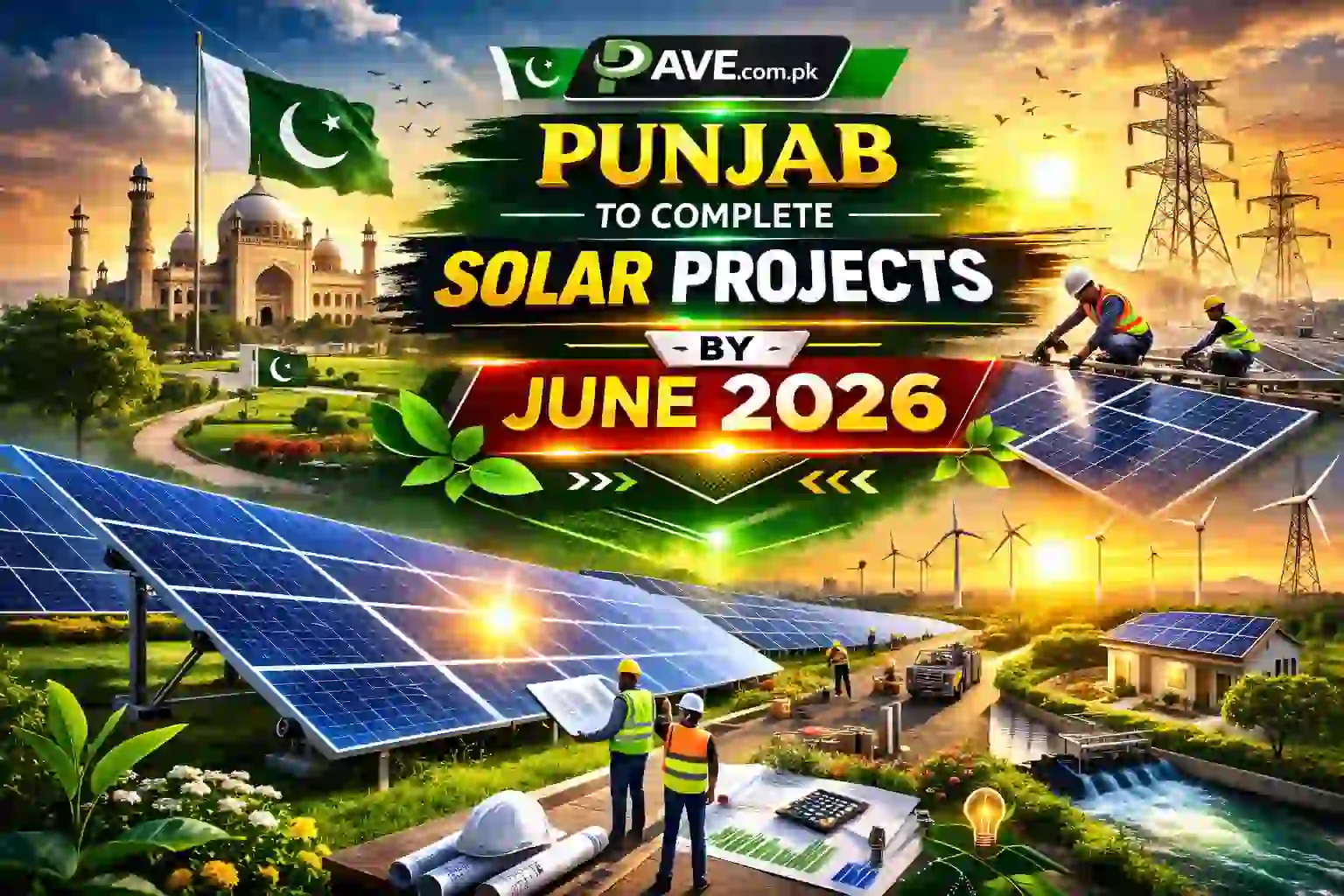
The Punjab Energy Department has confirmed that multiple high-impact renewable energy projects are moving toward completion by June 2026. This transition is part of Chief Minister Maryam Nawaz Sharif’s broader Roshan Gharana vision, focused on affordable electricity, reduced grid pressure, and long-term sustainability.
The province is aggressively expanding solar infrastructure across public institutions, agriculture, and residential sectors to cut dependence on conventional power sources.
Key Solar Projects Scheduled for Completion by June 2026
Punjab’s renewable push targets high-consumption public sectors first, ensuring maximum financial and grid relief.
Solarization of Public Buildings
Several major government institutions are being converted to solar power:
Institutions expected to be fully solarized:
- Punjab Assembly
- Central Jail Kot Lakhpat
- Institute of Cardiology
- Other high-load administrative buildings
These conversions will significantly reduce recurring electricity bills and serve as a model for other provinces.
Solarization of Educational Institutions
Higher education institutions are also part of the June 2026 deadline.
Included in the current phase:
- Lahore College for Women University (LCWU)
- University of Home Economics
- 50 higher secondary schools (Phase 1)
- Total 256 schools planned in subsequent phases
This initiative reduces operational costs while ensuring uninterrupted academic activity during peak summer demand.

CM Punjab Solarization of Agricultural Tubewells
The agricultural sector is one of Punjab’s largest electricity consumers. To reduce the burden:
- 8,000 tubewells are being converted to solar power.
- Deadline: June 30, 2026 (end of fiscal year 2025–26).
- Focus: Farmers struggling with high diesel and electricity costs.
This move directly supports rural productivity while stabilizing grid demand in peak irrigation seasons.

Status of Major Power Plants in Punjab
While smaller projects conclude in June, larger energy plants follow slightly extended timelines.
Zorlu Solar Project – 100 MW
Located in Quaid-e-Azam Solar Park, the 100 MW Zorlu Solar Project is expected to achieve its Commercial Operations Date (COD) by December 2026.
This plant will strengthen renewable contribution in southern Punjab.
Deg Outfall Hydel Project
The Deg Outfall Hydel Project is also targeted for December 2026 completion. Once operational, it will enhance hydropower contribution within the provincial grid.
Already Completed Projects
Projects already integrated into the system include:
- Murala
- Pakpattan
- Chianwali
These are currently supplying electricity and reducing pressure on conventional generation sources.

CM Punjab Solar Panel Scheme 2026 – Complete Guide
The CM Punjab Solar Panel Scheme 2026 continues to expand under the Roshan Gharana initiative.
Current Progress
- Over 67,000 residential solar systems installed
- Targeting low-income households
- Focused on consumers using 50–300 electricity units per month
This scheme is designed to provide permanent relief from rising electricity tariffs.

CM Punjab Solar Panel Scheme Online Apply 2026
Citizens searching for:
- CM Punjab Solar Panel Scheme online apply 2026
- CM Punjab Solar Panel Scheme online registration
- CM Punjab Solar Panel Scheme official website
- CM Punjab Solar Scheme application status
- CM Punjab Solar Panel Scheme online apply 2026 last date
- CM Punjab Solar Panel Scheme online apply 2026 PDF
Here is what you need to know.
Eligibility Criteria (General Guidelines)
Applicants must:
- Be residents of Punjab
- Have a valid CNIC
- Have a registered electricity connection
- Fall within the 50–300 monthly unit consumption bracket
- Not be a defaulter of electricity bills
Priority is given to low-income households.
How to Apply Online
- Visit the official Punjab government solar scheme portal.
- Enter CNIC and electricity reference number.
- Upload required documents (if requested).
- Submit the application.
- Track status via application reference number.
Applicants can later check CM Punjab Solar Scheme application status using their CNIC or tracking ID.
Last Date for CM Punjab Solar Panel Scheme 2026
The government typically announces deadlines in phases depending on district-wise allocation. Applicants are advised to apply early once registration opens, as quotas may close once targets are achieved.
CM Punjab Solar Panel Scheme 2026 PDF
The official PDF document usually includes:
- Eligibility details
- Technical specifications
- Installation process
- Consumer responsibilities
- Legal declarations
Citizens should only download the PDF from official Punjab government portals to avoid misinformation.
Electric Power Regulatory Authority Punjab – Oversight Mechanism
To ensure transparency and effective implementation, Punjab has established a provincial regulatory body to oversee:
- Renewable energy transitions
- Regional power distribution
- Monitoring of solarization projects
- Consumer grievance redressal
This strengthens regulatory checks and improves accountability in public energy reforms.
Punjab Renewable Energy Roadmap – What It Means for Citizens
By June 2026, Punjab is expected to:
- Reduce grid dependency for public buildings
- Lower subsidy burden
- Increase solar penetration in agriculture
- Provide residential relief through distributed solar systems
The long-term impact includes:
- Lower electricity bills
- Reduced load shedding
- Cleaner energy production
- Stronger provincial energy independence
Frequently Asked Questions
Will solar projects eliminate load shedding in Punjab?
They will significantly reduce pressure on the grid, but full elimination depends on overall national supply stability.
Can middle-income households apply for the Solar Panel Scheme?
The scheme prioritizes low-consumption households. Higher-consumption users may need to apply under net-metering frameworks instead.
Is the 2026 phase already active?
Installations are ongoing. Registration phases open district-wise.
Final Outlook
Punjab’s aggressive solar transition strategy signals a structural shift toward renewable energy dominance. With major public buildings, schools, agricultural tubewells, and residential homes converting to solar power, the province is positioning itself as a renewable energy leader in Pakistan.