
Punjab Launches E-Challan System 2025 – Safe City Cameras Begin Issuing Fines
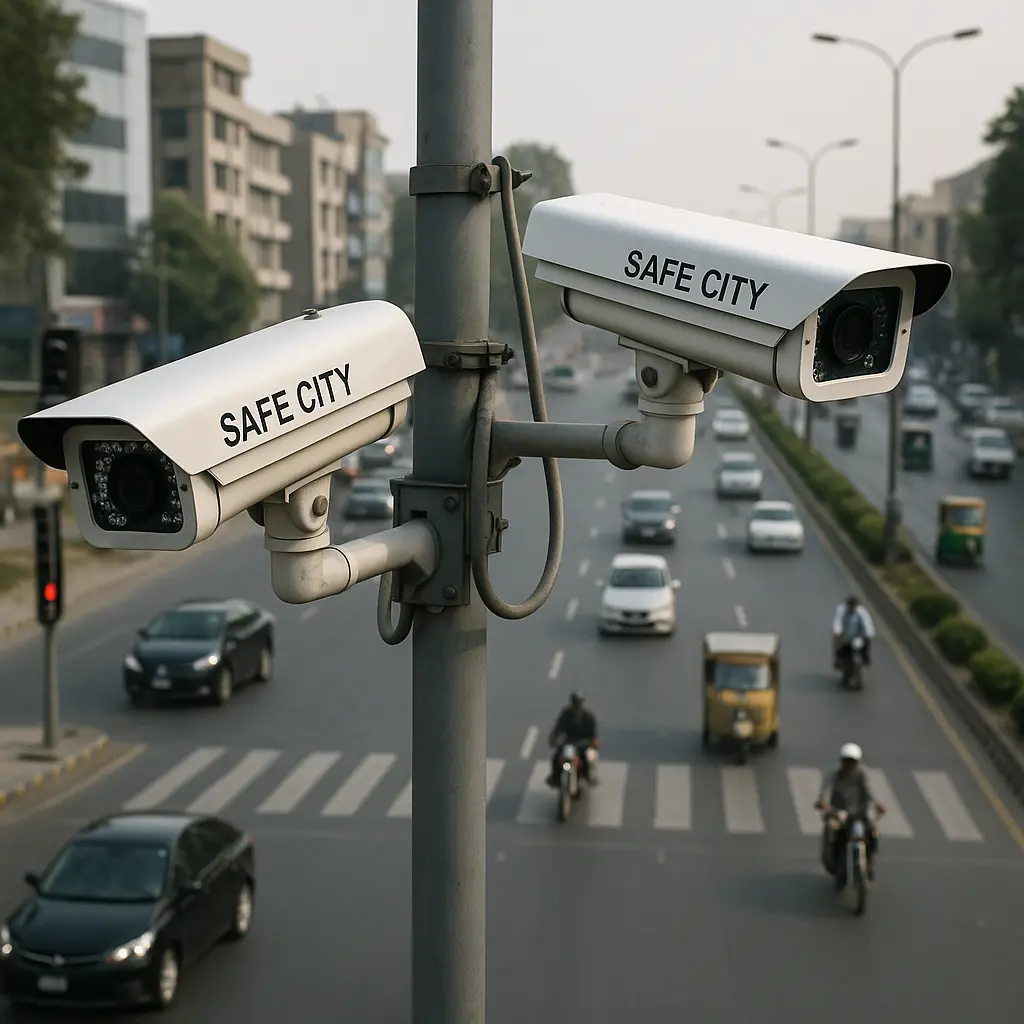
Punjab has taken a major digital step by officially launching the E-Challan System 2025, allowing Safe City cameras to issue automatic traffic fines across the province. The system has already gone live in Rawalpindi and will be rolled out in other major Punjab cities in phases. With this upgrade, traffic enforcement in Punjab has entered a new era of AI-based monitoring, digital ticketing, transparency, and strict rule enforcement.
The new system aims to eliminate manual challans, reduce arguments with traffic wardens, and minimize corruption by ensuring that every traffic ticket is backed by real-time camera evidence. According to the Punjab Safe City Authority (PSCA), the automated system will help create safer roads, reduce accidents, and promote responsible driving among citizens.
Safe City Cameras Start Detecting Violations Automatically
The E-Challan System 2025 works on advanced AI technology. Thousands of high-resolution surveillance cameras installed at intersections, highways, commercial zones, and entry–exit points continuously monitor traffic flow.
The system detects violations with complete accuracy, including:
- Red signal violation
- Helmets missing on motorcycles
- Driving without seat belts
- Lane discipline violations
- One-way violations
- Illegal or unregistered number plates
- Over-speeding
- Blocking zebra crossings
- Using mobile phones while driving
Once a violation is recorded, the system verifies the vehicle number plate, matches it with the registration data, and automatically issues an e-challan. No human involvement is required at any stage.

How E-Challans Are Delivered to Citizens
One major feature of the system is its automatic challan delivery. After the AI system confirms the violation:
- The challan is generated instantly.
- Evidence (picture + video clip) is attached.
- The challan is delivered to the registered home address of the vehicle owner.
This makes the process fair, transparent, and dispute-free. Citizens can pay their fines through:
- Online banking
- PSCA mobile app
- E-payment centers
- Banks partnered with Punjab Police
Drivers can also check their e-challans online by entering their vehicle registration number or CNIC on the Punjab E-Challan website.

Over 2,000 Cameras Installed in Rawalpindi Alone
The system began full operations after the installation of more than 2,000 AI-enabled cameras at 359 locations in Rawalpindi. The city now has one of the most advanced traffic enforcement networks in Punjab.
Key monitoring points include:
- Main intersections
- Traffic signals
- High-traffic commercial roads
- Entry and exit points
- Areas with frequent violations
Fifteen specialized cameras have also been installed at all major entry and exit routes of Rawalpindi to monitor vehicles 24/7.
Officials said the rollout will continue in other cities like:
- Lahore
- Faisalabad
- Multan
- Gujranwala
- Sialkot
- Bahawalpur
The goal is to ensure province-wide digital challan coverage within 2025.

Why Punjab Needed the E-Challan System
Traffic law violations have been increasing in Punjab over the past few years. Officials pointed out several major concerns:
- Rise in fatal accidents
- Motorcycle riders ignoring helmet rules
- Widespread red-signal jumping
- Wrong-way driving on busy roads
- Lack of lane discipline
- Manual challan system being misused
- Frequent complaints about bribery and manipulation
To address these issues, the Punjab government decided to introduce a system where human error is zero, transparency is 100%, and traffic rules are enforced fairly.
The E-Challan System 2025 directly resolves these issues by using technology that cannot be influenced, changed, or bypassed.

No More Arguments, No More Bribery
The biggest public advantage of the new system is that it removes the chances of disputes between drivers and wardens. There is no physical challan that can be avoided or altered.
With the new setup:
- Every challan is based on camera evidence
- Every violation has a photo and time-stamp
- No bribe or favor can stop the challan
- Fines cannot be deleted manually
- Transparency remains at 100%
This is the first time in Punjab that traffic enforcement has become fully digital and tamper-proof.
System Will Help Reduce Accidents
According to Safe City officials, traffic accidents in Punjab are mostly caused by:
- Over-speeding
- Red-light jumping
- Wrong-way driving
- Careless motorcycle riding
With automatic challans, drivers are expected to become more careful because they know that a camera is always watching, even if a traffic warden is not present.
Studies from other countries also show that AI-driven traffic enforcement significantly reduces:
- Fatal accidents
- Road injuries
- Emergency response pressure
Punjab hopes to see similar results within the first year of implementation.
Public Concerns and Government Response
Some citizens have expressed concerns about receiving challans for:
- Incorrect home addresses
- Old registration data
- Number plates not matching records
- Vehicles sold without proper transfer
In response, the government has advised all vehicle owners to:
- Update their home address in the excise system
- Ensure their vehicle transfer is complete
- Install government-issued number plates
- Keep their registration documents updated
Awareness campaigns will also be launched on radio, TV, and social media to educate people about the new system.
A Major Step Toward Digital Governance
The E-Challan System 2025 is not just a traffic initiative—it is part of Punjab’s wider digital governance reform. Safe City officials say the system will also help in:
- Identifying hit-and-run vehicles
- Tracing stolen vehicles
- Monitoring crime movement
- Improving emergency response
- Tracking suspicious activities
With real-time monitoring and digital proof, law enforcement operations will become faster and more effective.
Conclusion – Punjab Launches E-Challan System 2025
The Punjab E-Challan System 2025 is a landmark step toward smarter traffic enforcement and safer roads. By using AI-enabled cameras, auto-generated fines, and complete digital transparency, the province aims to reduce accidents, promote responsible driving, and modernize traffic management.
The system will continue expanding across Punjab throughout 2025, bringing a new era of technology-driven governance for millions of road users.