PAVE Policy Explained: Government’s Roadmap for Green Transportation in Pakistan
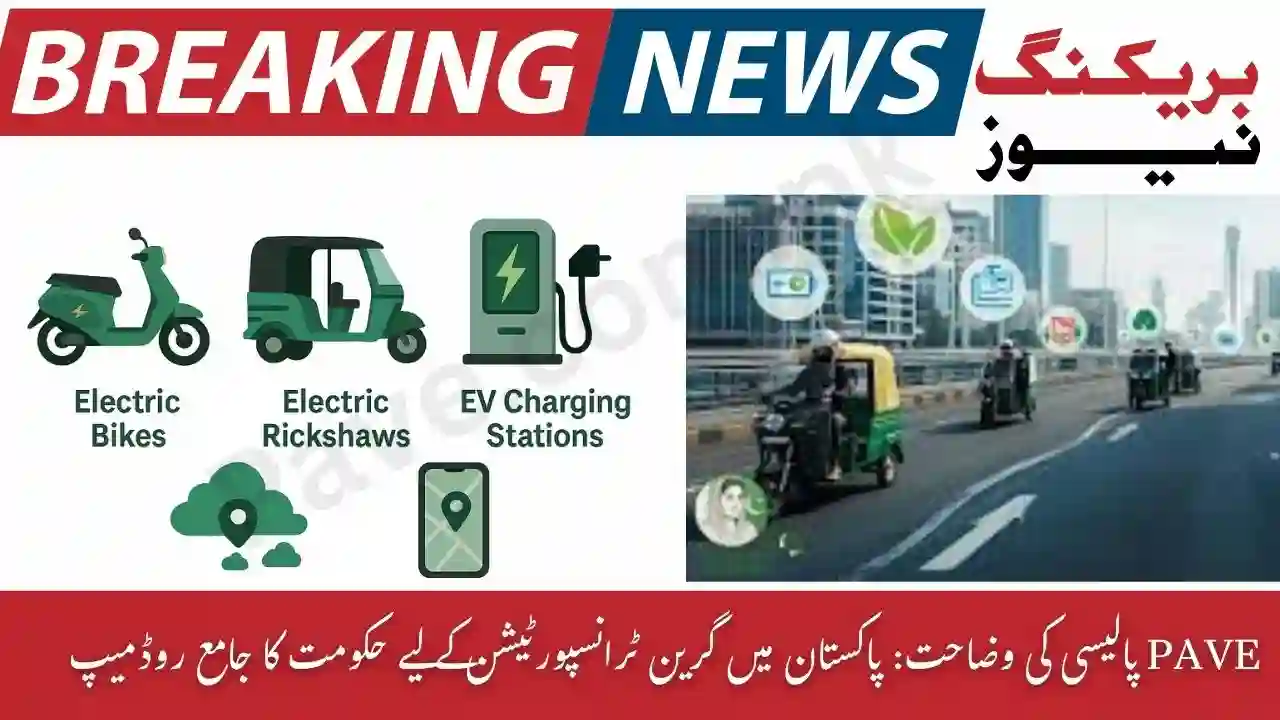
PAVE Policy Pakistan is entering a new era of sustainable mobility, driven by rising fuel prices, the need for energy independence, climate change pressures, and the global shift toward electric vehicles (EVs). In response to these growing challenges, the Government of Punjab has introduced the PAVE Policy (Promoting Access to Vehicular Electrification) as a long-term roadmap for achieving clean, affordable, and future-ready transportation across the province.
The PAVE Policy aims to transform Pakistan’s transportation ecosystem by promoting electric bikes, electric rickshaws, EV charging stations, smart mobility platforms, and a fully digitalized verification and installment system. This 2025 roadmap is designed to support students, jobholders, delivery riders, women, and low-income commuters who are unable to afford rising petrol costs.
Introduction to the PAVE Policy in Pakistan (2025 Overview):
The Promoting Access to Vehicular Electrification (PAVE) is the first large-scale mobility transformation initiative in Punjab that directly supports the shift from petrol motorcycles to affordable electric bikes. With over 20 million motorcycles on the road and fuel prices at all-time highs, the government aims to reduce financial pressure on households by promoting green, zero-emission commuting.
The PAVE Policy aligns with the National Electric Vehicle Policy (NEVP) and is structured around these core objectives:
- Expanding electric bike adoption in Punjab
- Reducing dependence on expensive imported fuels
- Cutting carbon emissions and improving urban air quality
- Offering interest-free installment plans for EVs
- Building Punjab’s largest EV charging network
- Supporting local EV manufacturing and job creation
Through the PAVE Policy, the government is not only providing cheap electric bikes but also laying the foundation for a long-term electrified transportation system.

What the PAVE Policy Covers: Complete Breakdown:
Punjab’s PAVE Policy is a multi-layered roadmap that covers several areas of green mobility. It includes financial support, infrastructure development, EV regulations, digital systems, and incentives for both consumers and manufacturers.
Below is the complete breakdown:

Affordable Electric Bikes for Students & Workers:
The policy’s center point is making electric bikes accessible and affordable. Key features include:
- Zero-interest, government-backed installment plans
- Equal monthly payments (EMIs) spread over 2–3 years
- Target audience includes students, jobholders, delivery riders, and women
- Selection through digital registration and verification
- Distribution through authorized EV dealers
- Warranty and after-sales support included
By enabling cheap EV ownership, the government aims to reduce fuel expenses and provide clean mobility options to millions of commuters.

Government Subsidy & Financial Support for EV Buyers:
Under the PAVE Policy, the provincial government provides:
- Direct subsidies to reduce upfront costs
- Interest-free financing under bank partnership programs
- Insurance support for EV users
- Maintenance packages for battery and motor systems
- Special women-focused installments
This approach ensures that low-income groups who cannot afford petrol motorcycles get a fair chance to adopt EVs.

Massive EV Charging Infrastructure in Punjab:
The PAVE initiative also includes a province-wide charging network:
- Fast charging stations on main roads and highways
- Slow charging points in government buildings, universities, bus stands
- Private sector incentives for building home & commercial chargers
- A digital map showing live charging locations
- Solar-powered charging hubs for rural areas
The goal is to ensure that EV users never face range anxiety.
Digital Registration, Verification & Biometric Approval:
To maintain transparency, the entire PAVE process is 100% digital:
- Online registration portal
- CNIC verification
- Biometric confirmation
- SMS-based approval updates
- Dealer location mapping
- QR-coded delivery system
Applicants can track their registration, installments, and delivery schedule through a centralized dashboard.
Collaboration with EV Manufacturers & Local Assembly Plants:
The PAVE Policy actively promotes domestic EV production by:
- Offering tax benefits to EV manufacturers
- Establishing local assembly lines for electric bikes
- Reducing import duty on batteries, motors, and controllers
- Encouraging Pakistani startups to enter the EV sector
- Supporting R&D for battery swapping stations
This will create jobs, reduce EV prices, and boost Pakistan’s industrial capacity.
Women Empowerment Through Electric Mobility:
A dedicated program under the PAVE Policy focuses on women:
- Reserved quota for female applicants
- Subsidized installment plans
- Women’s safety features in EV bikes
- Special training workshops and awareness sessions
- Female-friendly dealership points
This aligns with the government’s broader women empowerment agenda.
Why the PAVE Policy Is a Game-Changer for Pakistan:
The PAVE Policy is not just an EV scheme—it is a complete shift in how Pakistan approaches mobility. The long-term benefits are significant.
1. Reduces Monthly Household Expenses
Petrol motorcycles cost thousands per month in fuel. Electric bikes reduce commuting costs by up to:
- 70% compared to petrol bikes
- 90% lower maintenance
- No oil changes, no tuning, no engine repairs
This directly benefits low-income families, students, and delivery riders.
2. Fights Air Pollution & Climate Change
Punjab faces severe smog levels every winter. By replacing petrol bikes with EVs, the government aims to:
- Cut CO₂ emissions
- Reduce smoke and nitrogen oxide pollution
- Improve long-term health outcomes
- Support global climate standards
3. Generates New Jobs & Industrial Growth
The PAVE Policy creates thousands of jobs in:
- EV manufacturing
- Battery assembly
- Charging station installation
- Digital infrastructure development
- Dealership and delivery services
It strengthens Pakistan’s automotive sector and encourages innovation.
4. Makes Pakistan Energy Secure
Pakistan depends heavily on imported oil. EVs:
- Reduce fuel imports
- Save foreign exchange
- Lower the oil-based financial burden
- Support renewable electricity usage
This makes the national economy more stable.
Read Also: Breaking News: Sugarcane Crushing Season to Begin This Month Across Pakistan
PAVE Policy Eligibility Criteria:
Although specific quotas may vary based on different phases, the general eligibility framework includes:
- CNIC holder residing in Punjab
- Students (registered in college/university)
- Working professionals
- Delivery riders
- Low-income individuals
- Valid driving license
- No previous loan default
- Ability to pay monthly installments
Women and differently-abled individuals also receive priority in certain categories.
How the PAVE Delivery & Approval System Works:
The government has introduced a structured delivery timeline under the PAVE Policy:
Step 1: Online Registration
Applicants submit their CNIC and personal information.
Step 2: Digital Verification
NADRA checks eligibility, and banks review financial capacity.
Step 3: Approval Message
Successful candidates receive an SMS confirmation.
Step 4: Dealer Allocation
Applicants are assigned the nearest authorized EV dealership.
Step 5: Payment Plan Setup
Installments are finalized, and documents are signed digitally.
Step 6: Bike Delivery
Electric bikes are handed over after biometric authentication.
This transparent process minimizes fraud and ensures fairness.
Upcoming EV Projects Under the PAVE Policy (2025–2026):
- Electric Rickshaw Subsidy Plan
- Battery-Swapping Stations
- EV Bus Pilot Project for Lahore
- Solar-Powered Charging Corridors
- School & University EV Transport Program
- PAVE Mobile App (Tracking + Payment System)
- District-Level EV Distribution Centers
- Local Lithium Battery Production Plants
These initiatives will accelerate Pakistan’s transition to clean mobility.
Important FAQs About the PAVE Policy in Pakistan:
1. What is the goal of the PAVE Policy in Punjab?
To promote electric mobility by offering affordable electric bikes, subsidies, charging infrastructure, and a digitalized financing system.
2. Who can apply under the PAVE initiative?
Students, jobholders, riders, women, and low-income commuters residing in Punjab.
3. Is the PAVE installment system interest-free?
Yes, the government provides interest-free monthly installments for eligible applicants.
4. Does the policy include charging stations?
Yes, it includes a complete EV charging infrastructure across urban and rural Punjab.
5. What kind of vehicles are supported?
Electric bikes, with plans for electric rickshaws and EV buses in upcoming phases.
6. How are applicants selected?
Selection is based on digital verification, financial screening, eligibility criteria, and government priority categories.
7. When will the next phase start?
The government will announce new phases based on demand and budget availability.
Conclusion:
The PAVE Policy marks a major milestone in Pakistan’s journey toward a modern, clean, and financially sustainable mobility system. By providing affordable electric bikes, developing extensive charging networks, supporting EV manufacturers, and introducing digital verification mechanisms, the government is laying the foundation for long-term green transportation infrastructure.
The roadmap addresses rising fuel prices, environmental challenges, and the need for inclusive mobility solutions for students, riders, women, and low-income workers. As the policy expands over the coming years, it will significantly reduce commuting costs, improve air quality, and create new opportunities within Pakistan’s EV industry.
The PAVE Policy is more than a transport scheme—it is a visionary step toward a greener, smarter, and economically stronger Pakistan.