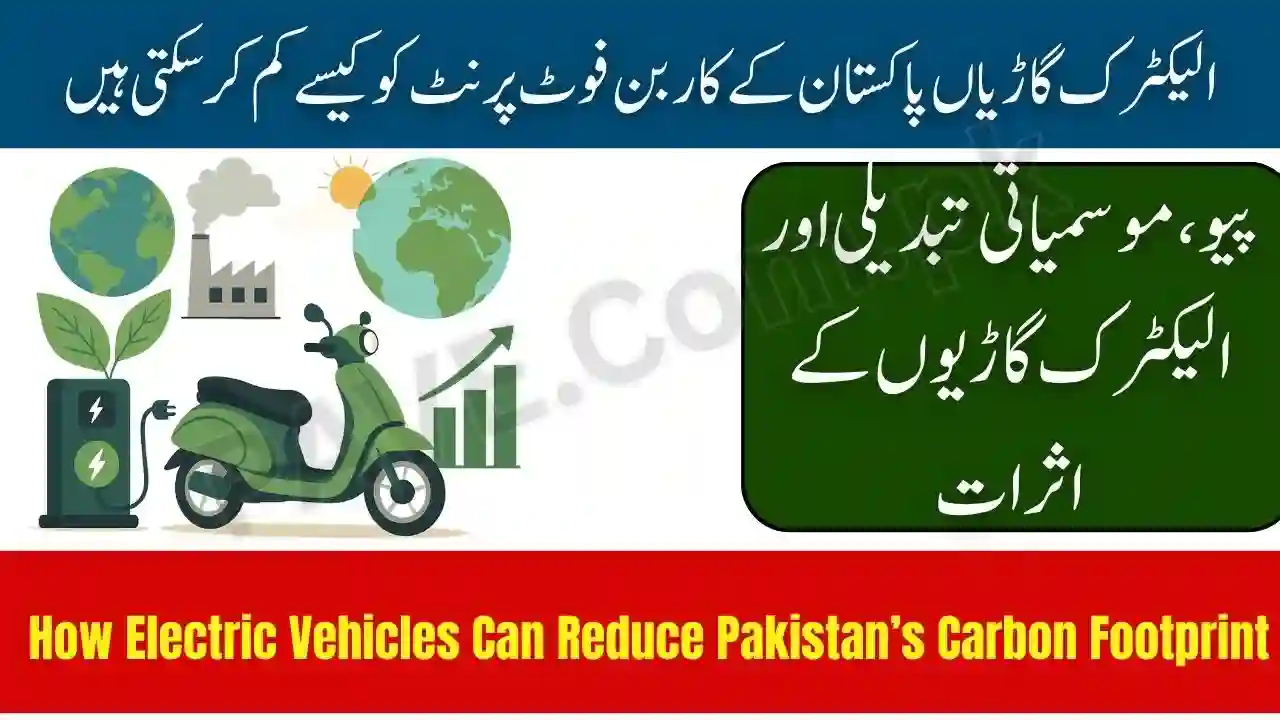
PAVE and Climate Change: How Electric Vehicles Can Reduce Pakistan’s Carbon Footprint
PAVE Climate Change Electric Vehicles Impact is entering a new era of clean mobility, driven by the government’s PAVE (Punjab Affordable Vehicle for Everyone) Program. As climate change intensifies and the country faces rising pollution, floods, heatwaves, and declining air quality, the shift toward electric vehicles (EVs) has become a national priority. PAVE is designed to make electric bikes and electric scooters accessible to students, jobholders, delivery riders, and women—helping reduce fuel consumption and carbon emissions across Punjab.
This detailed article explains how EVs under the PAVE program can significantly reduce Pakistan’s carbon footprint, improve energy efficiency, enhance public health, support climate adaptation, and reshape the country’s transportation sector.
1. Understanding Climate Change in Pakistan and Why PAVE Matters
Climate change is no longer a distant threat; it is a daily reality for Pakistan. Rising temperatures, smog, extreme rainfall, and melting glaciers have already become major challenges. Pakistan contributes less than 1% to global emissions but remains one of the top 10 most climate-vulnerable countries.
The transportation sector is a major contributor to environmental degradation:
- Over 43% of Pakistan’s total carbon emissions come from transport.
- Motorcycles alone consume 70% of petrol in Pakistan’s cities.
- Two-wheelers release harmful emissions including CO2, NOx, and particulate matter (PM2.5).
- Urban smog worsens each winter due to vehicular pollution and fuel combustion.
This is where PAVE electric vehicles can play a transformative role. EVs replace petrol consumption with clean electricity, reduce tailpipe emissions, and support Pakistan’s transition toward green mobility.
2. PAVE Program Overview – Making Electric Vehicles Affordable for Everyone
The Punjab Government launched the PAVE Program to provide affordable electric bikes through:
- Easy Installments
- Zero-Markup Plans
- Subsidized Down Payments
- Safe and Secure Distribution
- Student-Friendly and Women-Friendly Policies
The goal is to reduce dependence on petrol motorcycles and promote clean, eco-friendly transportation.
Under PAVE:
- EV bikes reduce fuel expenses by up to 85%.
- Charging an EV costs 10× less than filling petrol.
- Maintenance cost is extremely low because EVs have no engine oil, no filters, and fewer moving parts.
This makes electric mobility both economical and environmentally sustainable.

3. How PAVE Electric Vehicles Reduce Pakistan’s Carbon Footprint
Below are the key ways EVs under PAVE can significantly reduce emissions and fight climate change.
3.1 Zero Tailpipe Emissions Reduce Urban Pollution
Traditional petrol motorcycles contribute to:
- Carbon dioxide (CO2)
- Carbon monoxide (CO)
- Nitrogen oxides (NOx)
- Particulate matter (PM2.5)
- Hydrocarbons
EV bikes under PAVE produce zero tailpipe emissions, making them a powerful solution against:
- Smog
- Respiratory illnesses
- Eye infections
- Coughing and asthma
- Lung diseases
- Heart problems
Cleaner air leads to a healthier population and reduced healthcare costs.

3.2 EVs Reduce Pakistan’s Dependence on Imported Fuel
Pakistan spends billions of dollars annually importing petrol and diesel. By shifting to EVs:
- Fuel import bills decrease
- Pressure on foreign exchange reduces
- Trade deficit improves
- Energy security increases
EV adoption helps Pakistan financially while lowering carbon output from fossil fuel consumption.

3.3 Lower Greenhouse Gas Emissions Throughout Vehicle Lifecycle
Even when accounting for electricity production, EVs still generate fewer emissions over their entire lifecycle compared to petrol bikes.
Lifecycle comparison:
| Impact Area | Petrol Motorcycle | Electric Vehicle |
|---|---|---|
| Tailpipe emissions | Very high | Zero |
| Maintenance emissions | High (oil, filters) | Very low |
| Fuel production | High energy + high emissions | Low emissions |
| Overall CO2 footprint | Very high | 65–80% lower |
PAVE accelerates this impact by promoting mass EV adoption.

3.4 EV Charging Can Be Linked with Renewable Energy
Punjab is rapidly expanding:
- Solar energy
- Hydro energy
- Wind power
Charging EVs with renewable energy reduces emissions even further.
Future vision:
- Solar-powered EV charging stations
- University-campus chargers
- Public parking solar nodes
- Green charging networks across cities
This makes PAVE a long-term solution for climate resilience.
3.5 Reduced Noise Pollution in Cities
EV bikes are extremely quiet, reducing noise pollution in:
- Markets
- Universities
- Hospitals
- Residential areas
- High-traffic roads
Cleaner and quieter cities improve the overall quality of life.
3.6 Increased Battery Recycling and Green Tech Industry
EV adoption encourages:
- Battery recycling plants
- Green manufacturing
- Jobs in clean energy
- Technical training for EV mechanics
- Local production of EV parts
A greener industry means:
- Less waste
- Reduced environmental damage
- More sustainable economic growth
PAVE becomes a foundation for future green investments.
4. Economic Benefits of PAVE EVs for Climate Adaptation
Climate finance is becoming essential for developing countries. PAVE creates multiple economic advantages:
4.1 Lower Transportation Cost for Citizens
Electric bikes reduce monthly expenses by:
- Cutting petrol use
- Reducing maintenance
- Lowering repair costs
Savings contribute to economic resilience, especially during inflation.
4.2 Government Can Reduce Subsidy Pressure
Less petrol consumption helps the government avoid:
- Fuel subsidies
- Repeated price adjustments
- Budget deficits
4.3 EVs Create New Green Jobs
Growing market demand opens jobs in:
- EV manufacturing
- EV battery assembling
- Software diagnostics
- Charging networks
- Renewable energy management
These are long-term, sustainable economic opportunities.
5. Environmental Impact of PAVE EVs on Urban Air Quality
A study shows that if even 30% of petrol bikes in Lahore are replaced with EVs:
- PM2.5 levels could drop by 20–25%
- CO2 emissions could reduce by up to 40%
- Smog intensity in winter could reduce significantly
Cleaner air improves:
- Public health
- Workplace productivity
- Tourism
- Child respiratory health
- Agricultural yield
PAVE creates a long-term climate and health safety net for cities.
6. PAVE, Public Transport, and Future of Green Mobility in Pakistan
EV bikes under PAVE are only the beginning. Punjab’s broader vision includes:
- Public EV buses
- Hybrid and electric government vehicles
- Expanded EV charging infrastructure
- Electric rickshaws for cities and villages
- Solar-powered vehicle charging corridors
- Smart EV mapping tools
Pakistan aims to join global EV trends shaping mobility in:
- China
- India
- Europe
- Middle East
The PAVE program positions Pakistan for a sustainable, low-carbon mobility transition.
7. Challenges and Solutions for Pakistan’s EV Transformation
7.1 Battery Quality & Lifespan
Solution:
Local manufacturing + warranty programs under PAVE.
7.2 High Purchase Cost
Solution:
Zero-mark-up installments + govt subsidies.
7.3 Charging Infrastructure
Solution:
District-level EV stations + solar chargers + university-based hubs.
7.4 Public Awareness
Solution:
Campaigns on fuel savings, climate benefits, and low maintenance.
EV adoption grows faster when people understand its long-term value.
Read Also: Update: Unified GCC Visa 2026 to Transform Gulf Travel – One Visa for Six Countries Confirmed
8. Future Impact – How PAVE Can Help Pakistan Achieve Climate Goals
Pakistan must reduce carbon emissions to meet global climate commitments. PAVE helps achieve:
- Lower GHG emissions
- Cleaner air
- Reduced dependency on fossil fuels
- Better climate budgeting
- Modern transportation network
- Updated urban planning
By 2030, widespread EV use could reduce millions of tons of CO2 emissions annually.
FAQs PAVE Climate Change Electric Vehicles Impact:
Q1: How do electric vehicles under PAVE reduce carbon emissions?
EVs produce zero tailpipe emissions, reduce petrol usage, and improve energy efficiency. This lowers overall greenhouse gas emissions and improves urban air quality.
Q2: Are PAVE electric bikes affordable for students and low-income groups?
Yes. The program offers zero-markup installments, low down payments, and subsidized financing, making EV ownership easier.
Q3: Does EV charging increase electricity bills?
Charging an EV costs much less than buying petrol. Monthly charging expenses are typically 10 times lower than fuel costs.
Q4: Can PAVE EVs help reduce smog in Lahore and Punjab?
Yes. If EV adoption increases, smog levels can drop significantly because two-wheelers are major sources of urban pollution.
Q5: How long does an electric bike battery last?
Most EV batteries last 3–5 years depending on usage, charging habits, and manufacturer quality.
Q6: Is EV charging safe at home?
Yes. Most EVs come with certified chargers that can be safely used with standard home sockets.
Q7: Will Pakistan need more charging stations for EV growth?
Yes. The government is already expanding fast-charging hubs, university stations, and solar-powered charging points.