
Pakistan’s Province Launches First Livestock Management System – Complete 2026 Guide
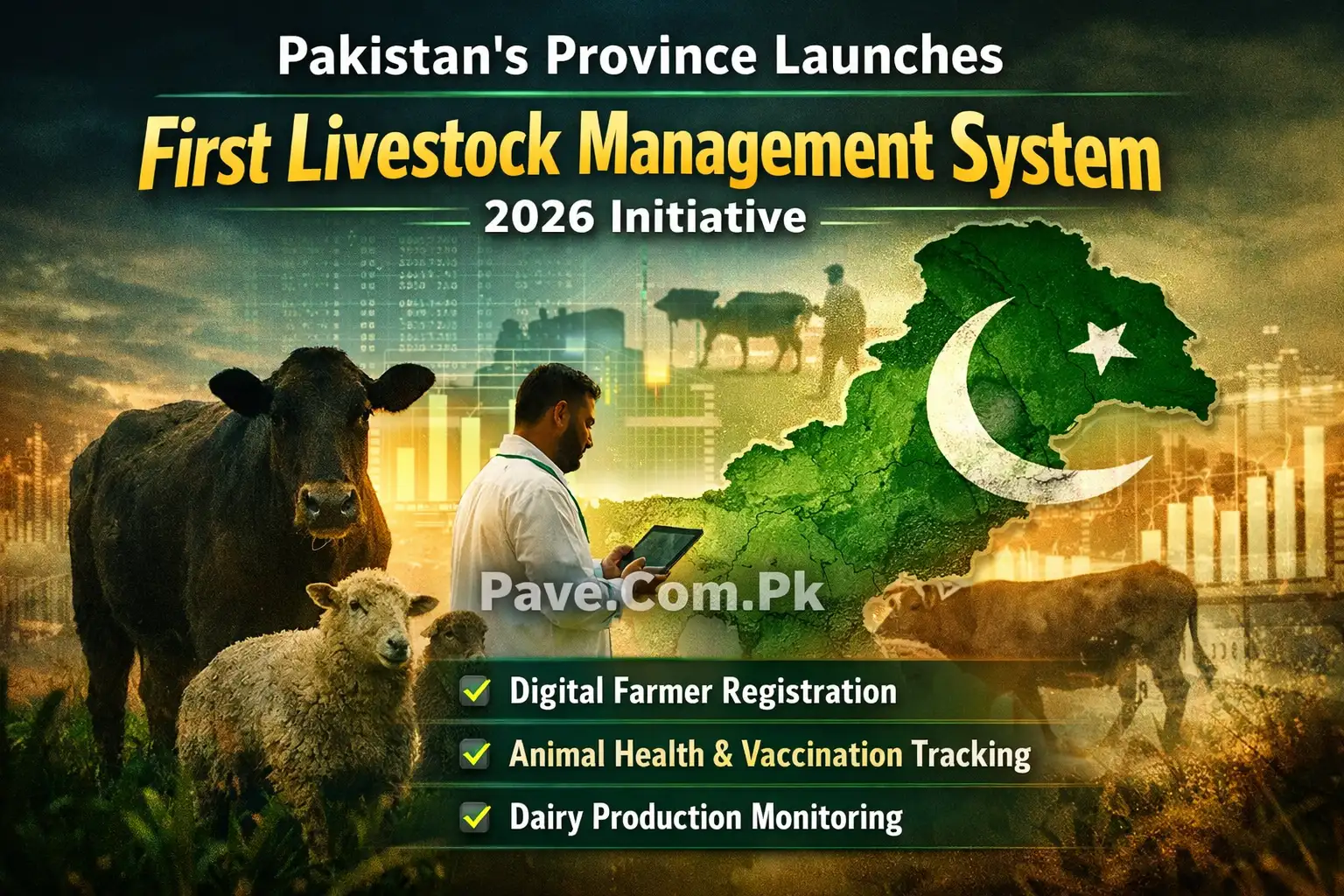
Pakistan has taken a major step toward digital agriculture as one of its provinces has officially launched the first Livestock Management System in 2026. This new digital system aims to improve animal health monitoring, farmer registration, milk production tracking, vaccination records, and livestock data management across the province. The initiative is being seen as a game-changer for farmers, dairy businesses, and the overall agriculture sector in Pakistan.
Livestock plays a very important role in Pakistan’s economy. Millions of families depend on cows, buffaloes, goats, sheep, and poultry for income. With rising demand for meat and dairy products, modern technology has become necessary. The newly launched Livestock Management System is designed to bring transparency, efficiency, and digital record-keeping to the livestock sector.
In this detailed guide, we will explain everything about Pakistan’s first Livestock Management System, its benefits, features, registration process, impact on farmers, economic importance, and future plans.
What Is the Livestock Management System in Pakistan?
The Livestock Management System (LMS) is a digital platform developed by the provincial livestock department to manage animal data, farmer registration, vaccination records, breeding information, and livestock health tracking.
This system allows the government to:
- Register livestock farmers digitally
- Maintain animal health records
- Monitor vaccination schedules
- Track dairy production
- Improve disease control programs
- Provide better subsidies and financial support
The system is part of Pakistan’s broader digital agriculture transformation strategy 2026.

Why Pakistan Needed a Digital Livestock System
Pakistan is one of the largest milk-producing countries in the world. According to agriculture statistics:
- Livestock contributes nearly 60% to the agriculture sector
- It contributes around 11% to the national GDP
- Millions of rural households depend on livestock
However, before this system:
- Records were manual and outdated
- Vaccination tracking was weak
- Animal disease outbreaks were difficult to monitor
- Farmers lacked access to digital services
The new Livestock Management System solves these issues by introducing real-time digital monitoring.

Key Features of Pakistan’s First Livestock Management System 2026
Here are the major features of the new digital livestock system:
1. Digital Farmer Registration
Farmers can now register their livestock farms online or through district livestock offices. Each farmer receives a unique ID.
2. Animal Tagging & Identification
Each animal is given a digital tag or QR-based identification number. This helps in tracking ownership and health history.
3. Vaccination & Disease Monitoring
The system keeps vaccination schedules and sends alerts for upcoming vaccines. This improves disease prevention and animal health management.
4. Milk Production Tracking
Dairy farms can record milk production data. This helps in analyzing productivity and planning better breeding strategies.
5. Breeding & Genetic Records
Animal breeding history is recorded digitally to improve livestock quality.
6. Mobile App Integration
Farmers can access the system through a mobile application for:
- Checking vaccination status
- Updating livestock data
- Receiving government announcements
7. Subsidy & Support Linkage
The system connects farmers to:
- Livestock subsidy programs
- Interest-free loans
- Insurance schemes
- Government relief packages

How to Register in the Livestock Management System
Farmers who want to benefit from the new system can follow these steps:
- Visit the official provincial livestock department website
- Click on “Livestock Management System Registration 2026”
- Enter CNIC number and personal details
- Add livestock details (number of animals, type, breed)
- Submit required documents
- Receive confirmation SMS
Farmers can also register through:
- District Livestock Offices
- Veterinary centers
- Designated agricultural facilitation centers

Benefits of the Livestock Management System for Farmers
✔ Better Animal Health
Vaccination reminders reduce disease outbreaks.
✔ Increased Milk Production
Proper monitoring improves dairy productivity.
✔ Access to Government Schemes
Registered farmers can easily qualify for subsidies and relief programs.
✔ Financial Transparency
Digital data helps banks offer livestock loans.
✔ Improved Market Access
Buyers can verify animal health records digitally.
Economic Impact on Pakistan’s Agriculture Sector
The launch of the Livestock Management System is expected to:
- Increase dairy exports
- Improve meat quality standards
- Attract foreign investment
- Strengthen rural economy
- Reduce livestock mortality rate
Experts believe this digital system will boost Pakistan’s agricultural growth in 2026 and beyond.
Role of Technology in Livestock Modernization
Modern agriculture now depends on:
- Digital databases
- Artificial intelligence for disease prediction
- GPS animal tracking
- Mobile agriculture apps
- Cloud-based farm management systems
Pakistan’s new livestock platform is aligned with global smart farming trends.
How This System Helps Control Animal Diseases
Disease outbreaks such as:
- Foot and Mouth Disease
- Lumpy Skin Disease
- Avian Influenza
cause major financial losses.
With the new system:
- Veterinary teams can track infected areas
- Vaccination campaigns become organized
- Early warning alerts can be issued
This reduces risk for farmers and stabilizes the livestock market.
Support for Small and Rural Farmers
Small farmers often lack:
- Awareness
- Access to veterinary services
- Financial support
The Livestock Management System helps by:
- Sending SMS updates
- Offering training programs
- Connecting farmers with veterinary experts
- Providing helpline support
This ensures equal opportunity for rural communities.
Challenges and Possible Solutions
Although the system is a major step forward, some challenges include:
Digital Literacy
Some farmers may not know how to use mobile apps.
Solution: Government training programs.
Internet Access in Rural Areas
Weak connectivity can slow digital registration.
Solution: Offline registration support at district offices.
Data Accuracy
Incorrect animal data may reduce system effectiveness.
Solution: Verification through veterinary officers.
Future Plans for Livestock Digitization in Pakistan
The government plans to expand the system by:
- Introducing livestock insurance tracking
- Export certification digitalization
- AI-based disease prediction
- Integration with national agriculture database
- Linking with NADRA for farmer verification
These steps will make Pakistan’s livestock sector more modern and internationally competitive.
Comparison with Global Livestock Management Systems
Countries like:
- Australia
- Netherlands
- Brazil
- India
have already implemented digital livestock tracking systems.
Pakistan’s 2026 initiative brings the country closer to global agricultural standards.
Public Reaction and Expert Opinions
Agriculture experts believe:
- This is one of the most important livestock reforms in recent years
- It will reduce corruption in subsidy distribution
- It will improve livestock export potential
Farmers have welcomed the initiative but demand:
- Easy registration
- Fast support services
- Transparent financial assistance
Conclusion
Pakistan’s Province Launches First Livestock Management System in 2026 marks a historic milestone in agricultural modernization. This digital system will improve animal health, increase milk production, strengthen rural income, and enhance transparency in government schemes.
With proper implementation, awareness campaigns, and farmer training, the Livestock Management System can transform Pakistan’s livestock industry into a modern, efficient, and globally competitive sector.
The future of smart farming in Pakistan has officially begun.