
Pakistan’s Cotton Production Falls Short of 10.2 Million Bale Target Despite Slight Increase
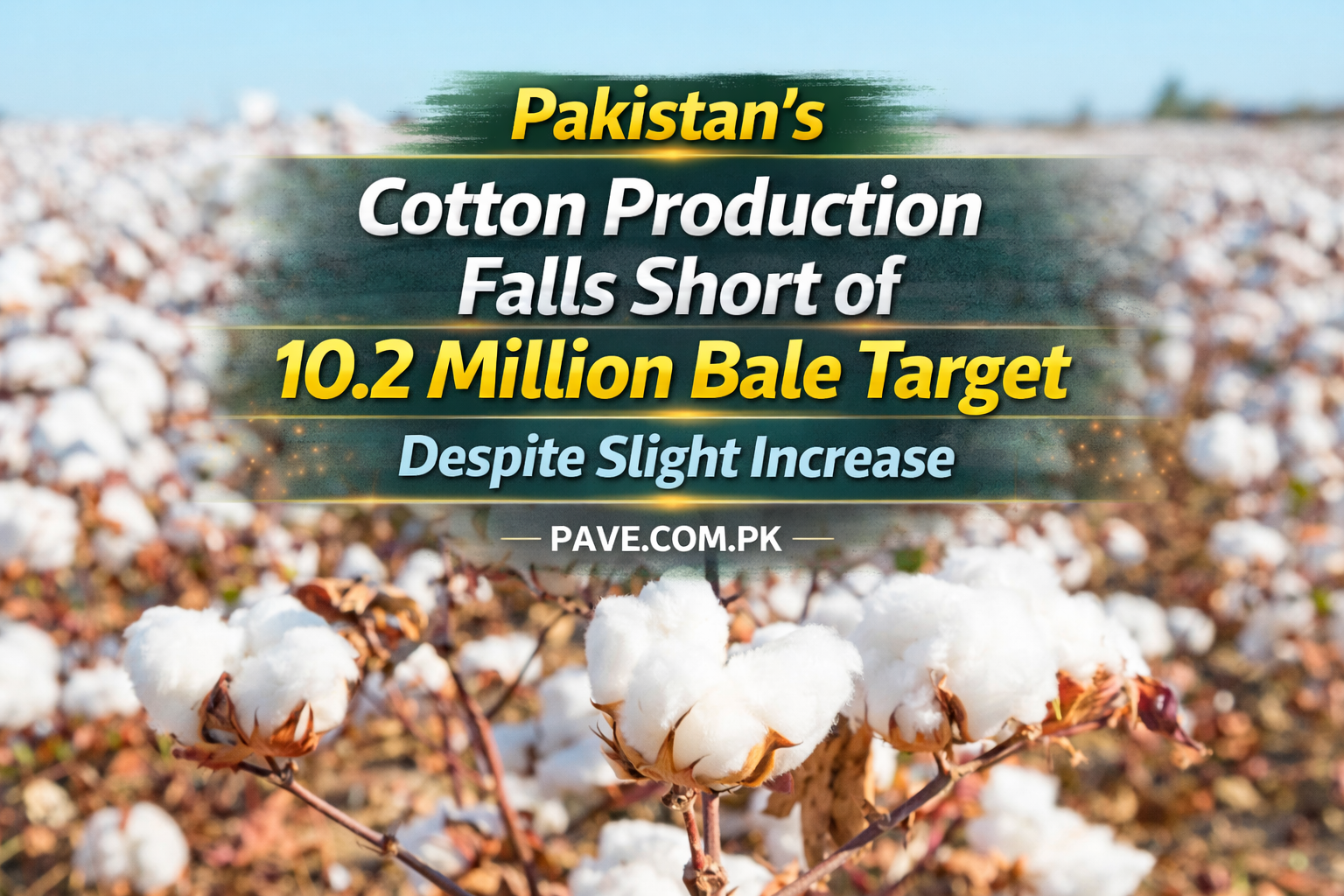
Pakistan’s cotton sector has once again faced challenges as the country’s cotton production failed to reach the official target of 10.2 million bales, even though there was a slight improvement compared to the previous season. The development has raised concerns among farmers, textile manufacturers, and economic analysts who closely monitor the country’s agricultural performance.
Cotton is one of Pakistan’s most important crops and plays a vital role in the national economy. It supports millions of farmers and workers while serving as the backbone of the country’s large textile industry.
Despite favorable expectations earlier in the season, final production estimates show that the crop remained below the government’s target, highlighting ongoing challenges in Pakistan’s agriculture sector.
Importance of Cotton in Pakistan’s Economy
Cotton is often referred to as the “white gold” of Pakistan because of its significant contribution to the country’s economy. It is the primary raw material used by the textile industry, which is one of Pakistan’s largest export sectors.
Pakistan is among the world’s major cotton-producing countries and the crop supports several economic activities, including:
- Textile manufacturing
- Garment production
- Cotton ginning and processing
- Oil extraction from cottonseed
The textile industry alone contributes a large share to Pakistan’s exports and employs millions of people across the country.
When cotton production declines or fails to meet targets, it can affect multiple sectors of the economy.

Why the 10.2 Million Bale Target Was Missed
Agricultural experts say several factors contributed to Pakistan missing the 10.2 million bale cotton production target.
Climate and Weather Challenges
Unpredictable weather conditions have been one of the biggest challenges for farmers. Heavy rains, floods, and extreme temperatures can damage cotton crops and reduce yields.
In recent years, climate change has increased the frequency of such weather events, making cotton farming more difficult.
Pest Attacks and Crop Diseases
Cotton crops are highly vulnerable to pests and diseases. Farmers often struggle with pests such as whiteflies and bollworms that damage plants and reduce productivity.
When pest management systems are not effective, crop losses can increase significantly.
Decline in Cultivated Area
Another reason for lower production is the reduction in cotton cultivation area. Many farmers have shifted to alternative crops such as sugarcane or maize because they offer higher profits or lower risk.
This change in farming patterns has reduced the total land available for cotton production.
Rising Input Costs
The cost of agricultural inputs such as fertilizers, pesticides, and fuel has increased in recent years.
Higher production costs can discourage farmers from planting cotton, especially when profit margins are uncertain.

Slight Increase Compared to Previous Season
Although the production target was not achieved, there was a slight increase in cotton output compared to the previous season.
Agriculture officials say improved farming techniques and better crop management in some regions helped increase yields.
However, the increase was not sufficient to reach the government’s ambitious production target.
Experts believe that with improved planning and policy support, Pakistan could gradually increase cotton production in the coming years.

Impact on Pakistan’s Textile Industry
The textile industry is one of the biggest stakeholders in Pakistan’s cotton sector.
When domestic cotton production falls short of demand, textile manufacturers must import cotton from other countries. This increases production costs and puts pressure on the country’s foreign exchange reserves.
Pakistan’s textile sector relies heavily on a stable supply of raw cotton to maintain production and export competitiveness.
Lower cotton production can lead to:
- Increased cotton imports
- Higher manufacturing costs
- Reduced export competitiveness
For this reason, industry leaders continue to emphasize the importance of strengthening the domestic cotton sector.

Government Initiatives to Support Cotton Farmers
Recognizing the importance of cotton production, the government has introduced several initiatives aimed at supporting farmers and increasing yields.
These initiatives include:
Improved Seed Varieties
Agricultural research institutions are working on developing high-yield and pest-resistant cotton seed varieties to improve productivity.
Farmer Training Programs
Training programs are being organized to educate farmers about modern farming techniques, pest control methods, and efficient irrigation practices.
Financial Support and Subsidies
Some government programs provide financial assistance or subsidies for fertilizers, pesticides, and farming equipment.
These measures aim to encourage farmers to increase cotton cultivation.
Regional Performance of Cotton Production
Cotton production in Pakistan is concentrated mainly in two provinces:
- Punjab
- Sindh
Punjab contributes the largest share of the country’s cotton output, while Sindh also plays a significant role in cotton cultivation.
Different regions experienced varying levels of crop performance during the season.
In some areas, favorable weather conditions helped improve yields, while in others, heavy rainfall and pest attacks affected crop productivity.
These regional variations highlight the importance of localized agricultural planning.
Challenges Facing Pakistan’s Cotton Sector
Despite its importance, Pakistan’s cotton sector faces several long-term challenges.
Water Management Issues
Cotton farming requires reliable irrigation systems. In many areas, water shortages and inefficient irrigation practices affect crop growth.
Limited Use of Modern Technology
Many farmers still rely on traditional farming methods. Greater adoption of modern agricultural technology could help increase productivity.
Competition From Other Crops
Some farmers prefer to grow crops that offer quicker returns or require less maintenance.
This shift reduces the total area available for cotton farming.
Climate Change Risks
Climate change continues to affect agricultural production worldwide, and cotton farming in Pakistan is particularly vulnerable to extreme weather events.
Opportunities to Improve Cotton Production
Despite these challenges, experts believe Pakistan has strong potential to increase cotton production with the right policies and investments.
Possible solutions include:
- Expanding research in high-yield cotton seeds
- Promoting modern farming technology
- Improving irrigation infrastructure
- Strengthening pest management systems
- Providing better financial incentives for farmers
With coordinated efforts from government institutions, farmers, and the textile industry, Pakistan could significantly improve cotton productivity.
Global Cotton Market and Pakistan’s Role
Pakistan is an important player in the global cotton market. However, the country faces competition from major cotton-producing nations such as:
- China
- India
- United States
- Brazil
These countries have invested heavily in agricultural technology and productivity improvements.
To remain competitive in the global market, Pakistan must continue modernizing its cotton sector.
Improved cotton production would not only strengthen the domestic textile industry but also boost export earnings.
Future Outlook for Pakistan’s Cotton Industry
Looking ahead, the future of Pakistan’s cotton industry will depend on how effectively the country addresses existing challenges.
Improving agricultural policies, investing in research, and supporting farmers will be key to increasing cotton yields.
If production targets can be achieved in future seasons, Pakistan’s textile sector could benefit from greater supply stability and reduced reliance on imports.
The cotton crop remains a critical part of the country’s agricultural and industrial ecosystem.
Conclusion
Pakistan’s cotton production has shown a slight improvement this season, but the country still fell short of the 10.2 million bale target. The shortfall reflects ongoing challenges such as climate change, pest attacks, rising farming costs, and shifting cultivation patterns.
Despite these difficulties, the cotton sector continues to play a vital role in Pakistan’s economy and remains essential for the growth of the textile industry.
With stronger policy support, modern farming practices, and improved research initiatives, Pakistan has the potential to boost cotton production and strengthen its position in the global textile market.