
Pakistan Plans Backup Oil Supplies from Saudi Arabia if Hormuz Stays Blocked
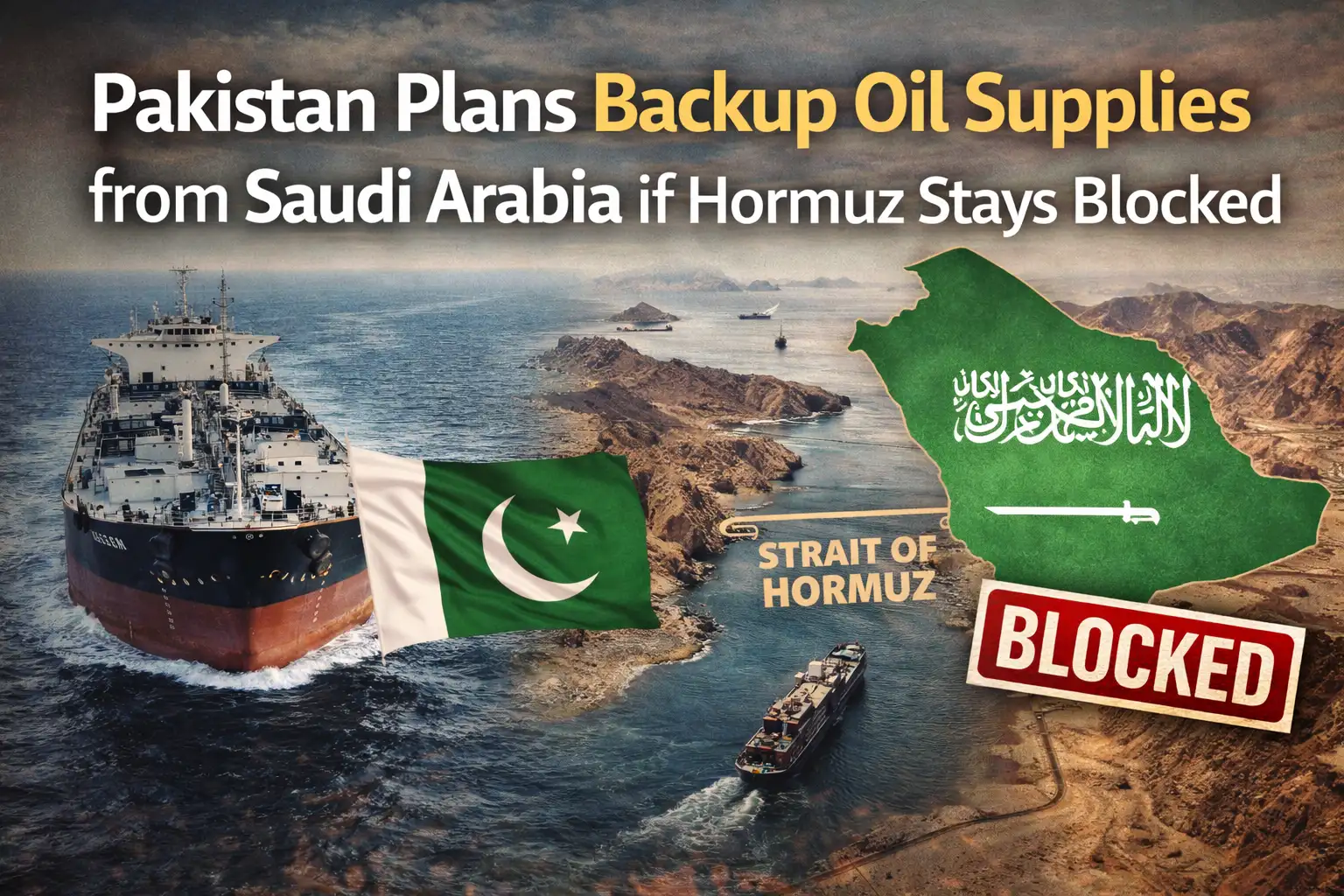
Pakistan is preparing contingency plans to secure backup oil supplies from Saudi Arabia if tensions in the Gulf region disrupt shipping through the Strait of Hormuz for more than 10 to 12 days. The development comes amid rising geopolitical uncertainty that threatens one of the world’s most critical energy corridors.
Search trends are rapidly increasing:
- Strait of Hormuz oil crisis
- Pakistan oil supply backup plan
- Saudi Arabia Red Sea oil exports
- Oil price forecast if Hormuz blocked
- Pakistan fuel shortage news
In this detailed report, we explain why Pakistan is planning emergency oil arrangements, how the Strait of Hormuz impacts global energy markets, and what it means for fuel prices, LNG supplies, and the economy.
Why the Strait of Hormuz Matters So Much
The Strait of Hormuz is one of the most important oil shipping routes in the world.
Key facts:
- Around 20 to 21 million barrels per day pass through it
- Represents nearly 20% of global petroleum consumption
- About 20% of global LNG trade transits this route
Countries dependent on this route include:
- Saudi Arabia
- UAE
- Qatar
- Kuwait
- Iraq
If the Strait remains blocked or partially disrupted, global oil prices could surge dramatically.
Analysts warn:
- Oil could rise to $100–$150 per barrel
- LNG prices could spike sharply
- Shipping insurance costs could soar

Why Pakistan Is Vulnerable
Pakistan is heavily dependent on Gulf energy imports.
Current import structure:
- LNG from Qatar
- Diesel from Kuwait
- Crude oil mainly from Abu Dhabi National Oil Company
- Petrol imports largely from Singapore
Most of these shipments pass through the Strait of Hormuz.
- Pakistan oil imports data
- Pakistan LNG supply crisis
- Fuel shortage Pakistan

What Happens If Hormuz Remains Blocked?
If the Strait remains inaccessible for more than two weeks, Pakistan could face serious challenges:
1. Crude Oil Supply Disruption
Pakistan imports around 300,000 barrels per day, while domestic production is only about 70,000 barrels per day.
2. LNG Supply Risk
LNG cargoes are vulnerable. Saudi Arabia is not a major LNG exporter, meaning alternative LNG supply may be limited.
3. Rising Fuel Prices
A prolonged disruption could cause:
- Petrol price increase
- Diesel price surge
- LPG price spike
4. Inflation and Current Account Pressure
Higher oil imports widen the trade deficit and increase inflation.

Pakistan’s Backup Plan: Saudi Arabia’s Red Sea Route
Pakistan may formally request inclusion in Saudi Arabia’s preferred crude buyer list.
Saudi Arabia operates the East-West pipeline, which:
- Transports oil from eastern oil fields
- Bypasses the Strait of Hormuz
- Exports through Red Sea terminals
Saudi Arabia already supplies oil via the Red Sea to:
- China
- Japan
- South Korea
- India
If Pakistan secures similar access, it could sustain refinery operations even if Hormuz shipping is blocked.
Search trends:
- Saudi East West pipeline capacity
- Saudi Red Sea oil exports
- Pakistan Saudi oil agreement

Current Petroleum Stock Position in Pakistan
Officials say Pakistan currently holds:
- Around 30 days of petrol inventory
- Around 30 days of high-speed diesel stocks
However, continued hostilities beyond next week could strain:
- Crude supply
- LNG imports
- Imported diesel
Spot market purchases may become necessary, but at higher premiums.
Tankers Currently Affected
Reports indicate:
- Two crude tankers bound for Pakistan are stranded
- One tanker operated by Pakistan National Shipping Corp.
- Another cargo at loading stage may not sail
This adds to short-term supply uncertainty.
Role of Singapore and Alternative Markets
Pakistan already imports significant petrol from Singapore. If required:
- Diesel imports from Singapore may increase
- Freight costs would rise
- Insurance premiums would increase
This could raise domestic fuel prices.
LNG – The Bigger Challenge
While crude oil may be sourced from Saudi Arabia, LNG remains vulnerable.
Qatar is Pakistan’s major LNG supplier, and shipments pass through Hormuz.
Two LNG cargoes already crossed the Strait and are expected soon, providing temporary relief.
But if the disruption continues:
- Gas shortages could worsen
- Power generation may be affected
- Industrial production may slow
Search queries:
- Pakistan LNG crisis 2026
- Gas shortage Pakistan update
- Electricity load shedding news
Could Oil Prices Reach $150?
Global analysts are closely monitoring the situation.
If Hormuz remains blocked:
- Oil prices could spike to $120–$150
- Inflation may surge globally
- Emerging markets may face currency pressure
For Pakistan, this would:
- Increase import bill significantly
- Pressure foreign exchange reserves
- Worsen inflation
Impact on Pakistan’s Economy
A prolonged disruption could:
- Widen current account deficit
- Increase government subsidy burden
- Pressure the rupee
- Slow economic growth
Higher oil prices affect:
- Transport costs
- Food prices
- Electricity tariffs
- Industrial production
Private Sector Flexibility
Some refiners, such as Cnergyico, have previously imported US West Texas Intermediate crude, avoiding Hormuz-linked supply chains.
Authorities may explore:
- US crude imports
- Alternative shipping routes
- Diversified supplier contracts
However, logistics take time.
Government’s Emergency Meetings
High-level meetings were chaired by:
- Petroleum Minister Ali Pervaiz Malik
- Finance Minister Muhammad Aurangzeb
Officials are:
- Assessing stock levels
- Monitoring tanker movements
- Preparing contingency measures
The government hopes tensions ease within a week but is preparing for prolonged instability.
Global Implications
The Strait of Hormuz affects:
- Asia’s largest energy buyers
- Global shipping routes
- Oil futures markets
If blocked:
- Energy markets could remain volatile
- Investors may shift to safe-haven assets
- Inflation concerns could re-emerge globally
Final Thoughts
Pakistan’s contingency planning highlights the critical importance of the Strait of Hormuz in global energy security. While existing fuel stocks provide short-term stability, prolonged disruption could lead to serious economic consequences.
By seeking Saudi Arabia’s Red Sea oil supply route, Pakistan aims to secure refinery operations and reduce vulnerability. However, LNG imports remain a major concern.
The coming days will determine whether diplomacy stabilizes the situation or markets brace for deeper energy shocks.