Pakisatn F-16 Shot Down Amid Taliban Conflict? Video Goes Viral
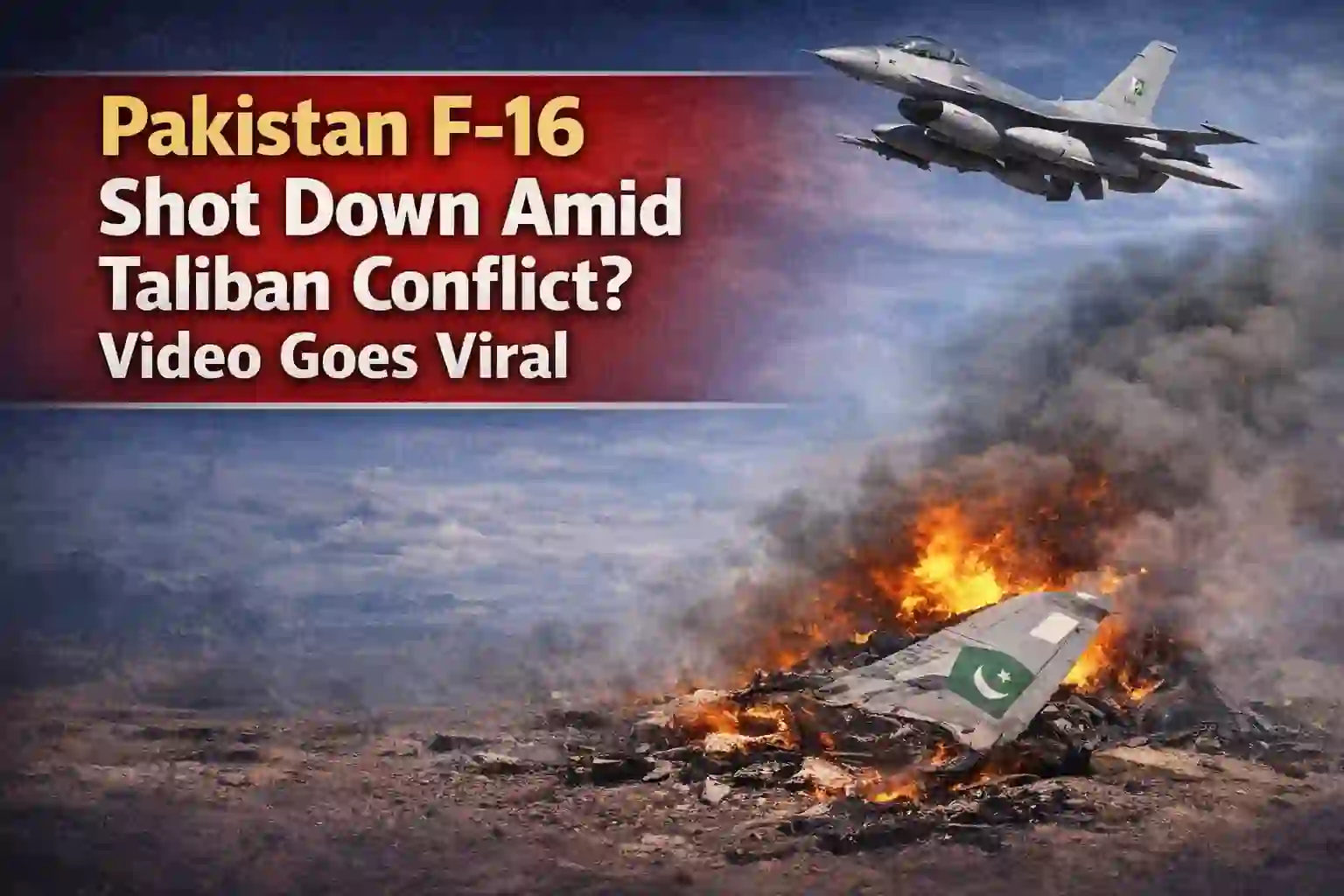
A dramatic video claiming that a Pakistan Air Force (PAF) F-16 has been shot down during ongoing tensions with the Taliban is spreading rapidly across social media. The short clip shows a fighter jet engulfed in flames, descending toward the ground, with loud background audio that suggests combat.
The footage has triggered strong reactions, with many users sharing it as “breaking news.” But is there any confirmed evidence that a Pakistani F-16 has actually been destroyed? Here is a detailed fact check based on currently available information.
What the Viral Video Shows
The video, which is around 40 to 50 seconds long, appears to show:
- A single-engine fighter jet flying at low altitude
- A sudden explosion or fire near the aircraft
- The jet trailing smoke before losing altitude
- No visible pilot ejection
- No clear geographic markers
At first glance, the clip looks convincing. However, there are several red flags.
The camera angles resemble in-game perspectives rather than real battlefield footage. The fire effects and motion physics look similar to high-end combat flight simulators such as Digital Combat Simulator World, commonly known as DCS World.
Experts who analyze open-source military footage have pointed out that:
- The explosion effects appear digitally rendered
- There is no real-world telemetry data visible
- No verifiable terrain or identifiable landmarks are present
So far, no independent source has confirmed the location or authenticity of the clip.

Has the Pakistan Air Force Confirmed Any Loss?
As of now:
- Inter-Services Public Relations (ISPR) has not issued any statement confirming the loss of an F-16.
- Pakistan’s Ministry of Defence has not reported any aircraft crash.
- There has been no official announcement regarding a pilot casualty or emergency response operation.
In modern military environments, the loss of a high-value fighter jet like an F-16 would likely generate immediate attention from:
- International defense monitoring agencies
- Regional governments
- Aviation tracking analysts
- Satellite imagery observers
None of these sources have reported a confirmed downing.
This silence strongly suggests that the viral claim is unverified at best.

What Is the Current Situation Between Pakistan and the Taliban?
There have been reports of increased tensions along the Pakistan-Afghanistan border in early 2026. Security incidents and cross-border exchanges have raised concerns in the region.
However, credible reports indicate:
- Border skirmishes involving ground forces
- Limited artillery exchanges
- No confirmed air-to-air combat
- No verified anti-aircraft missile strikes against Pakistani jets
If an F-16 had actually been shot down, there would likely be:
- Wreckage images
- Local eyewitness accounts
- Radar tracking data
- Statements from Afghan authorities
None of this has surfaced.

Why Misinformation Spreads Quickly During Conflict
When tensions rise, people are more likely to believe dramatic claims. Videos like this spread for several reasons.
1. High Emotional Climate
Military conflict creates anxiety and strong national feelings. A video showing a fighter jet in flames fits the emotional environment, making people more likely to share it without verification.
2. Advanced Gaming Technology
Modern flight simulators are incredibly realistic. Games like Digital Combat Simulator World can produce visuals that look almost identical to real combat footage.
To someone unfamiliar with military aviation, it can be very difficult to tell the difference between:
- Real battlefield video
- CGI animation
- Simulation gameplay
3. Information Warfare
In modern conflicts, misinformation can be used as a tool. Fake or misleading content can:
- Damage morale
- Create panic
- Influence public opinion
- Distract from actual developments
This is why many defense analysts urge caution before sharing viral military clips.

How High-Value Aircraft Losses Are Usually Verified
F-16 fighter jets are not small or easily hidden assets. If one were destroyed in combat, several indicators would typically appear:
- Official Statements – Either confirming or denying the incident
- Debris Photos – Wreckage images often surface quickly
- Satellite Imagery – Crash sites can be detected
- Local Reports – Civilians in the area often record footage
- International Monitoring – Defense observers track such incidents closely
So far, none of these verification signals exist in this case.
Could It Be Old Footage?
Another possibility is that the video is recycled from a past event or unrelated incident. This is common during geopolitical tensions.
Old clips are often reposted with new captions to match current events. Without clear timestamps or metadata, it is easy for misinformation to spread.
There is currently no evidence linking the viral video to any confirmed recent event.
The Role of Social Media Platforms
Platforms like X, Facebook, Instagram, and TikTok allow content to spread within minutes. Once a video gains traction, it can reach millions before fact-checking begins.
Many users:
- Share without checking the source
- Trust dramatic visuals over official statements
- React emotionally to headlines
This makes responsible sharing more important than ever.
What Should You Do Before Sharing?
If you see military footage online, consider asking:
- Who originally posted it?
- Is there a verified location?
- Have official sources confirmed it?
- Are credible defense analysts discussing it?
If the answer to these questions is no, it is better to wait.
Spreading unverified claims can create unnecessary fear and confusion.
Final Verdict: Is the Pakistan F-16 Shot Down?
Based on currently available information:
❌ There is no verified evidence that a Pakistan Air Force F-16 has been shot down.
❌ No official confirmation has been issued.
❌ No credible independent source has verified the claim.
The viral video appears unverified and likely simulated or misrepresented.
Until credible evidence emerges, the claim should be treated as unconfirmed.
The Bigger Picture
In the digital age, videos can look real even when they are not. Military misinformation spreads fast, especially during tense moments.
Staying informed means:
- Relying on verified sources
- Waiting for official confirmation
- Avoiding emotional reactions to viral content
The situation along the border may be serious, but spreading unverified military claims does not help anyone.