New Digital Safety Courses Mandatory for Private School & College Students
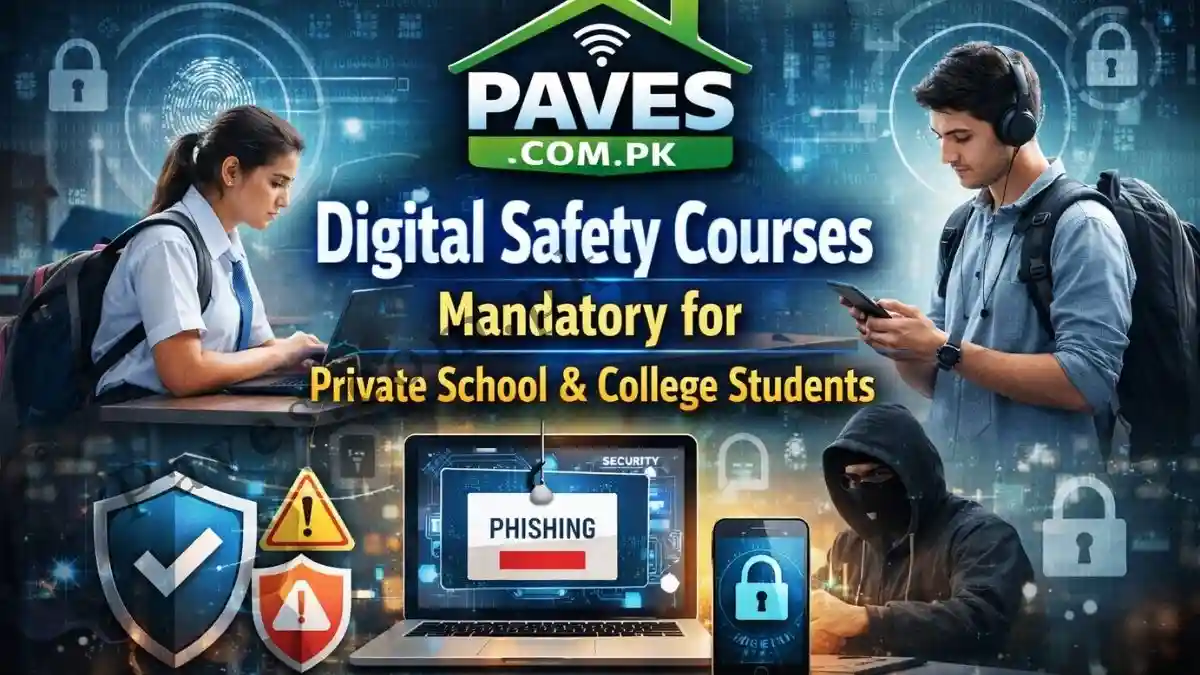
The federal government has officially made Digital Safety and Artificial Intelligence courses mandatory for private school and college students in Islamabad, starting from Class 9 in 2026. This directive has been issued by the Ministry of Federal Education and Professional Training and is being implemented through ICT-PEIRA to strengthen digital literacy, cybersecurity awareness, and AI readiness among students.
This policy marks a major shift in Pakistan’s academic landscape, integrating cybersecurity education and AI fundamentals into mainstream learning at the secondary and higher secondary levels.
This guide explains everything in detail, including why the courses are mandatory, what students will learn, enrollment deadlines, implementation strategy, compliance requirements for schools, benefits for students, and long-term national impact.
Why Digital Safety and AI Courses Are Now Mandatory
The decision is rooted in the growing importance of digital literacy in modern education systems.
1. Rising Cybersecurity Threats
Students are increasingly exposed to:
- Online fraud
- Identity theft
- Data breaches
- Social media exploitation
- Misinformation campaigns
Without proper training, young users are vulnerable to cyber risks. Mandatory digital safety education ensures students understand online threats and how to protect themselves.
2. Artificial Intelligence Is Reshaping Education and Jobs
AI is now integrated into:
- Academic research tools
- Automated systems
- Business operations
- Healthcare technologies
- Government infrastructure
Students who lack AI awareness risk falling behind in future academic and professional environments.
3. National Digital Competitiveness
By introducing cybersecurity and AI education at Class 9 level, Pakistan aims to:
- Strengthen national cyber resilience
- Build a digitally skilled youth population
- Align education with global digital standards
This initiative positions Islamabad’s private education sector as a leader in digital curriculum modernization.

What Will Students Learn in the Digital Safety Course?
The mandatory curriculum focuses on both practical and conceptual understanding.
Core Modules Include
1. Cybersecurity Fundamentals
- Understanding cyber threats
- Password management and digital authentication
- Recognizing phishing attacks
- Secure browsing practices
2. Data Protection and Privacy
- Personal data security
- Responsible social media usage
- Understanding digital footprints
- Safe online communication
3. Artificial Intelligence Basics
- What AI is and how it works
- Everyday AI applications
- Machine learning fundamentals
- Ethical AI usage
4. Responsible Digital Behavior
- Online ethics
- Digital citizenship
- Combating misinformation
- Respectful digital communication
The curriculum balances theoretical knowledge with real-world application.
Implementation Timeline and Enrollment Process
The ICT-PEIRA has outlined structured implementation steps to ensure smooth rollout.
Account Activation Deadline
All eligible students must activate their training accounts on the official government skills portal by March 8, 2026.
Failure to activate accounts may result in non-compliance issues for institutions.
Flexible Course Completion Model
To avoid academic disruption:
- Students may complete modules during summer vacations
- Courses can also be completed after final examinations
- Learning windows are flexible
This approach ensures academic schedules remain unaffected while promoting digital training.
Role of School Administration
Private schools and colleges are responsible for:
- Registering all students from Class 9 onward
- Providing login credentials
- Monitoring participation
- Ensuring completion compliance
Institutional accountability is central to the program’s success.

How Students Can Get Started
The process is straightforward.
Step 1: Visit the Official Skills Portal
Access the government-approved training platform.
Step 2: Register Using School Credentials
Use credentials provided by the institution.
Step 3: Activate Account Before Deadline
Complete activation before March 8, 2026.
Step 4: Begin Course Modules
Complete modules within the flexible timeline provided.
Students can progress at their own pace within the allowed window.

Benefits for Students
1. Improved Online Safety
Students gain the ability to:
- Identify online scams
- Protect personal data
- Avoid cyber exploitation
This reduces digital vulnerability.
2. Enhanced Academic Skills
AI literacy improves:
- Research efficiency
- Analytical thinking
- Technology adaptation
Students become better prepared for higher education.
3. Career Readiness
Early exposure to cybersecurity and AI builds a foundation for careers in:
- Information Technology
- Data Science
- Cybersecurity
- Software Development
- Digital Policy
Digital competence increases employability in competitive job markets.
Benefits for Schools and Educational Institutions
1. Stronger Compliance with Federal Directives
Schools that implement the program efficiently demonstrate regulatory compliance and institutional responsibility.
2. Enhanced Institutional Reputation
Digital safety certification strengthens a school’s academic profile and parent trust.
3. Safer Digital Environment
Students with cybersecurity awareness create safer online communities within schools.
National Impact of Mandatory Cybersecurity Education
This initiative supports long-term national objectives.
Digital Ecosystem Strengthening
Educated students reduce vulnerability to cyber attacks and misinformation campaigns.
AI-Driven Workforce Preparation
Pakistan’s youth will be better prepared for:
- Automation
- Digital entrepreneurship
- Technology innovation
Global Competitiveness
Countries investing in digital literacy early outperform others in economic growth and innovation metrics.
Frequently Asked Questions
Is the digital safety course compulsory for all private schools in Islamabad?
Yes. All private schools and colleges from Class 9 onward must comply.
Is the course examination-based?
Assessment structure depends on official guidelines, but modules focus on knowledge and awareness rather than heavy academic testing.
What happens if a student misses the deadline?
Institutions may face compliance issues. Students are encouraged to activate accounts before the March 8, 2026 deadline.
Is the training free?
Yes. The initiative is government-supported and designed for broad accessibility.
Will public schools also adopt this model?
Current implementation focuses on private institutions in Islamabad, with potential expansion based on results.
Strategic Significance for Pakistan’s Education System
The mandatory digital safety policy is more than a curriculum addition. It represents:
- Educational modernization
- Digital transformation in secondary education
- Proactive cyber threat mitigation
- AI readiness strategy
By institutionalizing cybersecurity and AI awareness, Pakistan is strengthening its digital foundation at the academic level.
Final Summary
The federal government’s directive making digital safety and AI courses mandatory for private school and college students in Islamabad beginning in 2026 is a forward-looking educational reform.
Key takeaways:
- Applies from Class 9 onward
- Account activation deadline is March 8, 2026
- Flexible completion timeline
- Focus on cybersecurity and AI literacy
- Schools are responsible for registration and monitoring