National Assembly Demands Urgent MDCAT Reforms 2025 – Major Admission Changes Expected
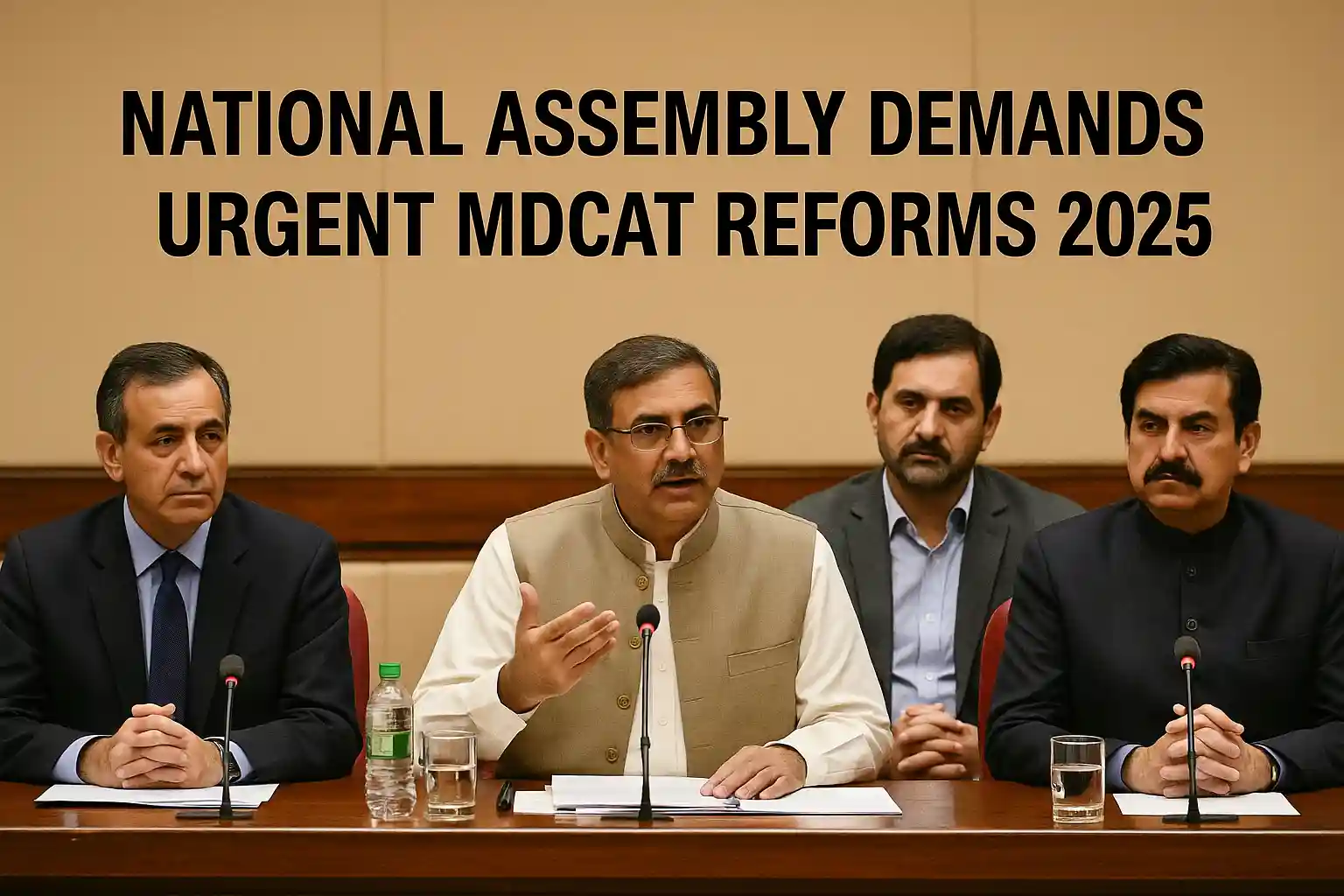
The National Assembly Standing Committee on National Health Services, Regulations and Coordination has officially demanded Urgent MDCAT Reforms 2025, signaling the possibility of major structural changes for MBBS and BDS aspirants across Pakistan. The committee stated that the current medical entrance framework contains serious gaps, inconsistencies, and governance issues that need immediate correction to ensure transparency and fairness for students.
The meeting, chaired by MNA Mahesh Kumar Malani, brought together senior officials from the Ministry of Health, PMDC, IBCC, and representatives from universities to review complaints related to MDCAT validity, admission rules, equivalency issues, and vacant seats in medical colleges. According to committee members, these issues have created a sense of uncertainty among students and threaten the quality and stability of medical education in the country.
Three-Year MDCAT Validity Sparks Strong Opposition
One of the central concerns discussed was the controversial three-year validity of MDCAT scores. Members stated that the policy has unintentionally created an unfair environment because the difficulty level of MDCAT varies from year to year. Students holding results from earlier years often have an advantage over those who appeared recently, especially if the most recent paper was more challenging.
The committee highlighted that students should ideally compete on the basis of equal difficulty, and using old scores disturbs merit lists. The Health Minister agreed that the system is flawed but said the government cannot alter the current admission cycle since the process is already underway. However, he assured the committee that serious legislative amendments will be considered for 2025, based on the recommendations provided during the meeting.
Members emphasized that MDCAT must be standardized, transparent, and aligned with international testing practices. Many MNA participants expressed frustration over repeated complaints from students who feel the current merit structure does not represent their performance fairly.

Large Number of Vacant MBBS and BDS Seats Creates Alarm
The committee also reviewed the troubling rise in vacant seats across medical and dental colleges. According to officials, hundreds of MBBS and BDS seats remain unfilled every year due to poor management, delayed timelines, and unnecessary inter-college transfers.
Students often take admission at one college and then shift to another institution, leaving previous seats vacant after deadlines are passed. This seat wastage not only deprives deserving students of opportunities but also disrupts the academic planning of colleges.
To address this, the committee evaluated several proposals:
- Introducing a ban on inter-college transfers except under extreme circumstances
- Strict monitoring of waiting list movement
- Ensuring transparent and synchronized admission deadlines
- Requiring colleges to report vacant seats in real-time
The Health Minister instructed PMDC, the Law Division, and university VCs to prepare a legally vetted strategy within two days to eliminate seat wastage. He said the current system cannot continue, as it directly affects national medical workforce planning.

IBCC Equivalency Formula Called ‘Unfair’ for Cambridge Students
A major topic of discussion was the long-standing issue of IBCC equivalency, particularly affecting O Level and A Level students coming from the Cambridge system. The committee observed that the existing IBCC formula often reduces students’ marks disproportionately and makes it difficult for them to compete with local board students.
MNA Mahesh Kumar Malani stated that students from international systems deserve a transparent and scientifically accurate equivalency system, not one that discourages academic diversity. The committee directed IBCC to revisit its formula and create a fair structure that reflects global grading standards.
Members showed willingness to personally engage with IBCC officials to ensure that a new, student-friendly formula is developed as soon as possible.

Governance Problems in PNMC Draw Committee’s Attention
The Pakistan Nursing and Midwifery Council (PNMC) faced scrutiny during the meeting over allegations of administrative irregularities. A significant concern was the continued involvement of Ms. Yasmin Azad, despite earlier directives for her removal. The committee stated that compliance with legal decisions must be ensured to restore trust in the institution.
The Health Minister assured the committee that the newly reconstituted PNMC will hold its meeting next week, and all pending decisions must be finalized within seven days. The committee emphasized the need for improved governance so that nursing education and licensing systems remain credible and transparent.

DRAP Monitoring, Pharmacy Referrals, and Hospital Transfers Discussed
The committee also discussed several additional health governance matters that required immediate attention. These included:
- Strengthening DRAP (Drug Regulatory Authority of Pakistan) oversight to prevent irregularities in medicine supply
- Addressing unethical pharmacy referral practices near federal hospitals
- Transferring the 200-bed TB Hospital to the Punjab government for better management
The committee stressed that regulatory bodies must operate with full transparency to ensure quality healthcare services across the country.
What the Proposed Reforms Mean for Students
For MDCAT and medical admissions aspirants, the committee’s recommendations signal big changes ahead. If approved, reforms may include:
- Reducing or ending the three-year MDCAT validity
- Standardizing merit calculations
- Overhauling transfer rules to eliminate vacant seats
- Changing IBCC equivalency formulas
- Improving admission transparency through real-time seat tracking
- Revising PMDC policies to make them more student-friendly
Students preparing for 2025 admissions should stay alert as final recommendations are expected very soon. The Health Minister’s instructions for urgent action indicate that the government aims to implement reforms before the next admission cycle begins.
Conclusion – National Assembly Demands Urgent MDCAT Reforms 2025
The National Assembly Standing Committee’s push for reform marks an important moment for Pakistan’s medical education system. By raising concerns about MDCAT fairness, PMDC regulations, IBCC equivalency, and vacant seats, the committee has acknowledged the real challenges faced by students nationwide. Now, all eyes are on the government and PMDC to see how quickly these recommendations translate into concrete policy changes.