
Breaking: KP Launches First Ever Livestock Management System to Boost Sector Efficiency 2026
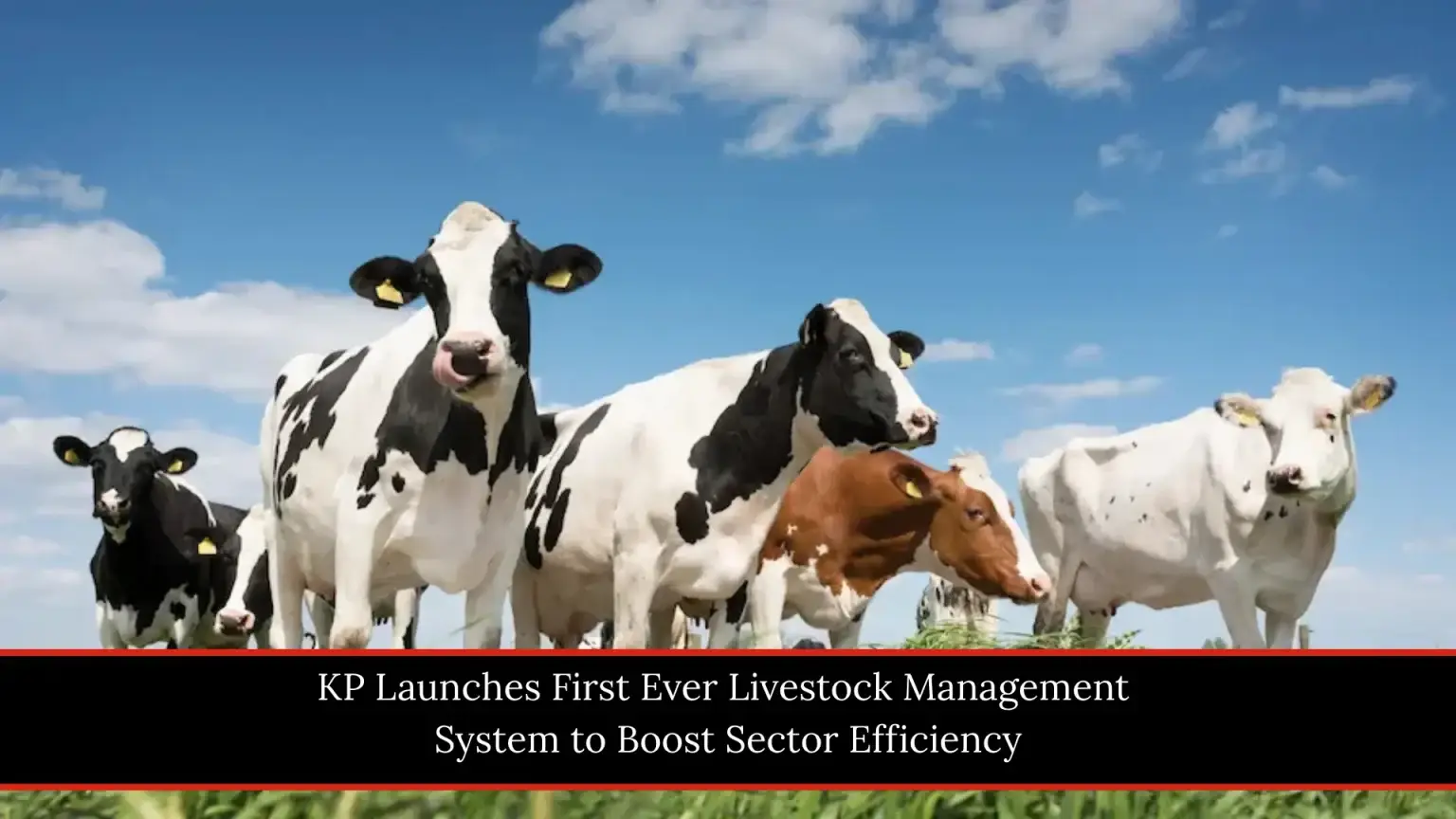
The Government of Khyber Pakhtunkhwa has launched its first-ever Livestock Management Information System (LMIS), marking a major shift toward digital governance in the agriculture and livestock sector. The system was formally inaugurated by Chief Minister Mohammad Sohail Afridi, signaling a long-term commitment to transparency, modernization, and data-driven policymaking.
This initiative is not just a software upgrade. It represents a structural reform aimed at transforming livestock services across the province.
This comprehensive guide explains:
- Why livestock matters to KP’s economy
- What problems existed in the old system
- What LMIS includes
- How it works
- Key digital modules
- Expected benefits for farmers
- Governance reforms behind the initiative
- Long-term economic impact
Why Livestock Is Critical to KP’s Economy
Livestock plays a central role in KP’s rural structure. According to official estimates shared during the launch ceremony, the livestock sector contributes nearly 25 percent to the provincial GDP and supports millions of households.
For many rural families, livestock is:
- A primary income source
- A food security buffer
- A financial safety net during crop failures
- A contributor to dairy and meat supply chains
Despite this importance, modernization in the sector remained limited for decades. Most operations relied on manual recordkeeping and fragmented service delivery.
The introduction of LMIS directly addresses this gap.

KP’s Livestock Population Snapshot
The province manages one of the largest and most diverse livestock populations in the country:
- 13.51 million cattle
- 3.94 million buffaloes
- 22.49 million goats
- 7.64 million sheep
Managing such a vast population without centralized digital monitoring made productivity optimization and disease control extremely challenging.
LMIS introduces a structured, technology-driven solution.

Problems in the Previous Livestock System
Before LMIS, livestock governance in KP faced several structural weaknesses:
- Manual data collection
- Paper-based service records
- Limited transparency
- Poor coordination between departments
- Delayed disease reporting
- Inefficient vaccination tracking
- Weak monitoring of field staff
Without reliable real-time data, policy planning often relied on outdated estimates rather than verified field information.
This limited evidence-based decision-making.

What Is the Livestock Management Information System
The Livestock Management Information System (LMIS) is a centralized digital governance platform designed to integrate livestock data, veterinary services, and policy management into a unified system.
It connects:
- Farmers
- Veterinary hospitals
- Mobile veterinary units
- Field formations
- Research institutions
- District-level authorities
The objective is to create a transparent, accountable, and data-driven livestock ecosystem.

Core Features of LMIS
Digital Livestock Census with Geo-Tagged Registry
A province-wide digital census has been launched under LMIS. The registry includes:
- Species-wise data
- Breed classification
- Age distribution
- Gender records
- Village-level mapping
- Union council and district tagging
Geo-tagging ensures accurate location tracking and prevents duplication of records.
This allows targeted policy interventions and better allocation of resources.
Digitized Service Delivery Lifecycle
LMIS records and monitors the complete lifecycle of livestock services, including:
- Vaccination campaigns
- Clinical treatment visits
- Artificial insemination procedures
- Slaughterhouse regulation
- Milk inspection
- Advisory and extension services
Each service becomes trackable, measurable, and accountable within the system.
This eliminates manual reporting discrepancies.
Real-Time Disease Surveillance System
One of the most critical modules of LMIS is its disease surveillance framework.
The system enables:
- Immediate reporting of animal diseases
- Rapid outbreak identification
- Laboratory information management
- Coordinated emergency response
Early detection reduces mortality rates and protects rural income streams.
Laboratory Information Management
LMIS integrates laboratory data directly into the central system. This ensures:
- Faster diagnostic reporting
- Accurate disease tracking
- Improved veterinary intervention
- Evidence-backed health planning
The result is improved overall livestock productivity.
Governance and Digital Reform Strategy
According to Zariful Maani, the principal architect behind LMIS, digital transformation became a priority soon after the current administration took office.
The objective was to:
- Improve oversight
- Strengthen monitoring mechanisms
- Enhance transparency
- Ensure accountability in public services
LMIS is positioned as a governance reform initiative rather than just a technical platform.
It integrates policy, services, and data into a single decision-support ecosystem.
How LMIS Benefits Farmers
For livestock owners, the system introduces practical advantages:
- Faster access to veterinary services
- Timely vaccination scheduling
- Improved disease management
- Centralized service records
- Better advisory support
- Reduced bureaucratic delays
Farmers gain structured access to services instead of navigating fragmented systems.
Economic and Strategic Impact
The broader economic implications are significant.
By improving livestock health and productivity, KP can:
- Increase dairy and meat output
- Strengthen rural income stability
- Improve food security
- Enhance export potential
- Reduce livestock mortality losses
- Optimize resource distribution
Data-driven livestock planning strengthens both micro-level farmer welfare and macro-level economic stability.
Transparency and Accountability Gains
LMIS improves governance in several ways:
- Field staff performance tracking
- Measurable service outputs
- Digital audit trails
- Reduction of manual errors
- Policy decisions backed by verified data
This reduces leakages and ensures services reach intended beneficiaries.
Long-Term Vision
The KP government envisions LMIS as a foundation for future innovations such as:
- Mobile-based farmer dashboards
- Predictive disease modeling
- Smart vaccination alerts
- Livestock insurance integration
- AI-based productivity forecasting
Digitalization creates scalability for future reforms.
Challenges and Implementation Considerations
Large-scale digital transitions require:
- Staff training
- Infrastructure strengthening
- Reliable internet connectivity in rural areas
- Continuous data updates
- Cybersecurity safeguards
Sustained political commitment will be necessary to ensure LMIS achieves its full potential.
Final Analysis
The launch of the first Livestock Management Information System in Khyber Pakhtunkhwa represents a structural transformation in how livestock governance operates.
By introducing:
- Geo-tagged livestock census
- Real-time disease monitoring
- Digitized service tracking
- Centralized data integration
- Transparent oversight mechanisms
KP is moving from a fragmented manual system toward a modern, data-driven agricultural governance model.