Kim Jong Un Statement on Iran War – North Korea’s Reaction Explained
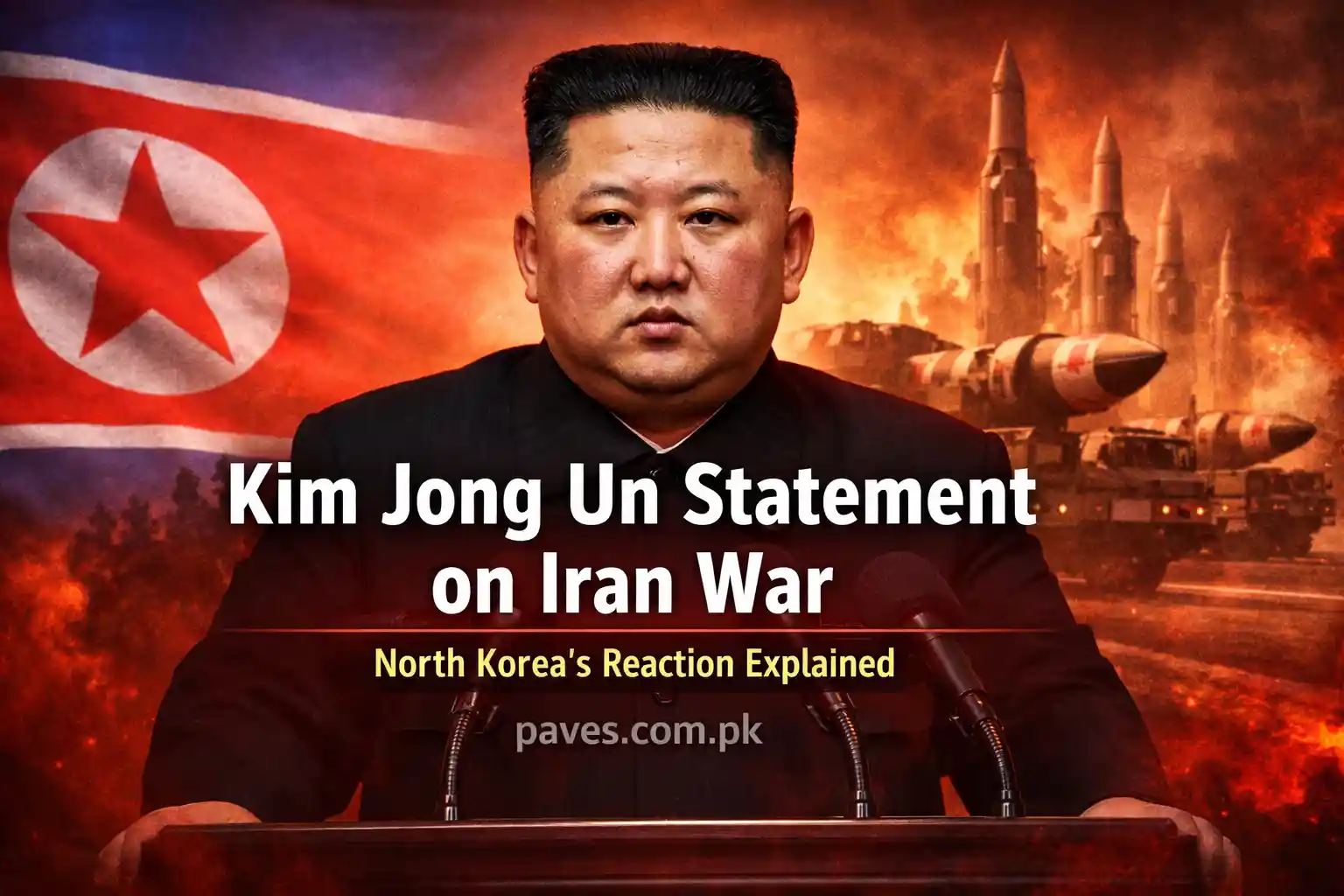
The ongoing Middle East conflict and the U.S.–Israel military campaign against Iran have triggered strong international reactions. One of the most notable responses came from North Korea, which sharply condemned the operation and warned about global instability.
Pyongyang’s official position reflects its long standing opposition to U.S. military interventions and reinforces its belief that nuclear weapons are essential for national survival. At the same time, global interest in topics like North Korea nuclear weapons, Kim Jong Un leadership, and Iran war news has surged as tensions escalate worldwide.
North Korea Condemns U.S.–Israel Strikes on Iran
North Korea’s Foreign Ministry issued a strong statement condemning the military campaign against Iran. The statement described the attacks as an illegal act of aggression and a violation of national sovereignty.
Officials in Pyongyang accused the United States and Israel of abusing military power and pursuing hegemonic ambitions. According to the statement, such actions demonstrate what North Korea called “gangster-like conduct” by powerful countries using force to achieve geopolitical goals.

Kim Jong Un and North Korea’s Strategic Position
Although Kim Jong Un did not personally issue an immediate speech about the Iran conflict, his government’s statements reflect the regime’s broader geopolitical strategy.
At recent political gatherings in Pyongyang, Kim emphasized that North Korea’s nuclear status is permanent and irreversible.
He also warned that the country would strengthen its military capabilities and remain ready for confrontation if necessary.
North Korea’s leadership views events in the Middle East as evidence that countries without nuclear deterrence are vulnerable to external military intervention.

What Did Kim Jong Un Do to North Korea
Kim Jong Un has ruled North Korea since 2011, following the death of his father Kim Jong Il.
During his leadership, he has:
- Expanded the country’s nuclear weapons program
- Developed long-range ballistic missiles
- Increased military spending
- Strengthened centralized political control
At the same time, his government has also invested in infrastructure projects in the capital Pyongyang and attempted limited economic reforms.
However, North Korea remains one of the most heavily sanctioned countries in the world due to its nuclear program.
Does North Korea Have Nuclear Weapons
Yes. North Korea is widely recognized as a nuclear-armed state.
The country conducted its first nuclear test in 2006 and has carried out several additional tests since then.
Security analysts estimate that North Korea may possess dozens of nuclear warheads and continues expanding its arsenal.
The country is also developing:
- intercontinental ballistic missiles (ICBMs)
- submarine-launched ballistic missiles
- tactical nuclear weapons
These developments are central to North Korea’s military strategy.

Does North Korea Support Israel
North Korea generally does not support Israel.
Historically, Pyongyang has maintained closer political relations with countries such as:
- Iran
- Syria
- Palestine
During the current conflict, North Korea publicly criticized Israel’s military operations against Iran and described them as violations of sovereignty.
What Do North Koreans Call Kim Jong Un
Inside North Korea, Kim Jong Un is often referred to using titles that emphasize loyalty and authority.
Common official titles include:
- Supreme Leader
- Respected Marshal
- General Secretary of the Workers’ Party
State media frequently portrays him as the central figure guiding the country’s political and military decisions.
Can a Hijabi Visit North Korea
Foreign visitors to North Korea are rare and strictly controlled, but visitors from Muslim countries are not banned.
Women who wear a hijab can technically travel to North Korea as tourists if they obtain the required visa through an authorized tour operator.
However, all visitors must follow strict regulations, including:
- government-approved itineraries
- constant supervision by official guides
- restrictions on photography and movement
Travel to North Korea remains highly regulated.
Is North Korea Safe for Tourists
Tourism in North Korea is tightly controlled but historically has been relatively safe for visitors who follow government rules.
However, several risks exist:
- strict laws governing behavior
- severe consequences for political violations
- limited access to medical services
Because of these factors, many governments advise their citizens to avoid traveling to North Korea unless necessary.
North Korea Threatens the United States
North Korea frequently issues warnings toward the United States, particularly during periods of military tension.
Recent speeches by Kim Jong Un emphasized that the country is prepared for either dialogue or confrontation depending on U.S. policy.
He also stated that North Korea could respond decisively to any perceived threat.
Such statements are often part of strategic messaging during geopolitical disputes.
Current North Korea Nuclear Strategy
North Korea’s military strategy focuses on maintaining a credible nuclear deterrent.
Key elements of this strategy include:
- developing long-range missile technology
- expanding nuclear warhead stockpiles
- improving submarine-launched missile capabilities
The leadership argues that nuclear weapons are necessary to prevent foreign military intervention.
Iran War and Its Impact on Global Politics
The conflict involving Iran, the United States, and Israel has created a ripple effect across international politics.
Countries such as North Korea have used the situation to reinforce their own security arguments.
In particular, the conflict is being cited by analysts as an example of why nuclear deterrence remains central to national defense strategies in certain states.
Are We Heading Toward a Larger Global Conflict
Despite rising tensions, most analysts believe the current situation remains a regional conflict rather than a global war.
However, several factors continue to raise concerns:
- military escalation in the Middle East
- missile exchanges between regional powers
- nuclear programs in multiple countries
International diplomacy continues to focus on preventing the conflict from expanding further.
Final Analysis of the Situation
North Korea’s reaction to the Iran conflict highlights how global security crises can influence international relations far beyond the immediate region.
Pyongyang’s strong condemnation of the U.S.–Israel military campaign reflects both its political alliances and its strategic messaging about nuclear deterrence.
At the same time, discussions about North Korea’s nuclear weapons, Iran’s nuclear program, and regional conflicts continue to dominate global security debates in 2026.