Is Iran Second Islamic Nuclear Power Now – Explore Full Reality Behind This Shocking Alerts
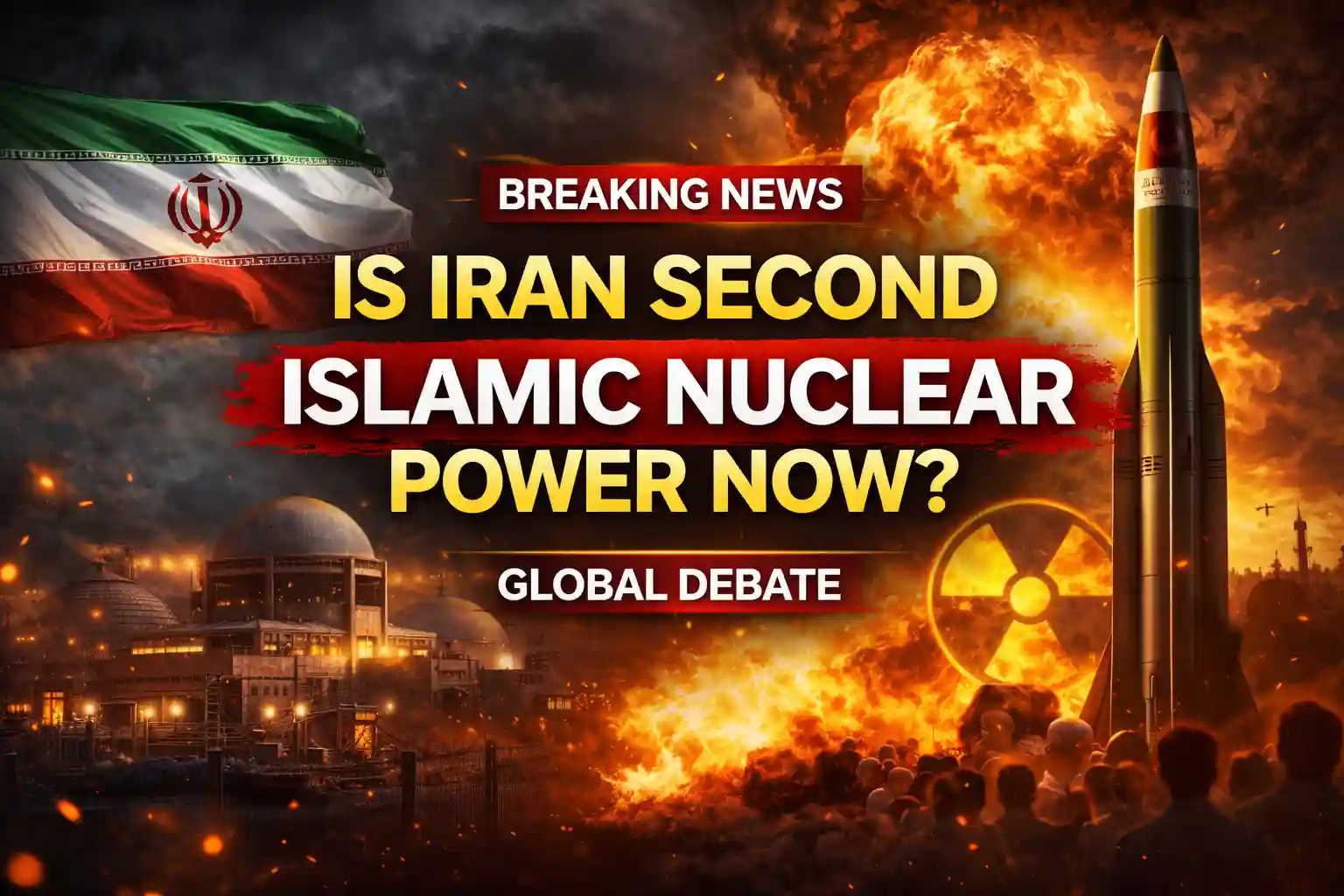
In recent months, global media and social platforms have been filled with dramatic claims suggesting that Iran has become the second Islamic nuclear power after Pakistan. These claims have raised serious questions across the world, especially in the Middle East and South Asia. Many people want to know the truth behind these alerts and whether Iran has officially developed nuclear weapons.
The reality, however, is far more complex. Iran has an advanced nuclear program and significant uranium enrichment capabilities, but international experts and nuclear watchdogs say the country has not officially developed or tested a nuclear weapon. Understanding the full reality requires examining Iran’s nuclear history, international monitoring, and the geopolitical tensions surrounding its nuclear ambitions.
This article explores the real status of Iran’s nuclear program, its nuclear capabilities, comparisons with Pakistan, and whether Iran can truly be considered the second Islamic nuclear power.
Iran Nuclear Program Overview and Background
Iran’s nuclear program began several decades ago with the goal of developing civilian nuclear energy and scientific research. The country operates nuclear facilities for power generation and uranium enrichment.
Iran currently has a nuclear power reactor at Bushehr and maintains multiple enrichment sites such as Natanz and Fordow, where uranium is processed using advanced centrifuges. These facilities are capable of enriching uranium for nuclear fuel used in energy production.
Iran is also a signatory to the Nuclear Non-Proliferation Treaty (NPT). Under this agreement, countries are allowed to develop nuclear technology for peaceful purposes but must not develop nuclear weapons.
Iranian officials repeatedly state that their nuclear activities are meant for energy production, medical research, and industrial development, not for building nuclear bombs.
Is Iran the Second Islamic Nuclear Power?
The simple and factual answer is No. Iran is not currently recognized as a nuclear weapons state.
Globally, there are only nine countries that possess nuclear weapons, including the United States, Russia, China, France, the United Kingdom, India, Pakistan, Israel, and North Korea.
Among Muslim-majority nations, Pakistan remains the only country with confirmed nuclear weapons. Pakistan conducted nuclear tests in 1998 and currently maintains an estimated nuclear arsenal of around 170 warheads.
Iran, by contrast, has not conducted nuclear weapons tests and has not officially declared possession of nuclear bombs.
Therefore, claims that Iran has already become the second Islamic nuclear power are not supported by verified evidence.

Iran’s Uranium Enrichment and Nuclear Capabilities
One of the main reasons Iran’s nuclear program is frequently discussed is its uranium enrichment capability.
Iran has developed advanced centrifuge technology capable of enriching uranium to high levels. Reports indicate that Iran has produced uranium enriched up to 60 percent purity, which is close to weapons-grade material.
However, weapons-grade uranium requires enrichment to about 90 percent purity. Even if a country has highly enriched uranium, building a nuclear weapon still requires several additional steps such as:
- Warhead design
- Nuclear detonation mechanisms
- Miniaturization technology
- Reliable delivery systems
Experts say that Iran has not demonstrated these final steps publicly, which means it cannot yet be classified as a nuclear weapons state.
Why Iran’s Nuclear Program Creates Global Concern
Iran’s nuclear activities have been controversial for many years. Several factors contribute to global concern.
Uranium Enrichment Capability
Iran is the only non-nuclear-weapon state known to produce uranium enriched up to 60 percent purity, which raises concerns among international experts.
Potential Weapon Capability
Many analysts believe Iran now has the technical knowledge to potentially build nuclear weapons in the future if it decides to do so.
Regional Security Issues
Countries such as Israel and Saudi Arabia worry that a nuclear-armed Iran could significantly change the balance of power in the Middle East.

Iran vs Pakistan Nuclear Capability Comparison
Understanding whether Iran could become the second Islamic nuclear power requires comparing its capabilities with Pakistan.
| Factor | Pakistan | Iran |
|---|---|---|
| Nuclear Weapons | Confirmed | Not confirmed |
| Nuclear Tests | Yes (1998) | None |
| Nuclear Arsenal | About 170 warheads | Unknown |
| Global Status | Recognized nuclear power | Nuclear threshold state |
Pakistan’s nuclear weapons program is well established and includes tested warheads and delivery systems. Iran’s program is mainly focused on nuclear technology and enrichment capability.

Could Iran Become a Nuclear Power in the Future?
Many experts consider Iran a nuclear threshold state. This means the country has the technology and knowledge required to build nuclear weapons relatively quickly if it decides to do so.
According to international assessments, Iran’s nuclear advances position it to develop nuclear weapons in the future if political leadership chooses that path.
However, the Iranian government continues to claim that its nuclear program is peaceful and not intended for military purposes.
Diplomatic negotiations and international monitoring will likely determine whether Iran eventually becomes a nuclear weapons state.
Why Viral Claims About Iran Nuclear Power Are Misleading
Social media often spreads dramatic headlines such as “Iran has become the second Islamic nuclear power.” These claims are usually based on incomplete information.
Several key facts are often ignored:
- Iran has not conducted nuclear weapons tests
- Iran has not officially declared nuclear weapons
- International agencies have not confirmed a nuclear arsenal
- Nuclear weapon development requires complex engineering and testing
Because of these factors, experts say Iran should not currently be considered a nuclear power.
The Future of Iran’s Nuclear Program
The future of Iran’s nuclear program depends largely on international diplomacy and regional security dynamics.
Possible future scenarios include:
- New international nuclear agreements
- Expanded international inspections
- Continued economic sanctions
- Escalating regional tensions
If diplomatic negotiations succeed, Iran’s nuclear program may remain focused on peaceful energy development.
However, if geopolitical tensions continue to rise, the nuclear issue could remain one of the most significant global security challenges.
Conclusion
The claim that Iran has become the second Islamic nuclear power is not accurate. While Iran has advanced nuclear technology and significant uranium enrichment capabilities, there is no confirmed evidence that the country possesses nuclear weapons.
Pakistan remains the only Muslim-majority country with a verified nuclear arsenal. Iran is better described as a nuclear threshold state, meaning it has the potential to develop nuclear weapons in the future but has not officially done so.
Understanding the real facts behind these claims is essential, especially in a world where misinformation can spread quickly. The future of Iran’s nuclear program will ultimately depend on diplomacy, international monitoring, and geopolitical developments.
FAQs Is Iran Second Islamic Nuclear Power Now
Is Iran officially a nuclear weapons country?
No. Iran does not currently possess confirmed nuclear weapons according to international assessments.
Which Islamic country has nuclear weapons?
Pakistan is the only Muslim-majority country with confirmed nuclear weapons.
Does Iran have enriched uranium?
Yes. Iran has produced uranium enriched to high levels, including around 60 percent purity.
Can Iran build nuclear weapons in the future?
Experts believe Iran has the technical capability to potentially develop nuclear weapons if it decides to do so.
Why is Iran’s nuclear program controversial?
Because uranium enrichment technology used for energy can also potentially be used to create nuclear weapons.