Iran War Latest News Today | Missiles, Drones & Airstrikes
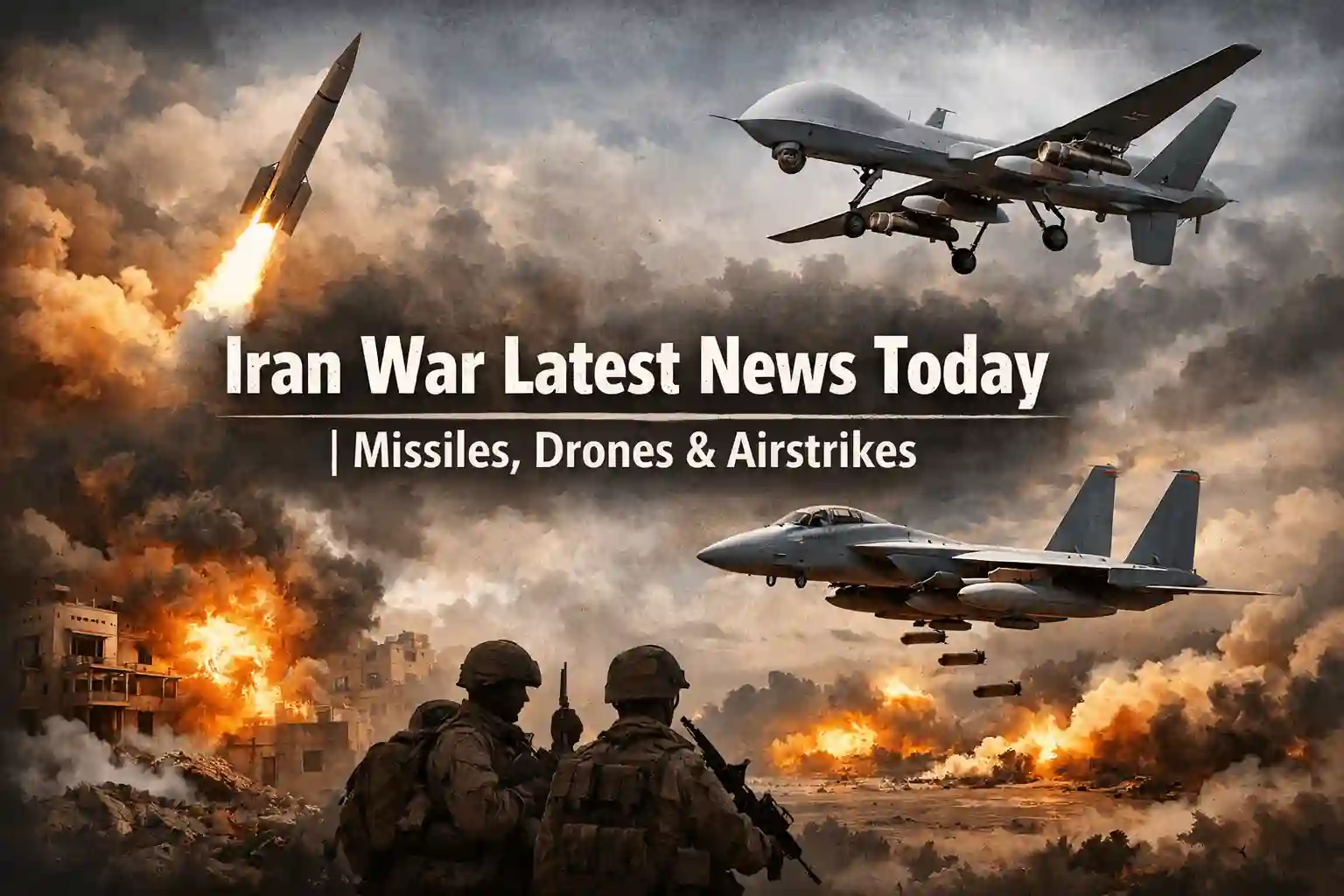
The Iran war continues to dominate global headlines as missile attacks, drone strikes, and air operations increase across the Middle East. Tensions between Iran, Israel, and Western allies have reached a dangerous level, raising concerns about a wider regional conflict. Military bases, strategic infrastructure, and energy facilities have become major targets in this evolving war situation.
This article provides the latest updates on the Iran war, focusing on missiles, drones, and airstrikes, along with the regional and global impact of the ongoing conflict.
Missiles in the Iran War: Ballistic and Precision Attacks
Missile strikes have become a key feature of the current Iran war escalation. Iran has reportedly launched multiple ballistic missiles targeting military installations and strategic facilities in the region. These missiles are designed for long range attacks and high impact damage.
Key Points About Missile Strikes:
• Use of medium range ballistic missiles
• Targeting of military airbases
• Attacks on energy infrastructure
• Increased missile interception by air defense systems
Air defense systems in neighboring countries have intercepted several incoming missiles. However, some strikes have caused damage to infrastructure and raised security concerns across the Gulf region.
Missile warfare increases the risk of wider conflict because it allows attacks from long distances, making retaliation faster and more intense.

Drone Warfare: How Iran Uses Drones in Modern Conflict
Drone attacks are one of the most significant developments in the Iran war. Iran has invested heavily in unmanned aerial vehicles, including loitering drones and attack drones.
These drones are used for:
• Surveillance and intelligence gathering
• Target identification
• Precision strikes
• Saturation attacks to overwhelm defenses
Drone warfare is effective because it is relatively low cost compared to traditional fighter jets. Drones can be launched in large numbers, increasing the chance of penetrating air defense systems.
Military experts say that drone swarms are changing modern warfare. They create psychological pressure and force countries to keep air defense systems active at all times.
Airstrikes and Counter Attacks
Airstrikes by opposing forces have intensified in response to missile and drone attacks. Fighter jets have reportedly targeted military compounds, weapons storage facilities, and command centers.
Airstrikes aim to:
• Destroy missile launch sites
• Target drone production facilities
• Disrupt military communication networks
• Weaken strategic military capabilities
The increase in air operations has raised fears of direct confrontation between major regional powers. Each new airstrike increases the possibility of further retaliation.

Impact on Middle East Stability
The Iran war is not limited to one country. It has affected multiple nations in the Middle East. Airspace restrictions, emergency alerts, and increased military presence have become common in several Gulf countries.
Regional Effects Include:
• Heightened security in Gulf states
• Temporary closure of airspace
• Disruption of oil and gas supply routes
• Increased military deployments
The Strait of Hormuz remains a critical concern. Any disruption in this region can impact global oil prices because a large percentage of the world’s oil supply passes through this route.
Energy markets react quickly to war developments. Oil prices often rise sharply when missile or drone attacks target energy infrastructure.

Global Economic Consequences of the Iran War
The Iran war does not only affect the Middle East. It also impacts global markets, trade routes, and energy supplies.
Economic Impact:
• Oil price volatility
• Gas supply uncertainty
• Shipping route risks
• Stock market fluctuations
Countries that rely on Middle Eastern oil are closely monitoring the situation. If the conflict expands further, energy costs may increase worldwide.
Global investors often shift toward safer assets during times of geopolitical tension. This leads to changes in currency values and commodity prices.
Military Strategy: Why Missiles and Drones Are Important
Modern warfare increasingly relies on missiles and drones because they reduce direct human risk while maintaining offensive capability.
Missiles provide:
• Long range strike capability
• High explosive impact
• Strategic deterrence
Drones provide:
• Cost effective attack options
• Flexible deployment
• Surveillance and reconnaissance
The combination of missile strikes and drone attacks makes the Iran war more complex and harder to predict.
Humanitarian Concerns and Civilian Safety
Whenever missile and airstrike activity increases, civilian safety becomes a major concern. Residents in affected areas often experience:
• Emergency sirens
• Temporary evacuations
• Power disruptions
• Infrastructure damage
Humanitarian organizations monitor the situation closely. Access to essential services such as electricity, water, and healthcare may be affected during prolonged conflict.
The international community continues to call for de escalation to prevent further harm to civilians.
Diplomatic Efforts and De Escalation Possibilities
Despite military escalation, diplomatic efforts continue behind the scenes. Several global powers are encouraging dialogue to reduce tensions.
Possible diplomatic outcomes include:
• Ceasefire agreements
• Limited military engagement zones
• Mediation talks
• Sanctions adjustments
However, progress remains uncertain. Each new missile or drone strike complicates peace negotiations.
What Could Happen Next in the Iran War?
The future of the Iran war depends on multiple factors:
• Military decisions by regional powers
• International diplomatic pressure
• Economic consequences
• Internal political developments
If missile and drone attacks continue at the current level, regional instability may increase. However, if diplomatic channels succeed, tensions could gradually decrease.
Security analysts believe the coming weeks will be critical in determining whether the conflict expands or stabilizes.
Frequently Asked Questions (FAQs)
What is happening in the Iran war today?
Missile strikes, drone attacks, and airstrikes have intensified. Regional military forces remain on high alert as tensions continue.
Why are drones being used heavily in the Iran war?
Drones are cost effective, difficult to detect, and capable of precision targeting. They allow large scale attacks without risking pilot lives.
Are missile attacks increasing in the Middle East?
Yes. Missile activity has increased as both sides attempt to target strategic military and infrastructure locations.
How does the Iran war affect oil prices?
Any disruption near major oil routes, especially the Strait of Hormuz, can cause global oil prices to rise due to supply concerns.
Is there any chance of peace talks?
Diplomatic efforts are ongoing, but no confirmed ceasefire agreement has been announced. The situation remains tense.
Which countries are most affected by the conflict?
Countries in the Middle East region are directly affected, especially those near strategic military and energy locations.