Iran Earthquake Update – Was It Linked to Iran Nuclear Test Today?
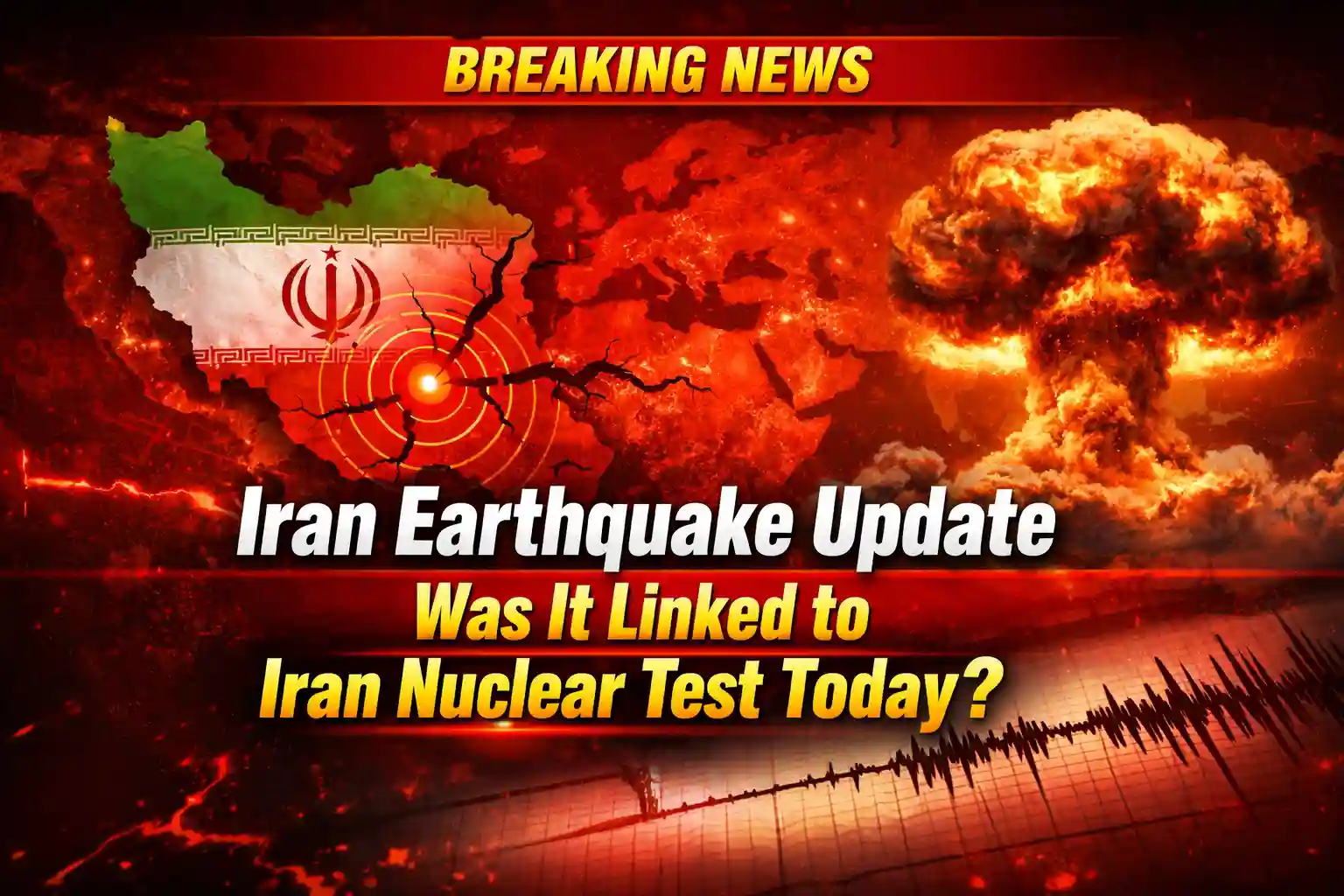
The recent Iran earthquake today has sparked global attention and widespread debate online. Many people are asking whether the seismic event was a natural earthquake or if it could be connected to a possible Iran nuclear test. Social media platforms quickly filled with speculation, raising questions about the cause of the tremor and whether it might be related to Iran’s nuclear program.
However, early analysis from seismic experts indicates that the earthquake was most likely a natural geological event, not an underground nuclear explosion. Understanding the difference between natural earthquakes and nuclear tests requires examining seismic data, geological conditions, and the monitoring systems used by international agencies.
This article provides a complete update about the Iran earthquake, nuclear test rumors, expert analysis, and the geological reasons behind earthquakes in Iran.
Iran Earthquake Today: Latest Update
A moderate earthquake was recorded in southern Iran, specifically in the Fars province region. The tremor had a magnitude of approximately 4.3, which is considered a moderate seismic event.
Local authorities reported that the earthquake was felt in several nearby areas. Fortunately, early reports suggested that no major casualties or widespread structural damage occurred. Emergency response teams monitored the situation to ensure public safety.
Iran frequently experiences earthquakes due to its geographical location. The country sits on several active tectonic fault lines, which makes seismic activity relatively common. Because of this geological environment, earthquakes of varying magnitudes occur regularly across different parts of the country.
Although the earthquake itself was not extremely strong, the timing of the event and geopolitical tensions in the region led many people to speculate about possible alternative causes.

Iran Nuclear Test Rumors After the Earthquake
Shortly after the earthquake occurred, rumors began circulating online suggesting that the seismic event might have been caused by a secret underground nuclear test conducted by Iran.
These claims spread quickly on social media platforms and discussion forums. Some users speculated that the earthquake might not have been natural but instead caused by a nuclear detonation underground.
However, experts have emphasized that there is no verified evidence linking the recent earthquake to a nuclear test. Seismologists analyze earthquake signals carefully, and the seismic patterns recorded during this event appear consistent with natural tectonic movement.
Whenever earthquakes occur in politically sensitive regions, speculation about nuclear tests often emerges. But scientific analysis is usually able to determine the real cause within a short period of time.

Why Earthquakes Sometimes Lead to Nuclear Test Speculation
Earthquakes occasionally trigger speculation about nuclear tests for several reasons.
Similar Seismic Signals
Both earthquakes and underground nuclear explosions generate seismic waves that travel through the Earth. These waves can be detected by seismographs worldwide. To people who are unfamiliar with seismic science, the signals may appear similar.
Political Tensions
Iran’s nuclear program has been a topic of global discussion for many years. Because of this, any unusual seismic activity in the region can quickly lead to speculation.
Spread of Online Misinformation
In the age of social media, rumors can spread extremely fast. When breaking news events occur, unverified claims often circulate before experts release confirmed information.
Historical Nuclear Test Examples
In the past, countries such as North Korea conducted underground nuclear tests that produced earthquake-like seismic signals. Because of these events, some people assume that similar tremors elsewhere might also be nuclear tests.
Despite these assumptions, scientific analysis usually reveals whether a seismic event was natural or artificial.

What Experts Say About Iran Nuclear Test Claims
Seismologists use advanced monitoring systems to analyze earthquakes and determine their origin. These experts examine several important factors when studying a seismic event.
One of the key indicators is the depth of the seismic activity. Natural earthquakes usually occur along fault lines deep within the Earth’s crust, while nuclear explosions typically occur closer to the surface.
Another factor is the seismic wave pattern. Natural earthquakes produce complex wave signals that reflect movement along geological faults. Nuclear explosions tend to produce more uniform wave patterns.
Based on early seismic data, experts believe the recent Iran earthquake shows characteristics consistent with natural tectonic activity, not a nuclear detonation.
International monitoring networks constantly observe seismic events around the world. These systems are designed to detect even small underground explosions, making it extremely difficult to conceal a nuclear test.

Why Earthquakes Are Common in Iran
Iran is considered one of the most earthquake-prone countries in the world due to its location on major tectonic boundaries.
The country lies at the meeting point of the Arabian tectonic plate and the Eurasian tectonic plate. As these massive plates push against each other, stress builds up within the Earth’s crust. When this stress is released, it results in earthquakes.
Because the tectonic plates are constantly moving, Iran experiences frequent seismic activity. Many earthquakes are small and cause little damage, but some can be extremely destructive.
Throughout history, several major earthquakes have struck Iran, causing significant loss of life and damage to infrastructure.
Historical Earthquakes in Iran
Iran has experienced many powerful earthquakes over the centuries. Some of the most notable events include:
Damghan Earthquake
One of the deadliest earthquakes in recorded history occurred in Damghan in the year 856. Historical records indicate that hundreds of thousands of people lost their lives during this devastating disaster.
Tabriz Earthquake
Another major earthquake struck the city of Tabriz in 1641, causing widespread destruction across the region.
Qir Earthquake
In 1972, the city of Qir experienced a powerful earthquake that killed thousands of people and destroyed many buildings.
These events highlight the serious seismic risks faced by Iran due to its geological location.
How Scientists Detect Nuclear Tests
Modern technology allows scientists to detect nuclear explosions anywhere in the world. International monitoring networks use multiple methods to identify nuclear tests.
Seismic Monitoring
Sensitive instruments called seismometers detect vibrations in the Earth. These devices can identify underground explosions and differentiate them from natural earthquakes.
Atmospheric Monitoring
Special sensors can detect sound waves produced by explosions in the atmosphere.
Underwater Detection
Hydroacoustic sensors are used to monitor explosions that occur underwater.
Radioactive Particle Detection
Some monitoring systems search for radioactive particles that may be released during nuclear explosions.
Because of these advanced detection methods, it is extremely difficult for any country to secretly conduct a nuclear test without being detected.
Current Situation: What We Know So Far
Based on currently available information, the recent Iran earthquake appears to be a natural seismic event rather than a nuclear explosion.
The earthquake occurred in a region known for tectonic activity, and its seismic characteristics match those of a typical earthquake.
Authorities and scientists continue to monitor seismic data to ensure accurate reporting. So far, no credible evidence suggests any connection between the earthquake and nuclear testing.
Conclusion
The Iran earthquake today has generated significant discussion and speculation, particularly regarding possible links to an Iran nuclear test. However, current scientific evidence strongly indicates that the earthquake was caused by natural tectonic movements.
Iran’s geological location makes earthquakes relatively common, and moderate tremors occur regularly throughout the country. While geopolitical tensions may lead to speculation about nuclear activity, experts rely on detailed seismic analysis to determine the true cause of such events.
At present, there is no confirmed link between the earthquake and any nuclear testing activity. As more information becomes available, scientists and authorities will continue to provide updates based on verified data.
FAQs Iran Earthquake Update
Was the Iran earthquake linked to a nuclear test?
No confirmed evidence suggests that the recent Iran earthquake was caused by a nuclear test. Experts believe it was a natural seismic event.
What was the magnitude of the Iran earthquake today?
The earthquake recorded in southern Iran had a magnitude of approximately 4.3.
Why do earthquakes sometimes trigger nuclear test rumors?
Both earthquakes and underground nuclear explosions produce seismic waves, which can cause confusion and speculation among the public.
Is Iran prone to earthquakes?
Yes. Iran lies along major tectonic plate boundaries, making it one of the most earthquake-prone regions in the world.
Can scientists detect secret nuclear tests?
Yes. International monitoring systems use seismic sensors, atmospheric detectors, and radioactive particle monitoring to identify nuclear explosions.