
Important Updates: Motorway M2 Now Open for Public Traffic
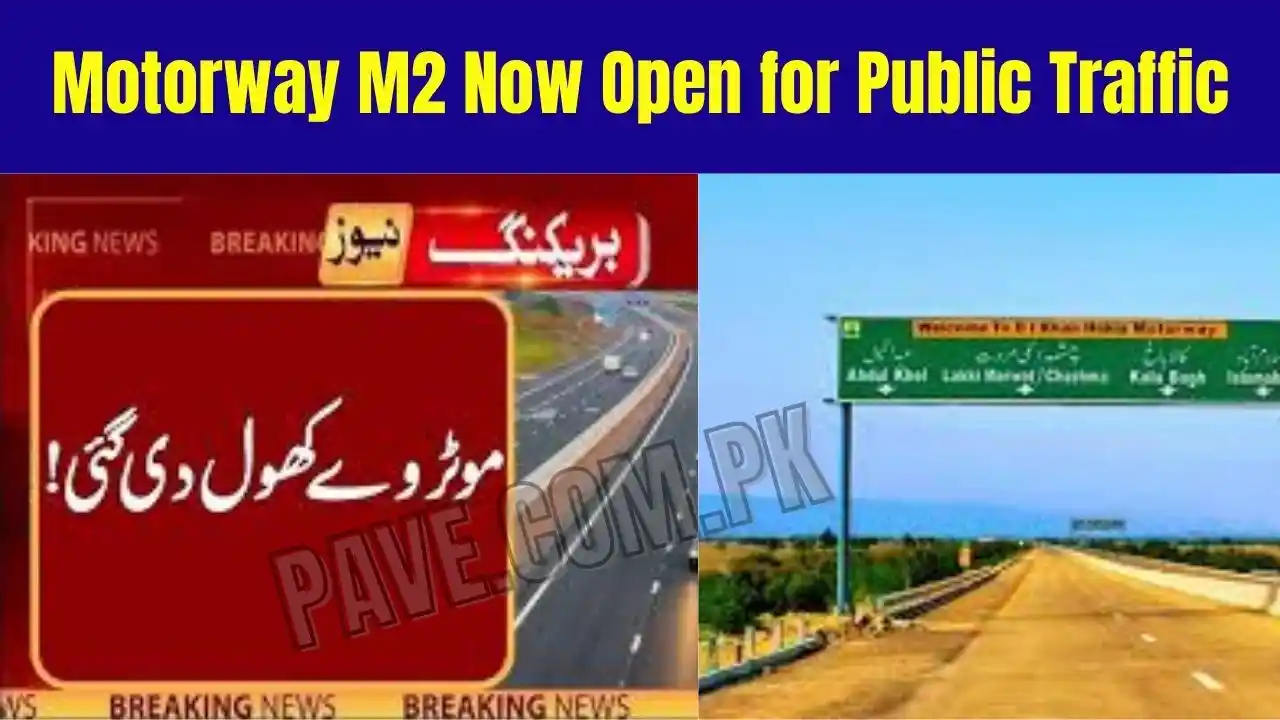
The National Highways and Motorway Police (NHMP) has officially reopened Motorway M2 for all types of public traffic after a temporary closure caused by adverse weather and low visibility conditions. The reopening brings major relief to thousands of daily commuters and transporters who rely on this critical route connecting Lahore and Islamabad.Motorway M2 Now Open for Public Traffic
Reason Behind the Closure
Motorway M2 was closed earlier due to dense fog/smog buildup and poor visibility, which made driving conditions hazardous. In a precautionary move, authorities restricted vehicle movement to prevent road accidents and ensure passenger safety.
The closure affected:
- Intercity bus operations
- Private vehicle owners
- Goods transport moving between Punjab’s major commercial hubs

Traffic Fully Restored — With Safety Guidelines
Following improved weather conditions and visibility clearance, the NHMP has now fully restored traffic flow on the motorway. However, travelers have been advised to exercise caution as weather conditions may change unexpectedly.
Read Also:Islamabad Affordable Housing Project 2025 – Complete Guide
Motorway Police Advisory for Safe Travel
- Keep headlights and fog lights ON at all times
- Maintain safe distance between vehicles
- Avoid unnecessary overtaking or speeding
- Dial Motorway Helpline 130 in case of emergency assistance

Importance of Motorway M2 in National Connectivity
Motorway M2 is not just a road — it is one of Pakistan’s most strategic transport arteries, linking the capital Islamabad with the provincial capital Lahore. It plays a crucial role in:
- Passenger movement
- Commercial logistics and goods transportation
- Tourism and inter-city business operations
Any disruption affects both public mobility and the national supply chain, making today’s reopening an important development.
The National Highways and Motorway Police (NHMP) has announced the full reopening of Motorway M2, restoring traffic between Lahore and Islamabad after a precautionary closure due to low visibility caused by dense fog and smog. The decision comes as a major relief for daily commuters, transporters, and logistics operators who depend on this critical route.

Why Was Motorway M2 Closed?
The motorway was temporarily shut down after visibility dropped to dangerous levels, increasing the risk of road accidents. To ensure public safety, authorities halted traffic movement in certain sections of the motorway.
The closure impacted:
- 🚍 Intercity buses and passenger coaches
- 🚗 Private vehicles and daily travelers
- 🚚 Goods transport and freight carriers

Traffic Resumes — But With Safety Precautions
With weather conditions improving, NHMP has fully restored traffic flow on Motorway M2. However, officials have urged motorists to drive responsibly and remain alert to sudden weather changes.
NHMP Safety Recommendations
- ✅ Use fog lights and low-beam headlights at all times
- ✅ Maintain a safe distance between vehicles
- ✅ Avoid unnecessary overtaking or speeding
- ✅ In emergencies, call Motorway Helpline 130
Why Motorway M2 Matters for Pakistan
Motorway M2 is more than just a highway — it is a lifeline for national connectivity, linking Islamabad with Lahore, Punjab’s economic hub. It supports:
- 🧍 Passenger travel and business commutes
- 📦 Logistics and supply chain operations
- 🕌 Tourism and inter-city travel
Any disruption directly affects public mobility and economic activity, which is why the reopening is being welcomed nationwide.
The National Highways and Motorway Police (NHMP) has confirmed that the motorway has been reopened for all types of traffic after being temporarily closed due to poor visibility and adverse weather conditions.
The closure, enforced as a safety measure, had caused delays for daily commuters, intercity buses, and freight transport vehicles. With weather conditions now improved, vehicle movement has been fully restored, bringing relief to thousands of travelers.
Reason for the Closure
The motorway was shut down earlier due to:
- Dense fog or smog buildup
- Low visibility, increasing the risk of accidents
- Public safety concerns raised by traffic authorities
To prevent collisions and pile-ups, NHMP temporarily halted traffic across multiple sections.
Motorway Reopened With Caution
Although the motorway is now operational, drivers are advised to remain alert, as weather conditions may change unexpectedly.
Read Also: Dalda Foundation Scholarship 2025–2026 – Apply Online Before
Official Safety Instructions
- Keep fog lights and headlights ON while driving
- Avoid speeding and overtaking in low visibility areas
- Maintain safe distance between vehicles
- For help, dial Motorway Helpline 130
Importance of Motorway Connectivity
The motorway network is a critical transportation route, supporting:
- Passenger movement between major cities
- Goods transportation and supply chain operations
- Tourism and inter-district travel
Any closure affects business, logistics, and public mobility, which makes today’s reopening a major development.
The National Highways and Motorway Police (NHMP) is one of Pakistan’s most respected law enforcement bodies, known for its discipline, efficiency, and public service. From managing high-speed corridors to ensuring road safety, NHMP has set a benchmark for policing standards in the country.
Below are the answers to some of the most commonly asked questions about NHMP.
Who Is the Current IG of National Highways and Motorway Police (NHMP)?
As of the latest update, the Inspector General (IG) of National Highways and Motorway Police is Dr. Muhammad Kaleem Imam (or replace with the most recent IG if updated — let me know if you want real-time confirmation via web check!).
The IG is responsible for:
- Overseeing operational control of all motorways and national highways under NHMP jurisdiction
- Implementing traffic safety policies
- Managing public awareness campaigns on road safety
What Is the Status of Motorways in Pakistan?
Pakistan currently has an expanding motorway network, managed and patrolled by NHMP. The operational motorways include:
| Motorway Route | Route Description | Status |
|---|---|---|
| M-1 | Islamabad to Peshawar | Fully Operational |
| M-2 | Lahore to Islamabad | Fully Operational |
| M-3 | Lahore to Abdul Hakeem | Operational |
| M-4 | Faisalabad to Multan | Operational |
| M-5 | Multan to Sukkur | Operational |
| M-6 | Sukkur to Hyderabad | Under Construction |
| M-8 & M-9 | Coastal & Karachi Links | Partially Operational |
Pakistan’s motorway network is rapidly expanding, and NHMP is taking on more responsibility for traffic regulation and safety enforcement across newly developed routes.
What Is the Meaning of NHMP?
NHMP stands for “National Highways and Motorway Police.”
It is a federal police organization responsible for:
- Enforcing traffic laws on national highways and motorways
- Assisting travelers in emergencies
- Providing road safety education and rescue services
- Monitoring vehicle speed, lane discipline, and overload control
Read Also: Breaking News: Punjab Govt Extends Honhaar Scholarship Deadline 2025 – Complete
NHMP is often considered one of the most professional and corruption-free departments in Pakistan.
When Did Pakistan Motorway Police Convert into National Highways and Motorway Police?
The Pakistan Motorway Police (PMP) was initially established in 1997 to manage the M-2 Islamabad–Lahore Motorway.
Later, as more highways were added under federal jurisdiction, the department was officially renamed to NHMP (National Highways and Motorway Police) in 2001 to reflect its expanded role over both highways and motorways.
Motorway M2 Now Open for Public Traffic Conclusion
The National Highways and Motorway Police (NHMP) has evolved from a small motorway-focused unit into one of Pakistan’s most disciplined and technologically upgraded policing institutions. From traffic enforcement to public assistance, road safety education, helpline services, and rescue operations, NHMP continues to set a high standard for law enforcement agencies nationwide. With the rapid expansion of Pakistan’s motorway network and the construction of new routes under CPEC and national infrastructure plans, the role of NHMP has never been more important. Strong leadership, modern training, and public trust make NHMP not only a guardian of highways but also a symbol of responsible policing in Pakistan’s future transport system.
As Pakistan continues to progress, the NHMP stands as a shining example of how policing should truly serve the public. It is one of the few departments where travelers feel protected rather than burdened. Their swift response teams, safety campaigns, and polite enforcement style have earned them nationwide respect. The success of NHMP also proves that with training, transparency, and accountability, any department can transform into a model institution. With growing road infrastructure and millions of passengers traveling daily, NHMP’s commitment to safety and professionalism will remain central to Pakistan’s mobility and economic growth.