How is North Korea Reacting to U.S. Attack on Iran – Kim Jong-un Visits Factory After Iran Strike
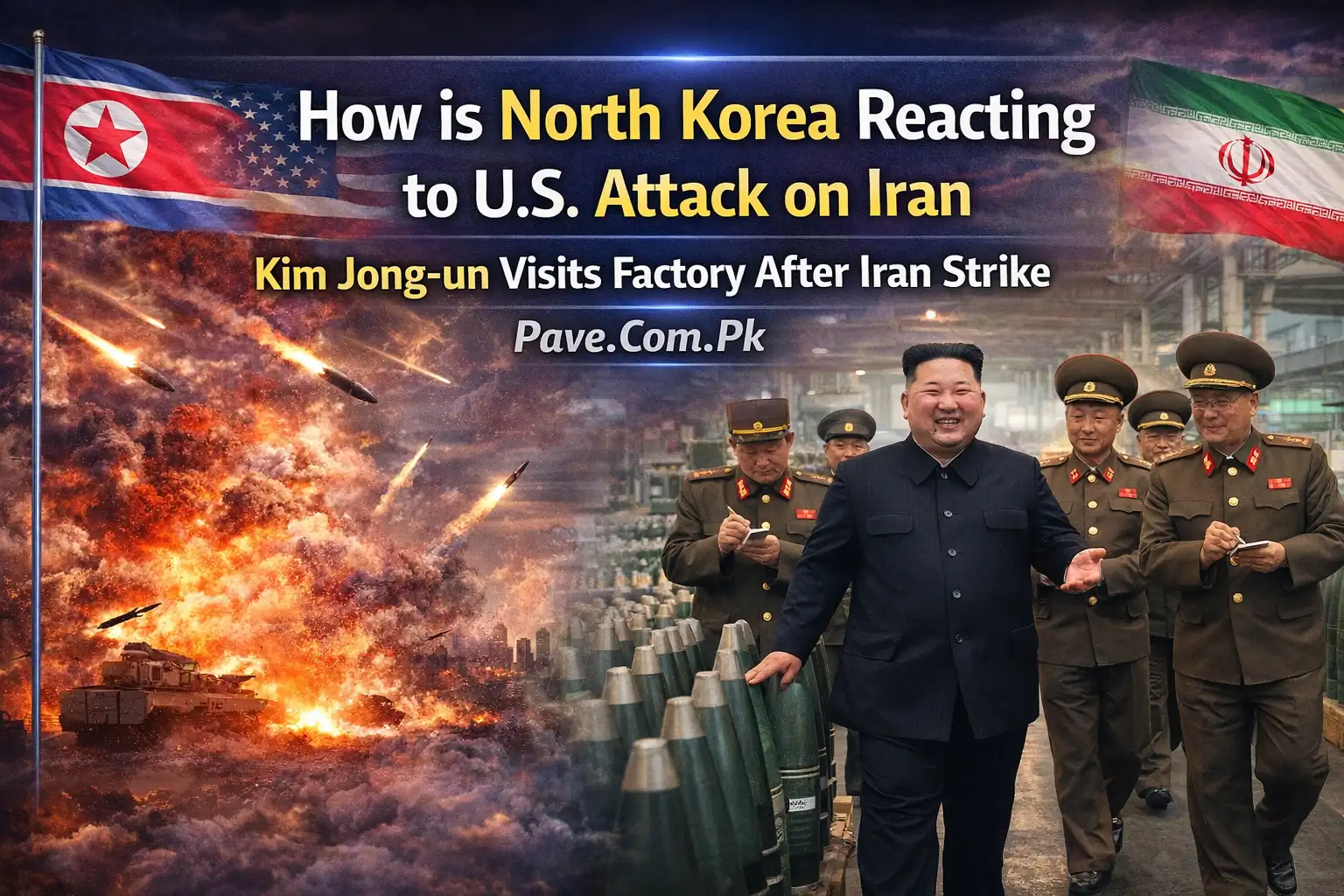
Global tensions have increased after the United States and Israel launched military strikes on Iran, leading to reactions from several countries around the world. One of the most closely watched responses came from North Korea, a country that has historically had tense relations with the United States.
Many people are searching online for questions like:
- How is North Korea reacting to the US attack on Iran?
- What did Kim Jong-un say about the Iran strike?
- Which factory did Kim Jong-un visit after the Iran attack?
North Korea’s leadership quickly responded to the events in the Middle East. At the same time, North Korean leader Kim Jong-un made a public visit to a factory, which analysts believe sends a strong political message.
This article explains North Korea’s reaction, Kim Jong-un’s factory visit, and what it could mean for global politics.
Background: The U.S. Attack on Iran
The recent U.S. and Israeli military strikes on Iran targeted important military and political locations.
The attacks caused serious damage and increased tensions across the Middle East. Iran responded with missile and drone attacks on U.S. bases and regional targets, raising fears of a wider regional war.
The situation has attracted attention worldwide because it could influence global security, oil markets, and international alliances.
Countries including Russia, China, and North Korea have been carefully observing the developments.
North Korea Condemns U.S. and Israeli Attacks
North Korea strongly criticized the attacks on Iran. Officials in Pyongyang described the strikes as an “illegal act of aggression” and a violation of Iran’s sovereignty.
According to North Korea’s foreign ministry:
- The U.S. and Israel abused military power.
- The attack violated international law.
- The actions increased instability in the Middle East.
North Korea also warned that such military actions could increase global conflict and undermine peace efforts.
This statement reflects North Korea’s long-standing opposition to U.S. military interventions abroad.
Kim Jong-un Visits Factory After Iran Strike
Shortly after the attacks on Iran, North Korean leader Kim Jong-un made a public appearance at a factory.
Kim visited the Sangwon Cement Complex in North Hwanghae Province, where he met workers and praised their production efforts.
During the visit, Kim:
- Inspected industrial facilities
- Encouraged factory workers
- Highlighted economic development goals
State media reported that Kim praised the workers for their dedication and contribution to the country’s economy
Why Kim Jong-un Visited a Factory
Experts believe the factory visit was not random.
Analysts say the visit was designed to send several important messages.
Showing Confidence
By appearing publicly, Kim demonstrated that North Korea is not intimidated by the U.S. strike on Iran.
Some analysts noted that if Kim had been worried about a similar attack, he might have avoided public appearances.
Highlighting Economic Stability
The visit also emphasized North Korea’s focus on economic production and industrial growth.
Political Messaging
Public factory visits are often used by North Korean leaders to show:
- Leadership strength
- National stability
- Continued development despite global tensions
North Korea’s Strategic Concern After the Iran Strike
Although North Korea publicly criticized the attacks, analysts believe the situation may also raise concerns inside the country.
The strike against Iran involved advanced intelligence and precision targeting.
Some experts believe Pyongyang may worry that similar strategies could theoretically be used against North Korea’s leadership.
This possibility has likely increased North Korea’s focus on:
- Military readiness
- Leadership protection
- Nuclear deterrence strategy
North Korea’s Nuclear Deterrence Strategy
North Korea’s leadership often emphasizes its nuclear weapons program as a deterrent against foreign military intervention.
Experts argue that the Iran strike reinforces North Korea’s belief that nuclear weapons provide protection against regime change.
According to security analysts:
- Countries without nuclear weapons may be more vulnerable to military attacks.
- Nuclear deterrence makes direct attacks much riskier.
This idea has been central to North Korea’s national defense strategy for many years.
Relations Between North Korea and Iran
North Korea and Iran have historically maintained friendly relations.
Over the years, both countries have cooperated in several areas, including:
- Missile technology
- Military cooperation
- Political support in international forums
Because of this relationship, North Korea’s criticism of the attack on Iran was not surprising.
Both countries also share a long history of political tensions with the United States.
Global Reactions to the Iran Strike
The attack on Iran triggered reactions from many countries and international organizations.
Some governments called for de-escalation and diplomatic dialogue, while others criticized the military action.
International leaders expressed concerns that the conflict could lead to:
- Regional war in the Middle East
- Disruption of global oil supplies
- Increased military tensions worldwide
The United Nations also held emergency discussions about the situation.
How the Crisis Could Affect U.S.–North Korea Relations
The situation in Iran may also affect relations between the United States and North Korea.
For years, diplomatic efforts between Washington and Pyongyang have been complicated by issues such as:
- Nuclear weapons
- Missile testing
- Economic sanctions
If North Korea believes that the United States is willing to target foreign leaders militarily, it could make diplomatic negotiations more difficult.
Some experts believe Pyongyang may now become even more cautious in its dealings with Washington.
North Korea’s Domestic Messaging
North Korean state media carefully controls information presented to its citizens.
The government often frames international events in ways that support its political narrative.
In the case of the Iran strike, North Korean media may present the event as proof that:
- The United States is aggressive toward other countries
- North Korea must maintain strong military defenses
- The leadership must remain vigilant against external threats
This messaging helps reinforce domestic support for the government.
Military and Security Implications
The events in the Middle East could influence global military strategies.
North Korea may respond by strengthening its:
- Missile defense systems
- Nuclear weapons program
- Military readiness
Security experts believe Pyongyang will continue investing in advanced weapons systems to ensure deterrence.
Expert Analysis on Kim Jong-un’s Response
Some analysts believe Kim Jong-un’s factory visit was carefully planned to show calm leadership during international tension.
Instead of focusing on military rhetoric, the visit emphasized economic development.
This approach may help North Korea project an image of stability and confidence.
Experts also note that public appearances are often used by North Korean leaders to reassure both domestic and international audiences.
What Could Happen Next?
The global situation remains uncertain.
Several developments could influence future events, including:
- Further military escalation in the Middle East
- Diplomatic negotiations between global powers
- Economic impacts on energy markets
North Korea will likely continue monitoring the situation closely while maintaining its defensive posture.
Conclusion
North Korea reacted strongly to the U.S. attack on Iran, condemning it as an illegal act of aggression and warning that such actions threaten global stability.
At the same time, Kim Jong-un’s visit to the Sangwon Cement Complex shortly after the strike appears to be a symbolic move.
The visit likely served multiple purposes:
- Demonstrating confidence
- Showing leadership stability
- Emphasizing economic development
As global tensions continue to evolve, North Korea’s reaction highlights the broader geopolitical implications of the Iran crisis.
The situation will likely remain a major focus for international observers and policymakers in the coming months.