Govt Officials: Pakistan Not Play With India in T20 World Cup on 15th February 2026
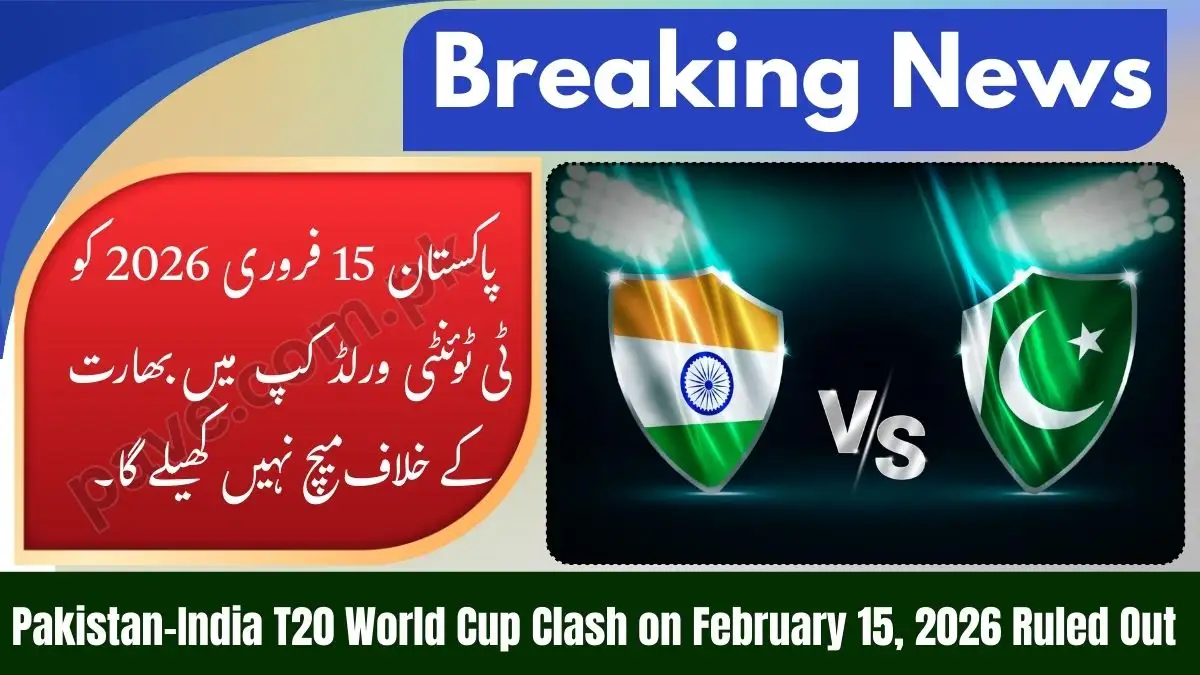
ISLAMABAD / COLOMBO — In a decision that has jolted international sport, the Government of Pakistan has formally instructed the Pakistan Cricket Board to boycott its marquee T20 World Cup fixture against India, scheduled for February 15, 2026, at Colombo. Pakistan will continue to participate in the rest of the tournament, but the refusal to play its arch-rival marks one of the most consequential political interventions in modern cricket.
At a stroke, the sport’s most watched rivalry has been removed from the calendar. The fallout touches points tables, broadcast contracts, fan travel plans, and the fragile idea that global cricket can be insulated from geopolitics.
Why This Match Matters More Than Any Other
India–Pakistan games are not just fixtures; they are global events. They routinely draw hundreds of millions of viewers, anchor tournament schedules, and bankroll a substantial share of ICC broadcast revenues. Removing one from a World Cup is unprecedented in scale and consequence.
Yet Islamabad insists the move is not symbolic theater. Officials describe it as a calibrated protest aimed at what they see as institutional bias within cricket’s governing structures.
The Core Conflict: Solidarity With Bangladesh
The immediate trigger is a diplomatic row centered on Bangladesh’s absence from the tournament.
The Catalyst
Earlier this year, Bangladesh declined a tour of India, citing security assessments and domestic political considerations. The refusal set off a chain reaction inside international cricket governance.
The ICC’s Decision
The International Cricket Council declined Bangladesh’s request to shift fixtures to a neutral venue. When no compromise emerged, Bangladesh was disqualified and replaced by Scotland.
Pakistan’s Response
Islamabad publicly condemned the decision as “biased” and “hegemonic,” arguing that it reflected disproportionate influence by larger boards and punished a smaller member for raising legitimate concerns. In Pakistan’s telling, refusing to play India is an act of solidarity meant to force a reckoning.
The Government Decree
Following a high-level meeting at the Prime Minister’s Office with PCB Chairman Mohsin Naqvi, a formal directive was issued:
“The Government of Pakistan grants permission for the national team to participate in the ICC Men’s T20 World Cup 2026. However, in protest against discriminatory practices and in solidarity with regional partners, Pakistan will not take the field for the match against India on February 15.”
The language leaves little room for ambiguity. This is state policy, not a board-level protest that could be quietly reversed.

Strategic and Economic Fallout
Tournament Mathematics
India is expected to receive a walkover, securing two points without playing a ball. For Pakistan, that single zero reshapes the group landscape and narrows the path to the semi-finals. Net run-rate buffers and contingency plans suddenly matter far more.
Broadcast and Commercial Shock
The India–Pakistan fixture is the crown jewel of the World Cup inventory. Its absence could cost broadcasters and sponsors hundreds of millions of dollars in advertising and activation value. Insurance clauses, make-goods, and renegotiations are already being discussed behind closed doors.
Sanctions and Precedent
The ICC must now decide how to respond. Options range from fines to points deductions or future hosting penalties. Whatever the outcome, the precedent is stark: a full member has declined a World Cup match by government order.
Fans Caught in the Middle
Thousands of supporters who booked travel and accommodation for Colombo face losses that refunds may not cover. For many, this was a once-in-a-lifetime trip built around a single night of cricket.
Inside Pakistan: Support, Anxiety, and Silence
Public sentiment at home leans nationalist, with many praising the government for “standing up” to perceived inequities. Privately, players and coaching staff worry about missing the game that best sharpens competitive edge. An India–Pakistan match is not just emotional fuel; it is elite preparation under maximum pressure.
No player has spoken on record. The silence underscores how firmly the decision sits above the dressing room.
A Blow to the Game’s Operating Model
The decision also exposes the fragility of cricket’s so-called “hybrid model,” which relies on neutral venues and scheduling gymnastics to keep rival nations in the same tournaments. If a World Cup fixture can be pulled days before kickoff, the model’s limits are clear.
For administrators, the lesson is uncomfortable: commercial logic alone cannot override political red lines.
What Happens Next
Emergency meetings are expected in Dubai as the ICC races the calendar. Diplomatic channels are active, but expectations are muted. Reversing a public government directive would require a face-saving compromise that, so far, has not materialized.