
Government Notifies New Fuel Prices Effective February 16
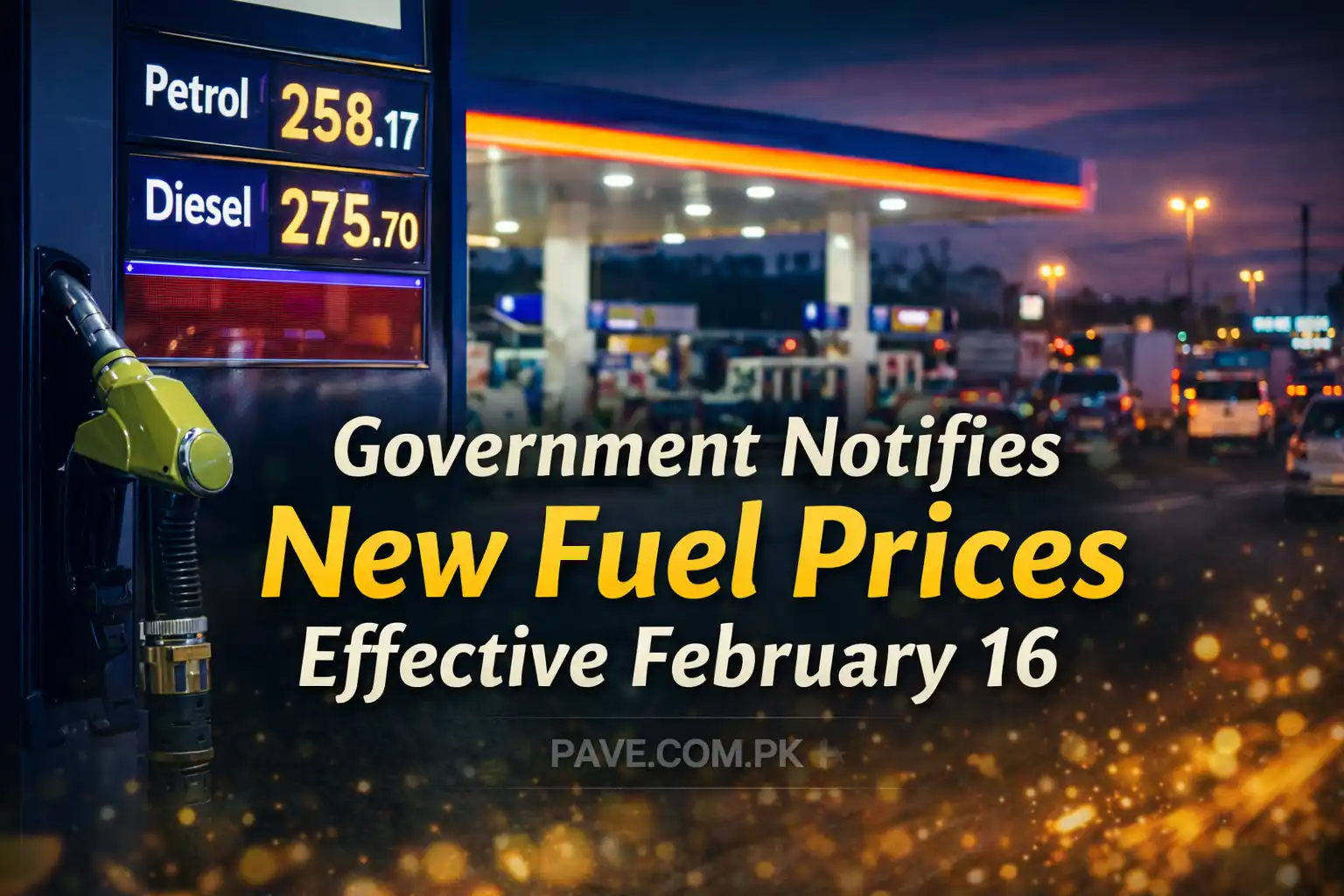
The federal government has announced a major increase in petrol and high-speed diesel prices for the next 15 days. According to a notification issued by the Petroleum Division, the new fuel prices will take effect from February 16, 2026.
This latest petrol price increase in Pakistan comes after recommendations from the Oil and Gas Regulatory Authority (OGRA). The revised rates will remain applicable for the next fortnight and will be reviewed again based on international oil market trends.
Fuel price changes directly affect transportation, inflation, and household expenses, making this development highly important for citizens across Pakistan.
New Petrol and Diesel Prices in Pakistan (February 2026)
Under the new notification:
🔹 High-Speed Diesel (HSD)
- Increased by: Rs. 7.32 per litre
- New Price: Rs. 275.70 per litre
- Previous Price: Rs. 268.38 per litre
🔹 Petrol (Motor Spirit)
- Increased by: Rs. 5 per litre
- New Price: Rs. 258.17 per litre
These prices will remain effective for 15 days, after which another review will be conducted.
Why Did the Government Increase Fuel Prices?
Fuel prices in Pakistan are linked to:
- International crude oil prices
- Exchange rate fluctuations
- Petroleum levy and taxes
- Freight and distribution costs
When global oil prices rise or the Pakistani rupee weakens against the dollar, fuel prices in Pakistan usually increase.
OGRA reviews market data and recommends new prices every fortnight.
Impact of Petrol and Diesel Price Increase on Public
The increase in petrol and diesel rates affects multiple sectors:
1️⃣ Transportation Costs
- Public transport fares may increase
- Ride-hailing services may revise rates
- Logistics and freight charges may rise
2️⃣ Inflation Pressure
Higher diesel prices directly impact:
- Goods transportation
- Food supply chains
- Construction materials
This can increase overall inflation in Pakistan.

3️⃣ Household Expenses
Petrol price hikes increase daily commuting costs, especially for:
- Office workers
- Students
- Delivery riders
Diesel Price Increase – Why It Matters More
High-speed diesel is widely used in:
- Trucks and buses
- Agriculture machinery
- Industrial generators
Because diesel is used in transport of goods, its price increase often leads to:
- Higher food prices
- Increased market rates
- Supply chain pressure
The Rs. 7.32 per litre increase in diesel is considered significant.
Petrol Price in Pakistan 2026 – Ongoing Trend
Fuel prices in Pakistan have been fluctuating over recent months due to:
- Global crude oil volatility
- IMF program conditions
- Exchange rate movements
- Government tax adjustments
Many citizens search daily for:
- Latest petrol price in Pakistan
- Diesel price today
- Fuel rates February 2026
- OGRA petrol notification
The government reviews fuel prices every 15 days to align with international market trends.
Role of OGRA in Fuel Price Determination
The Oil and Gas Regulatory Authority (OGRA) evaluates:
- Global oil price trends
- Import costs
- Inland freight equalization margin
- Taxes and levies
Based on these factors, OGRA submits recommendations to the Petroleum Division, which then issues the final notification.
International Oil Market Influence
Pakistan imports a large portion of its petroleum products.
When global crude oil prices increase due to:
- Geopolitical tensions
- Supply cuts by oil-producing countries
- Higher international demand
Local fuel prices also rise.
Exchange rate depreciation of the rupee against the US dollar further increases import costs.
Public Reaction to Fuel Price Hike
The announcement has triggered concerns among:
- Transporters
- Business owners
- Daily wage workers
- Middle-class families
Many fear that the increase will lead to:
- Higher inflation
- Increased transport fares
- Rising grocery prices
Economic Impact of Fuel Price Increase
Fuel prices play a critical role in Pakistan’s economy.

Positive Side:
- Helps reduce fiscal deficit
- Supports IMF commitments
- Adjusts to market realities
Negative Side:
- Inflationary pressure
- Reduced purchasing power
- Increased cost of doing business
Balancing fiscal discipline and public relief remains a challenge.
Will Fuel Prices Increase Again?
The current rates will remain effective for 15 days.
After that:
- Another review will be conducted
- Prices may increase or decrease
- Decision will depend on global market trends
Citizens are advised to monitor official notifications for updates.
How Citizens Can Manage Rising Fuel Costs
To reduce the impact of higher fuel prices:
- Use public transport when possible
- Carpool for office commute
- Maintain vehicles for better mileage
- Avoid unnecessary travel
- Use fuel-efficient driving habits
Small changes can help reduce fuel consumption
Conclusion
The government’s decision to increase petrol and diesel prices for February 2026 reflects global oil market trends and economic adjustments. While the move may support fiscal management, it also puts additional pressure on citizens already facing inflation.
With diesel rising to Rs. 275.70 per litre and petrol to Rs. 258.17 per litre, transportation and daily living costs are expected to increase.
The next review in 15 days will determine whether prices stabilize or rise further. Until then, citizens and businesses must adjust to the new fuel rates.