Government Plans to Electrify Public Transport in Pakistan – What’s Coming Next
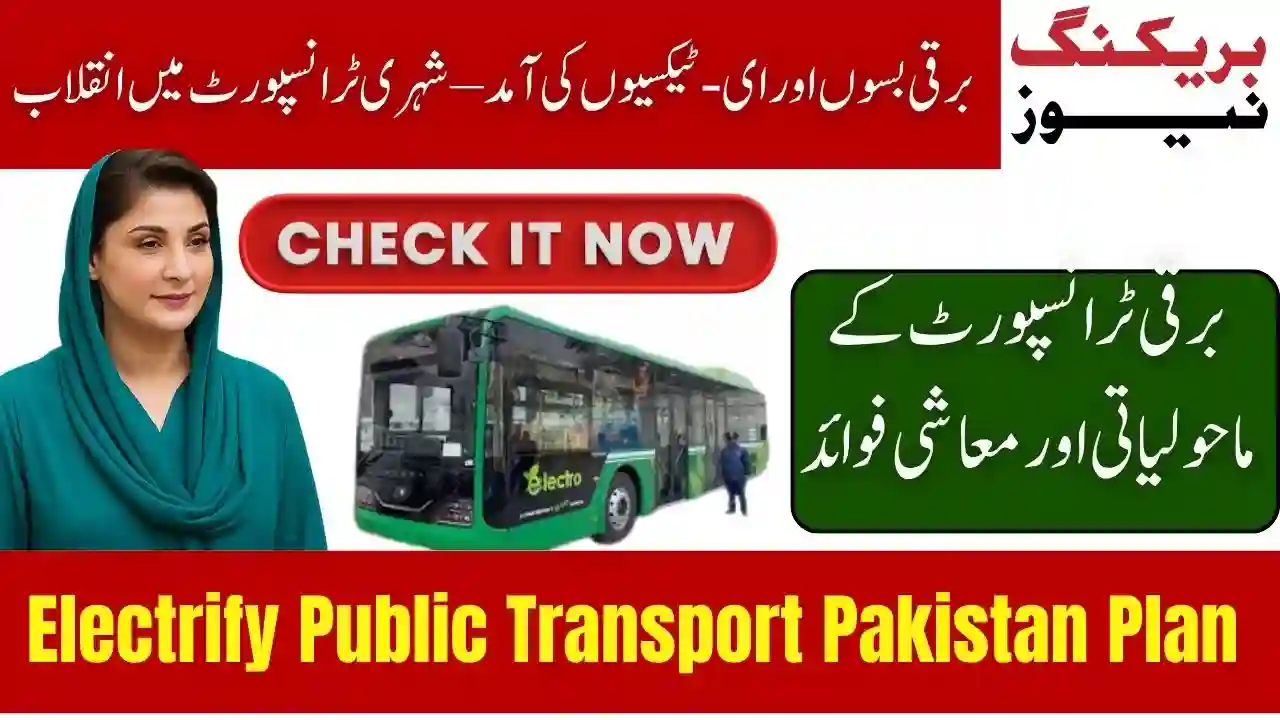
Electrify Public Transport Pakistan Plan is entering a new era of electric mobility as the government intensifies efforts to electrify public transport across major cities. From electric buses and e-taxis to EV charging infrastructure, the 2025–2030 roadmap aims to transform how millions of people commute daily — cleaner, cheaper, and smarter.
Rising fuel prices, environmental concerns, and urban congestion have made electric transport a national priority. The Government of Pakistan, through the Ministry of Climate Change and Provincial Transport Departments, has set a vision to replace thousands of diesel buses and taxis with electric vehicles (EVs) in the coming decade.
This electrification plan aligns with the National Electric Vehicle Policy (NEVP) and the country’s Net Zero 2050 commitment under global climate frameworks.
🚍 Key Goals of Pakistan’s Public Transport Electrification Plan
The government’s roadmap includes both short-term and long-term targets for introducing electric buses, e-taxis, and EV rickshaws.
| Target Area | 2025 Goal | 2030 Goal | Responsible Body |
|---|---|---|---|
| Electric Buses | 500 in operation | 5,000 nationwide | Provincial Transport Authorities |
| E-Taxis | 1,100 pilot units | 10,000+ fleet | Punjab Transport Dept & Private Sector |
| EV Rickshaws | 10,000 deployed | 50,000+ | Local Assemblers (PAVE, Jolta, etc.) |
| EV Charging Stations | 200 installed | 2,000 across highways & cities | NEPRA & PSO |
| Reduction in CO₂ Emissions | 30% by 2030 | 60% by 2040 | Ministry of Climate Change |

🏛️ Government Departments Leading the EV Transition
The electrification program is a multi-departmental initiative combining federal and provincial efforts. Major players include:
- Ministry of Climate Change (MoCC) – Policy and sustainability framework.
- Ministry of Industries & Production (MoIP) – EV manufacturing and incentives.
- Punjab Transport Department – Implementation of e-bus and e-taxi projects.
- NEPRA – Approval of EV tariff and charging infrastructure.
- Pakistan State Oil (PSO) – National EV charging network rollout.
- PITB (Punjab IT Board) – Digital verification and tracking systems.

🚗 Current Pilot Projects and Initiatives
1. Punjab E-Taxi Pilot Project (2025)
Led by Chief Minister Maryam Nawaz, Punjab launched the 1,100 Electric Taxi Plan to introduce e-taxis for both individual drivers and fleet operators. The project includes:
- Subsidized rates through Bank of Punjab financing
- Fleet and individual models
- Warranty & after-sales service support
This initiative is a game-changer for ride-hailing platforms like Careem and InDrive, which plan to integrate electric taxis in 2025–2026.
2. Electric Bus Operations in Karachi and Islamabad
The Sindh Transport Department has introduced 100 electric buses in Karachi, running on key routes between Clifton, Saddar, and Gulshan.
Similarly, Islamabad’s Metro Bus Service has begun testing fully electric buses powered by solar-charged depots.
3. NEPRA EV Tariff and Charging Station Licensing
The National Electric Power Regulatory Authority (NEPRA) approved a dedicated EV charging tariff of Rs. 22.98/kWh to promote commercial charging.
Over 150 licenses have been issued for private EV charging stations under the “Charge Pakistan” initiative.
4. PSO’s EV Charging Network Expansion
Pakistan State Oil (PSO) has set up fast chargers along the Lahore–Islamabad Motorway (M-2) and Karachi–Hyderabad (M-9) route.
By 2026, PSO aims to open EV-ready fuel stations in all provincial capitals.

⚙️ Local EV Manufacturing and Assemblers
Pakistan’s automotive industry is now gearing toward local EV assembly, which reduces import dependency and creates jobs.
Top EV Manufacturers in Pakistan:
- Jolta Electric – E-bikes, e-rickshaws, and light-duty EVs
- Milele Motors – Electric buses and vans
- Sazgar Engineering Works – Hybrid and EV conversions
- PAVE (Punjab Affordable Vehicle for Everyone) – Low-cost electric bikes and rickshaws
- MG Motors Pakistan – Assembling MG4 EVs locally by 2026

💰 Financial Incentives and Subsidies
The government is offering several financial incentives to make EV adoption easier:
| Incentive Type | Description |
|---|---|
| Tax Relief | 0% customs duty on EV imports (under 50 kWh) |
| Sales Tax Reduction | 1% GST on EVs (down from 17%) |
| Green Financing | Banks offering EV loans at 7–9% markup |
| Provincial Subsidy | Punjab & Sindh offering registration fee waivers |
| Charging Incentives | NEPRA tariff relief and PSO partnership for installation |
🌍 Environmental and Economic Impact
Electrifying public transport has dual benefits — environmental sustainability and economic relief.
Environmental Benefits:
- Reduction of urban air pollution and noise.
- Decrease in CO₂ emissions by an estimated 150,000 tonnes annually.
Economic Benefits:
- Saving billions in fuel import costs.
- Creating 100,000+ new green jobs by 2030.
- Reducing operational costs for public buses by up to 60%.
🧭 Challenges in Electrifying Public Transport
While progress is promising, there are still major hurdles:
- Limited Charging Infrastructure: Fewer than 200 active charging stations nationwide.
- High Initial Cost: Electric buses and taxis still cost 30–40% more upfront.
- Battery Recycling: Lack of policy for safe disposal of used lithium batteries.
- Grid Capacity: Pakistan’s power grid needs upgradation to handle EV loads.
- Public Awareness: Many drivers and operators lack technical training.
🔋 Government’s Next Steps (2025–2030 Roadmap)
The next five years will be critical for scaling up EV adoption in Pakistan.
| Year | Key Milestones |
|---|---|
| 2025 | Launch of 1,100 Electric Taxis in Punjab |
| 2026 | EV Charging Network on All Motorways |
| 2027 | Local Assembly of Electric Buses in Karachi |
| 2028 | Green Transport Zones in Lahore, Karachi, Islamabad |
| 2029 | 100% Electric Bus Fleet for Urban Metro Services |
| 2030 | National EV Fleet Target – 100,000 Vehicles |
🏙️ City-Wise Implementation Plans
Lahore
- E-Taxi Fleet: 500 under PAVE program
- Metro Bus Electrification: Routes to be fully converted by 2027
- Charging Hubs: PSO and LESCO collaboration
Karachi
- 100 Electric Buses operational
- Green Corridors: Saddar–Clifton–Korangi line
- Sindh Transport Authority EV policy in progress
Islamabad
- Solar Charging Depots for Metro buses
- Smart Traffic Integration with EV sensors
Faisalabad & Multan
- Pilot e-bus routes planned under Punjab Masstransit Authority (PMA)
- PSDF training programs for e-vehicle technicians
💼 Private Sector and International Partnerships
Pakistan is seeking foreign investment from global EV leaders:
- BYD (China) – Electric bus assembly discussions with NDRC.
- GIZ Germany – Technical collaboration for sustainable battery recycling.
- World Bank & ADB – $300 million green transport funding.
- UNDP Pakistan – EV ecosystem readiness program (2025–2028).
Private players like Careem, InDrive, Daewoo Express, and Foton Motors are also expected to join through Public-Private Partnerships (PPP).
🧑🔧 Skill Development and Workforce Training
The Punjab Skills Development Fund (PSDF) and NAVTTC are offering Electric Vehicle Maintenance & Safety Training Courses for mechanics, drivers, and engineers.
Training includes:
- Battery diagnostics and management systems (BMS)
- EV charging safety and power systems
- Motor repair and software calibration
📡 Digital Monitoring and Smart Transport Integration
The government plans to integrate IoT-based tracking systems for electric buses and taxis. Each EV will feature:
- GPS tracking for efficiency
- Smart ticketing via PITB Transport App
- Data-sharing with Punjab Safe Cities Authority for traffic planning
🧾 Step-by-Step Summary of Upcoming Changes
- 2025: Launch of Punjab E-Taxi and e-Bus routes.
- 2026: Nationwide fast-charging infrastructure expansion.
- 2027: Local manufacturing and job creation in EV sector.
- 2028–2030: 50% reduction in fuel-based public vehicles.
- Post-2030: Transition to a fully green transport ecosystem.
🧠 Public Awareness and Community Engagement
Public information campaigns are being launched under the slogan “Charge Pakistan Green”, encouraging citizens to:
- Use EV public transport instead of private vehicles.
- Support cleaner commuting habits.
- Report environmental violations through the Green Punjab App.
Read Also: Saudi Arabia Announces Nursing Jobs for Pakistani Women With 4,500 Riyals Salary
📈 Future Vision – A Green, Smart, and Connected Pakistan
By 2030, Pakistan envisions a sustainable transport system where:
- 100% of urban buses are electric.
- All metro and BRT systems use solar-powered depots.
- Cities have zero-emission transport corridors.
- Local industries produce EV batteries and components domestically.
This is not merely an environmental goal — it’s an economic transformation creating a resilient, technology-driven future.
❓ FAQs – Electrification of Public Transport in Pakistan
Q1. What is Pakistan’s main goal for public transport electrification?
The government aims to convert all major public transport systems (buses, taxis, and rickshaws) to electric vehicles by 2030.
Q2. Which city will start first with e-buses?
Karachi and Lahore are leading the transition, followed by Islamabad and Faisalabad.
Q3. How will the government support drivers and operators financially?
Through subsidized financing, low-interest EV loans, and tax exemptions under the National EV Policy.
Q4. Who will build the charging stations?
NEPRA, PSO, and private energy companies are responsible for nationwide charging network expansion.
Q5. Will local mechanics receive EV training?
Yes, PSDF and NAVTTC have launched special courses for EV maintenance and charging systems.
Q6. When will the full electrification be completed?
The government targets 2030 for 100% public transport electrification in major cities.
🏁 Conclusion:
The Government of Pakistan’s plan to electrify public transport marks a historic shift toward cleaner, smarter, and more sustainable mobility.
With strong policy backing, local manufacturing, and international partnerships, the country is on the path to achieving its EV vision 2030 — ensuring affordable commuting, reduced emissions, and new economic opportunities for millions.