Electricity & Gas Bills May Soon Be Linked to Household Income
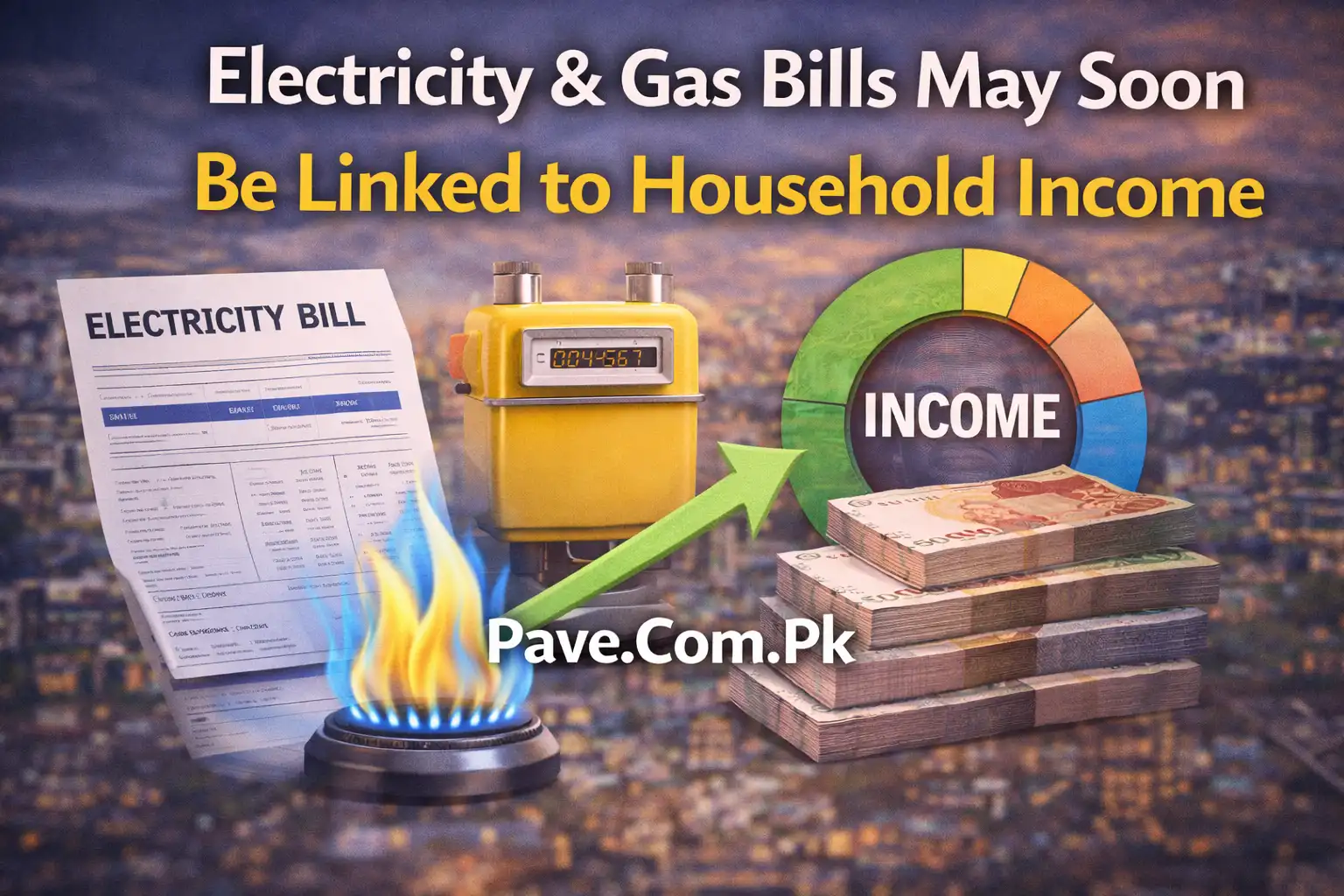
Pakistan’s federal government is preparing a major reform in the energy sector that could change how electricity and gas bills are calculated. Instead of charging consumers based only on how many units they use, the new system may link energy tariffs to household income.
The reform is being developed in line with commitments under the International Monetary Fund (IMF) program, specifically under the Extended Fund Facility (EFF).
Many people are searching online:

- Income based electricity tariff Pakistan
- Gas bill linked to income 2026
- IMF energy reforms Pakistan
- Electricity subsidy new policy
- Circular debt power sector Pakistan
In this detailed article, we explain everything in easy English, including what income-based pricing means, why the government wants this change, and how it may affect households across Pakistan.
What Is the Current Electricity & Gas Billing System?
At present, electricity and gas tariffs in Pakistan are based on:
✔ Number of units consumed
✔ Usage slabs
✔ Seasonal adjustments
✔ Fixed charges
The more electricity or gas you use, the higher the per-unit rate becomes.
This is called a usage-based slab system.
What Is the Proposed Income-Based Pricing Model?
Under the new proposal:
- Subsidies will be determined based on household income.
- Low-income households may receive higher subsidies.
- High-income households may pay closer to actual energy costs.
This is a structural shift from consumption-based to income-based pricing.
Why Is the Government Considering This Change?
The reform is part of broader energy sector restructuring under the IMF’s Extended Fund Facility.
✔ Targeted subsidies
✔ Reduced fiscal burden
✔ Lower circular debt
✔ Improved efficiency
The IMF has emphasized protecting low- and middle-income groups.
What Are Energy Subsidies?
Energy subsidies are government support payments that reduce electricity and gas bills for certain consumers.
Currently, subsidies are mostly based on:
- Consumption levels
- Lifeline consumer categories
However, this system may not always reflect actual income levels.
Problems With the Current Slab System
The usage-based system has several limitations:
- Some wealthy households benefit from subsidies.
- Poor households with high consumption (large families) may lose support.
- Cross-subsidies create distortions.
The government believes income-based targeting may improve fairness.
What Is Circular Debt in the Power Sector?
Circular debt refers to unpaid bills and financial gaps within the power supply chain.
It happens when:
- Distribution companies fail to collect full payments.
- Subsidies are delayed.
- Tariffs do not cover actual costs.
Reducing circular debt is a major IMF condition.
How Income Assessment May Work
The government may integrate the system with:
✔ Existing tax records
✔ Social protection databases
✔ Benazir Income Support Program data
✔ NADRA income information
Digital verification could determine eligibility for subsidies.
Impact on Low-Income Households
Low-income households may:
✔ Receive targeted financial support
✔ Pay lower energy rates
✔ Benefit from social protection alignment
The IMF has stressed that reforms should not burden vulnerable groups.
Impact on Middle & High-Income Groups
Middle and higher-income consumers may:
- Pay higher effective tariffs
- Lose generalized subsidies
- Pay closer to cost-reflective rates
This could increase monthly bills for some households.
Gas Tariff Reform
The proposal may also apply to natural gas pricing.
Gas subsidies may also shift from slab-based to income-based models.
This would mark a significant policy change.
IMF’s Role in Energy Sector Reform
The IMF program requires:
- Energy pricing rationalization
- Reduced inefficiencies
- Improved revenue collection
- Cost-reflective tariffs
Energy sector reform is central to economic stabilization.
Potential Benefits of Income-Based Tariffs
✔ Fairer subsidy distribution
✔ Reduced misuse of subsidies
✔ Better fiscal discipline
✔ Lower circular debt growth
It may improve long-term sustainability.
Possible Challenges
However, challenges include:
- Accurate income verification
- Data privacy concerns
- Administrative complexity
- Public resistance
- Implementation costs
Strong digital infrastructure will be required.
International Examples
Some countries use targeted subsidy systems based on:
- Income brackets
- Social welfare registration
- Means-tested programs
Pakistan may adopt similar mechanisms.
Timeline for Implementation
Officials have indicated:
- Discussions with IMF are ongoing.
- Reform framework is being finalized.
- No official implementation date yet.
Public announcements may follow IMF review.
Final Thoughts
The proposal to link electricity and gas bills to household income represents one of the most significant reforms in Pakistan’s energy sector in recent years.
If implemented effectively, it could improve subsidy targeting, reduce fiscal pressure, and help control circular debt — a long-standing economic challenge.
However, success will depend on accurate income data, digital infrastructure, transparency, and public trust.
The coming months will be crucial as Pakistan finalizes discussions with the IMF and prepares for potential structural changes in energy pricing.