Drone Attacks Shake Qatar & Saudi Oil Sites Amid Iran War
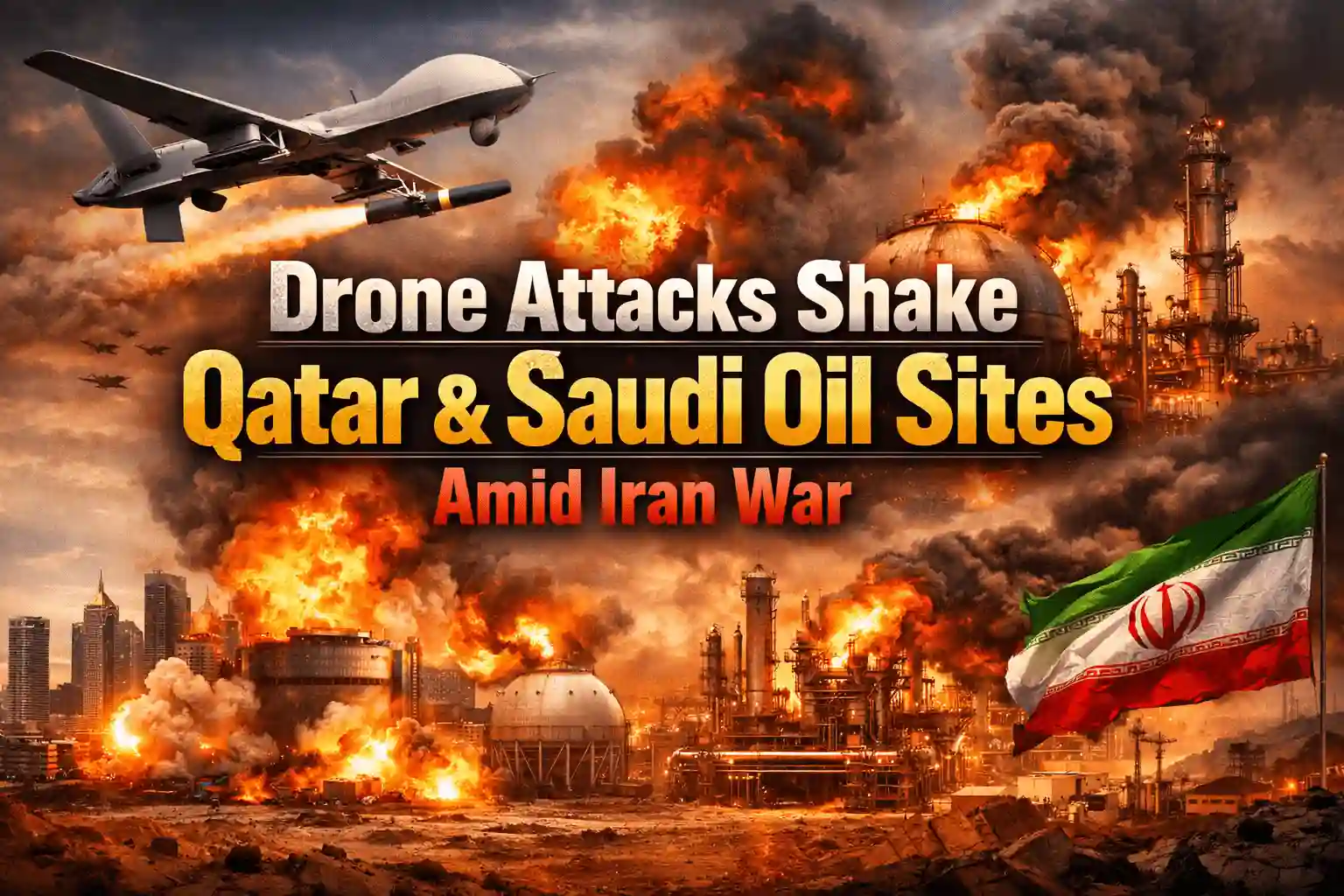
The Middle East conflict has entered a dangerous new phase after drone attacks targeted major oil and gas facilities in Qatar and Saudi Arabia. The escalation comes amid the ongoing Iran war crisis, raising serious concerns about global energy security, oil prices, and regional stability.
These attacks on Qatar and Saudi oil sites are not just regional incidents. They have global consequences because both countries play a vital role in supplying oil and liquefied natural gas to the world. Energy markets reacted immediately, and governments across the region issued strong responses.
Drone Attacks on Qatar Oil and Gas Facilities
Qatar is one of the largest exporters of liquefied natural gas in the world. Its industrial areas, including Ras Laffan and Mesaieed, host some of the most important LNG production facilities globally.
Recent drone strikes reportedly targeted strategic energy infrastructure in Qatar. As a precautionary measure, production activities at certain sites were temporarily halted to assess damage and ensure safety.
Although officials confirmed that there were no major casualties, the attack created panic in global energy markets. Qatar supplies a large share of LNG to Europe and Asia, and any disruption can directly affect gas prices and supply chains.
The attack highlights how vulnerable critical energy infrastructure can be during regional conflicts.

Saudi Oil Sites Targeted Amid Iran War Tensions
Saudi Arabia is one of the world’s top crude oil producers. The country’s oil facilities are central to global energy supply, especially in times of market uncertainty.
Drone strikes reportedly targeted key oil processing sites, including areas near major refineries. Saudi authorities confirmed that emergency protocols were activated immediately to contain damage and secure operations.
Even short term shutdowns at Saudi oil facilities can influence global oil prices. Markets responded with sharp price increases due to fears of prolonged disruption.
The attack is seen as part of broader Iran war tensions involving regional and international powers.

Why Qatar and Saudi Oil Sites Are Strategic Targets
Qatar and Saudi Arabia are not random targets. They are energy powerhouses.
Qatar:
• One of the largest LNG exporters in the world
• Supplies natural gas to Europe, Asia, and emerging markets
• Hosts major industrial and energy infrastructure
Saudi Arabia:
• One of the world’s largest oil producers
• Key member of OPEC
• Influences global oil production levels
Attacks on their oil and gas facilities directly impact:
• Global oil prices
• LNG supply
• Shipping routes
• Energy security
• Inflation rates worldwide
This is why the drone attacks have caused international concern.
Impact on Global Oil Prices and Energy Markets
Immediately after reports of the attacks, oil prices surged. Brent crude and other global benchmarks experienced sharp increases.
Natural gas markets also reacted strongly, especially in Europe and Asia, where countries depend heavily on Middle Eastern LNG exports.
Energy experts explain that markets add a “geopolitical risk premium” during conflicts. This means prices rise not only due to actual damage but also because of fear and uncertainty.
If disruptions continue, the following effects may occur:
• Higher fuel prices for consumers
• Increased transportation costs
• Inflation pressure in importing countries
• Strain on developing economies
The Strait of Hormuz, a critical shipping route for oil exports, also becomes a point of concern during such conflicts. Any instability there can worsen supply chain risks.

Iran War Context Behind the Drone Attacks
The drone attacks come amid rising tensions involving Iran and its regional rivals. Military actions, retaliatory strikes, and strategic messaging have intensified over recent weeks.
While officials continue diplomatic discussions, military responses have increased across the Gulf region. Several countries have strengthened air defense systems and security protocols around critical infrastructure.
The situation remains fluid. Analysts warn that further escalation could lead to:
• Wider regional conflict
• More infrastructure attacks
• Military retaliation
• International diplomatic intervention
The Iran war has moved beyond political disagreements and is now affecting economic stability worldwide.
Regional Security Response After Oil Site Attacks
Following the attacks, Gulf countries increased surveillance and defense coordination.
Security forces enhanced protection around:
• Oil refineries
• LNG terminals
• Military bases
• Airports
• Ports and shipping lanes
Airspace restrictions were also implemented temporarily in some areas to ensure safety.
Global powers are closely monitoring developments. Calls for de escalation and diplomatic dialogue have increased, but tensions remain high.
Economic Consequences Beyond the Middle East
The drone attacks on Qatar and Saudi oil sites are not limited to regional consequences. Their impact spreads globally.
Countries dependent on energy imports may experience:
• Increased electricity costs
• Higher fuel prices
• Increased production costs
• Supply chain delays
Stock markets in several regions reacted negatively due to uncertainty.
If the conflict continues, global growth forecasts may be affected. Energy driven inflation could pressure central banks to reconsider economic policies.
Possible Future Scenarios After Drone Attacks
Experts outline several possible developments:
- Short term disruption with rapid repairs and stabilization
- Continued drone and missile strikes leading to prolonged energy volatility
- Expanded regional military cooperation
- Diplomatic intervention leading to ceasefire talks
The most important factor will be whether energy infrastructure remains protected from further attacks.
If oil production stabilizes quickly, markets may calm down. If attacks continue, volatility could persist.
How Energy Infrastructure Vulnerability Is Changing Warfare
Modern warfare increasingly targets economic infrastructure rather than traditional military assets.
Oil facilities, gas terminals, and shipping routes are strategic targets because they influence global stability.
Drone technology has made it easier to strike high value targets from a distance. This shift changes how countries protect critical infrastructure.
Energy security is now directly linked to national security.
Conclusion: Drone Attacks Shake Global Stability
The drone attacks on Qatar and Saudi oil sites mark a serious escalation in the Iran war conflict. While immediate damage appears contained, the psychological and economic impact is significant.
Energy markets remain sensitive to developments. Governments are strengthening defenses, and diplomatic efforts are ongoing.
The situation demonstrates how regional conflicts can quickly affect global markets, fuel prices, and economic stability.
As the Middle East remains tense, the world watches closely for the next move.
Frequently Asked Questions
What caused the drone attacks on Qatar and Saudi oil sites?
The attacks are linked to rising tensions in the Iran war conflict. They are seen as part of broader regional escalation involving military retaliation and strategic targeting of energy infrastructure.
Were Qatar and Saudi oil facilities severely damaged?
Initial reports suggest limited structural damage and no major casualties. However, temporary shutdowns occurred to ensure safety and assess impact.
How did the attacks affect global oil prices?
Oil and gas prices surged immediately after the news due to supply fears and geopolitical uncertainty.
Why are Qatar and Saudi Arabia important for global energy?
Qatar is a leading LNG exporter, and Saudi Arabia is one of the world’s largest oil producers. Disruptions in either country affect global supply chains.
Could this lead to a larger Middle East war?
While tensions are high, diplomatic efforts continue. However, further escalation cannot be ruled out if attacks continue.