Breaking: Pakistan Refuses IMF Technical Assistance for 142 Governance Reforms
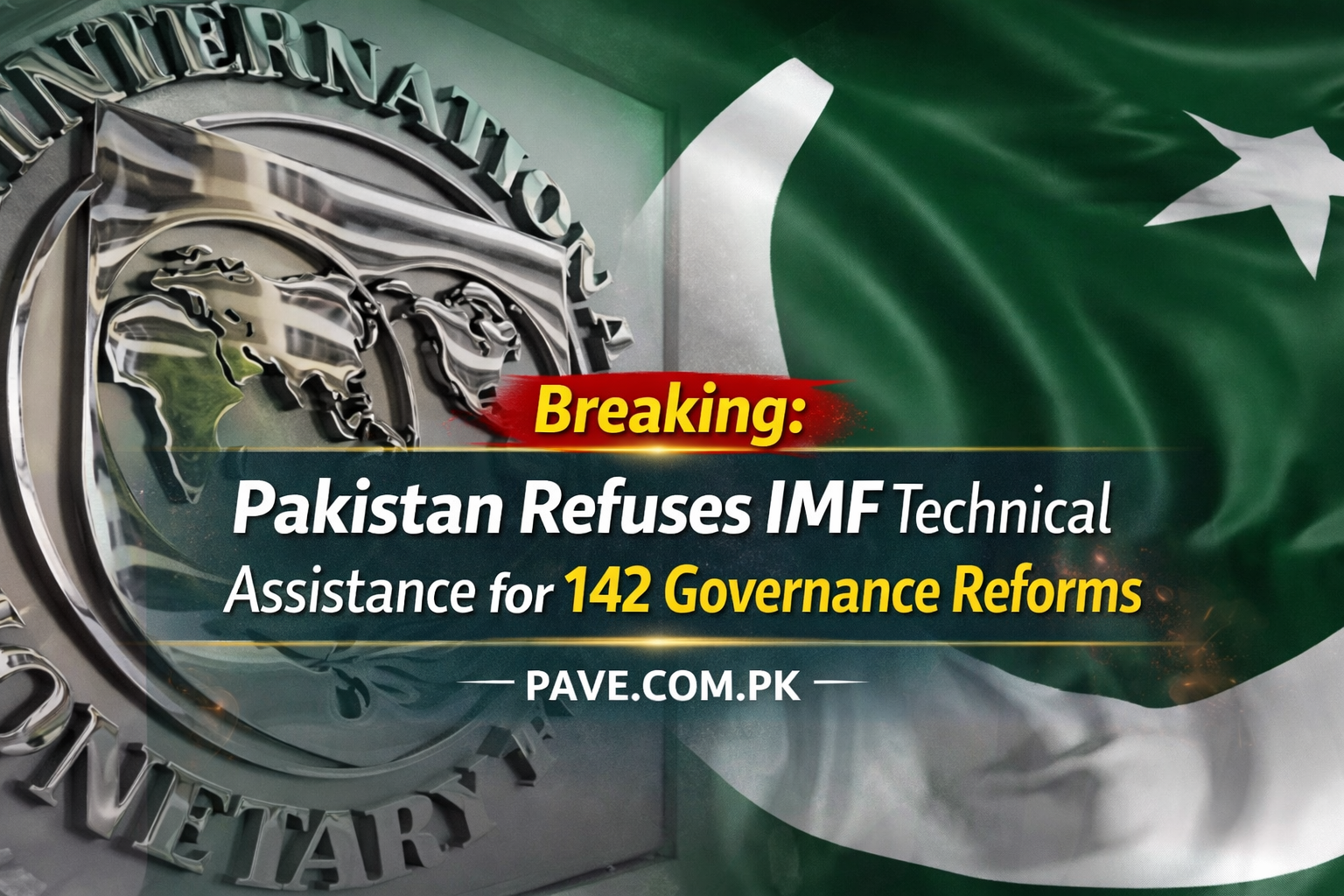
Pakistan has reportedly refused technical assistance from the International Monetary Fund (IMF) related to 142 governance reforms, a move that has attracted significant attention from economic experts and international observers. The decision comes at a time when Pakistan continues to navigate complex economic challenges and negotiations with global financial institutions.
The governance reform plan was reportedly designed to improve transparency, strengthen institutional performance, and enhance financial accountability within various government departments. However, Pakistani authorities decided not to proceed with IMF technical support for the reforms, raising questions about the country’s economic policy direction.
The development is important because Pakistan has historically worked closely with the IMF during periods of economic difficulty.
Understanding the IMF and Its Role in Pakistan’s Economy
The International Monetary Fund is an international financial institution that provides loans, policy advice, and technical assistance to countries facing economic difficulties.
Pakistan has approached the IMF multiple times for financial support. IMF programs typically include economic reforms designed to stabilize the economy and improve governance.
These reforms may involve:
- Fiscal discipline and budget management
- Improvements in tax collection systems
- Strengthening financial institutions
- Enhancing transparency in government operations
While IMF programs often help countries manage economic crises, they can also be politically sensitive because they sometimes require structural reforms.

What Are Governance Reforms?
Governance reforms generally focus on improving the way government institutions operate. The goal is to make public institutions more transparent, accountable, and efficient.
The proposed 142 governance reforms reportedly covered several areas of Pakistan’s administrative and financial systems.
Possible areas of reform may include:
- Public financial management
- Transparency in government spending
- Institutional accountability
- Regulatory improvements
- Anti-corruption mechanisms
Governance reforms are often recommended by international organizations to strengthen economic stability and attract foreign investment.

Why Pakistan Refused IMF Technical Assistance
While official details may vary, economic analysts believe several factors could explain Pakistan’s decision to decline IMF technical assistance for the governance reforms.
Sovereignty Concerns
One possible reason is concern over maintaining control of domestic policymaking. Governments sometimes prefer to implement reforms independently rather than relying on external technical guidance.
Political Considerations
Governance reforms can be politically sensitive because they may require significant institutional changes. Political leadership may prefer to manage such reforms internally.
Administrative Flexibility
Declining external assistance may give the government more flexibility in designing reforms that align with local priorities and administrative realities.
However, experts note that the decision does not necessarily mean Pakistan will abandon governance reforms entirely.

Pakistan’s Economic Challenges
Pakistan’s economy has faced several challenges in recent years, including inflation, currency fluctuations, and fiscal deficits.
Economic stability requires strong institutions, efficient financial management, and sustainable fiscal policies.
Key economic challenges include:
- Managing public debt
- Stabilizing the national currency
- Controlling inflation
- Improving tax collection systems
Governance reforms are often recommended as part of broader economic stabilization strategies.
IMF Programs and Pakistan’s Economic History
Pakistan has worked with the IMF many times over the past several decades. These programs are typically designed to support countries experiencing financial instability.
IMF assistance usually includes:
- Financial loans to stabilize the economy
- Policy recommendations for economic reform
- Technical assistance for institutional improvements
While IMF programs can provide much-needed financial support, they sometimes involve conditions that require structural economic reforms.
These conditions may include fiscal tightening, subsidy reductions, and institutional reforms.
Importance of Institutional Transparency
Transparency and accountability are essential components of effective governance. Strong institutions help ensure that public resources are managed responsibly.
Governance reforms often focus on improving:
- Government accountability systems
- Public financial management processes
- Anti-corruption frameworks
- Regulatory oversight mechanisms
By strengthening institutional transparency, countries can improve investor confidence and promote sustainable economic growth.
Impact on Pakistan’s International Financial Relations
Pakistan’s decision to refuse IMF technical assistance may influence how international financial institutions view the country’s reform strategy.
However, declining technical assistance does not necessarily mean that Pakistan will end its engagement with the IMF or other global financial organizations.
Countries often negotiate the terms of financial cooperation to ensure that economic policies align with domestic priorities.
Maintaining constructive relationships with international financial institutions remains important for economic stability.
Economic Experts’ Reactions
Economic experts have expressed mixed reactions to the news.
Some analysts believe that Pakistan should maintain independence in designing governance reforms, ensuring that policies reflect local economic realities.
Others argue that international technical assistance can provide valuable expertise and help strengthen institutional reforms.
The debate highlights the complexity of balancing national sovereignty and international cooperation in economic policymaking.
Importance of Governance for Economic Growth
Strong governance plays a crucial role in long-term economic development.
Countries with transparent and efficient institutions tend to attract more investment and maintain stronger economic stability.
Governance reforms can help:
- Improve public sector efficiency
- Strengthen investor confidence
- Reduce corruption risks
- Enhance economic planning and policy implementation
For developing economies, institutional improvements are often essential for sustainable growth.
Pakistan’s Path Forward
Despite declining IMF technical assistance for the governance reform plan, Pakistan still faces the task of strengthening its economic institutions.
Future reforms may focus on:
- Improving public sector accountability
- Strengthening financial oversight
- Modernizing administrative systems
- Enhancing regulatory transparency
These reforms could be implemented through domestic initiatives without direct external technical support.
Economic experts emphasize that consistent policy implementation will be critical for achieving long-term stability.
Global Context of Governance Reforms
Governance reforms are not unique to Pakistan. Many countries around the world undertake similar initiatives to improve their administrative systems.
International organizations such as the IMF, the World Bank, and regional development banks often support governance reforms through technical assistance programs.
However, each country has the right to determine how it manages its internal reforms.
Balancing external advice with domestic policy priorities is a common challenge for governments.
Conclusion
Pakistan’s decision to refuse technical assistance from the International Monetary Fund for 142 governance reforms highlights the ongoing debate about economic sovereignty, institutional reform, and international cooperation.
While governance improvements remain essential for long-term economic stability, governments must carefully balance domestic priorities with international recommendations.
The coming months will be important in determining how Pakistan approaches institutional reforms and economic policy development.
Regardless of the approach chosen, strengthening governance and transparency will remain key to building a more resilient and sustainable economy.