Breaking: Iran Confirms Death of Supreme Leader Ali Khamenei Amid Conflict
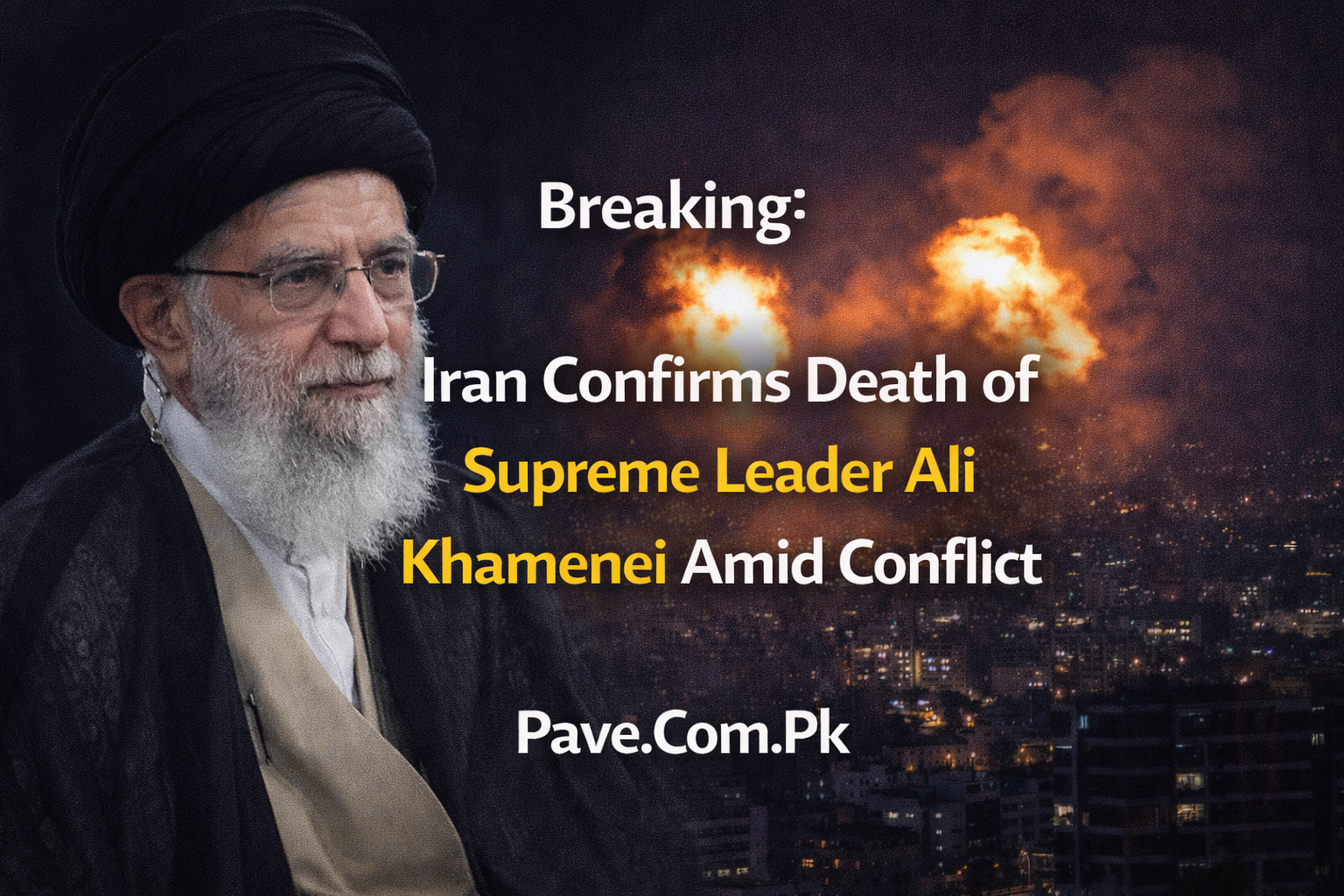
In a dramatic and unprecedented development, Iran’s state media has confirmed that Supreme Leader Ayatollah Ali Khamenei — the nation’s most powerful political and religious figure — has died following a joint U.S.–Israeli military operation. This announcement has shocked societies across the Middle East and around the world, carrying far-reaching implications for geopolitics, internal stability in Iran, and global security.
People everywhere are searching for information, including:
- Is Ayatollah Ali Khamenei really dead?
- Latest Iran conflict news 2026
- What happens now in Iran?
- Iran leadership succession 2026
- Global reaction to Khamenei’s death
This article explains what is known so far, the context behind the strikes, how Iran’s leadership structure works, what comes next for Iran, and why this moment matters for the world.
Who Was Ayatollah Ali Khamenei?
Ayatollah Ali Hosseini Khamenei served as Iran’s Supreme Leader since 1989, succeeding Ayatollah Ruhollah Khomeini after his death. At age 86, Khamenei had led the Islamic Republic for more than three and a half decades, shaping its domestic and foreign policy with an iron grip.
As Supreme Leader — the highest office in Iran — Khamenei had authority over:
- The Iranian military, including the Islamic Revolutionary Guard Corps (IRGC)
- The judiciary
- The executive branch
- Foreign policy
- Nuclear policy
- Control over major religious and political institutions
Unlike a president, the Supreme Leader is not elected by public vote but chosen by the Assembly of Experts, a clerical council responsible for succession. This gives the position immense power, placing it above all other political structures in the country.
For many years, Khamenei was a symbol of resistance against Western influence and staunch opposition to Israel. His legacy is controversial — admired by some for resisting foreign pressure but criticized by others for internal repression and economic stagnation.

How and Why the Strike Happened
Recent reports indicate that a military strike — reportedly conducted by Israel in coordination with the United States — targeted Iranian strategic sites, including areas linked to national leadership. Iranian state media confirmed that Khamenei was killed in this assault, stating that he was at his office compound in Tehran when it was struck.
U.S. and Israeli officials earlier claimed that Khamenei’s death had occurred during the operation — a claim that was later acknowledged by Iranian broadcast outlets amid national mourning.
This strike followed weeks of escalating tension between Iran and Western allies amid broader conflict dynamics in the Middle East. Iran had previously launched significant missile and drone attacks on U.S. military sites in retaliation for earlier strikes — part of a chain of aggressive actions and counter-actions in the region.
The exact military objectives and strategic reasoning are complex, but they were framed by Western leaders as defensive measures or preventative actions against perceived imminent threats. Critics, however, view this as a dangerous escalation that may plunge the region into wider war.
Immediate Aftermath and National Mourning
Iranian authorities announced a official 40-day mourning period following the confirmation of Khamenei’s death, during which government offices were ordered closed for several days. State television referred to him as a martyr and reaffirmed the continued resilience of the Islamic Republic.
State media also reported that members of Khamenei’s immediate family, including his daughter and grandchildren, may have been among the casualties. Such losses deepen the emotional and political impact of the event for many Iranians.
In parts of Iran, especially in areas with long-standing opposition to the regime, some local populations reportedly celebrated the news — an indication of the profound divisions within Iranian society.

Conflicting Statements and Verification Issues
Despite multiple confirmations by Iranian state media and Western political leaders, there have been mixed messages early after the event. Iranian foreign officials initially made statements suggesting that Khamenei might still be alive — a reflection of confusion and information uncertainty in the immediate hours following the strikes.
Such mixed reporting is not unusual in rapidly evolving geopolitical crises, where propaganda, strategic messaging, and incomplete verification can all contribute to confusion.
Still, the consensus among leading global news agencies and multiple official broadcasts is that the Supreme Leader has indeed been killed, although details about the exact circumstances and location continue to be pieced together.

Constitutional and Political Implications in Iran
The death of a Supreme Leader has no modern precedent in Iran’s 1979 Islamic Republic history. The constitution mandates that the Assembly of Experts — a body of senior clerics — must select the next leader.
However, the process is opaque and heavily controlled by factions within Iran’s political elite. Power struggles are almost certain to emerge among clerical conservatives, the IRGC leadership, and more reformist elements.
The IRGC — a powerful military and political force — is widely expected to play a significant role in the transition and may temporarily fill gaps in authority while the succession process unfolds.
This institutional uncertainty has the potential to create a constitutional crisis if there is no clear consensus candidate or if multiple factions push competing claims.
Regional and Global Reactions
The international reaction to Khamenei’s death has been immediate and intense.
Global leaders and organizations have issued statements ranging from cautious concern to outright geopolitical positioning:
- United Nations officials have called for restraint and avoidance of further conflict.
- Western leaders, including U.S. political figures, have framed the developments as a blow to Iranian hardline influence.
- Neighboring Middle Eastern governments have expressed concern about stability and potential economic fallout.
World markets, particularly oil prices, reacted to the news due to the Middle East’s central role in global energy supply. Even a localized conflict or leadership vacuum in Tehran can spark volatility in energy markets and international trade.
Potential for Retaliation and Escalation
One of the biggest questions in the wake of Khamenei’s death is whether Iran will retaliate, and how. Iranian officials have already signaled strong potential for reprisals against the U.S., Israel, and allied nations.
Iran’s missile and drone capabilities — along with allied proxy networks across regions like Lebanon, Iraq, Syria, and Yemen — make direct retaliation a plausible and dangerous possibility.
Experts warn that escalation could take many forms, including:
- Long-range missile strikes
- Proxy war activity through armed groups
- Cyberattacks
- Disruption of shipping lanes such as the Strait of Hormuz
The extent of retaliation may determine whether the conflict remains limited or expands into broader regional warfare.
What Happens Next in Iran?
1. Succession Process
The Assembly of Experts must convene to select a new Supreme Leader. This process may take weeks or months and could involve intense political negotiation.
2. Immediate Governance Measures
Senior officials, including those in Iran’s political and military leadership, may assume interim power to maintain stability.
3. Domestic Stability
Iran’s economy and society are already strained, and leadership uncertainty could fuel further protests or unrest.
4. International Diplomacy
Leaders worldwide may intensify mediation efforts to prevent broader escalation.
5. Geopolitical Realignments
Countries in the region may reassess alliances, particularly Gulf states and global powers engaged in Middle Eastern affairs.
Why This Moment Matters Globally
The death of a long-serving leader like Khamenei — especially under such violent circumstances — is not merely a national event for Iran. It reshapes:
- Middle East power dynamics
- U.S.–Iran and Israel–Iran relations
- Nuclear non-proliferation strategies
- Global energy markets
- International diplomatic alignments
The absence of a clear successor raises questions about Iran’s future direction — whether it will maintain its theocratic model, see a shift toward more moderate governance, or descend into internal conflict.
Conclusion
The confirmation of Ayatollah Ali Khamenei’s death marks a watershed moment in modern Middle Eastern history. The event represents not only the end of an era for Iran, but a pivotal turning point with potential ripple effects across global security, diplomacy, and economic stability.
While many details remain fluid, key facts — multiple state confirmations of his death and the declaration of national mourning — establish this as one of the most consequential international developments in recent decades.The world now watches closely as Iran enters a period of transition, uncertainty, and potential upheaval. What unfolds next will shape regional and global landscapes for years to come.