BISP Payment Increase 2026 – New Amount Update
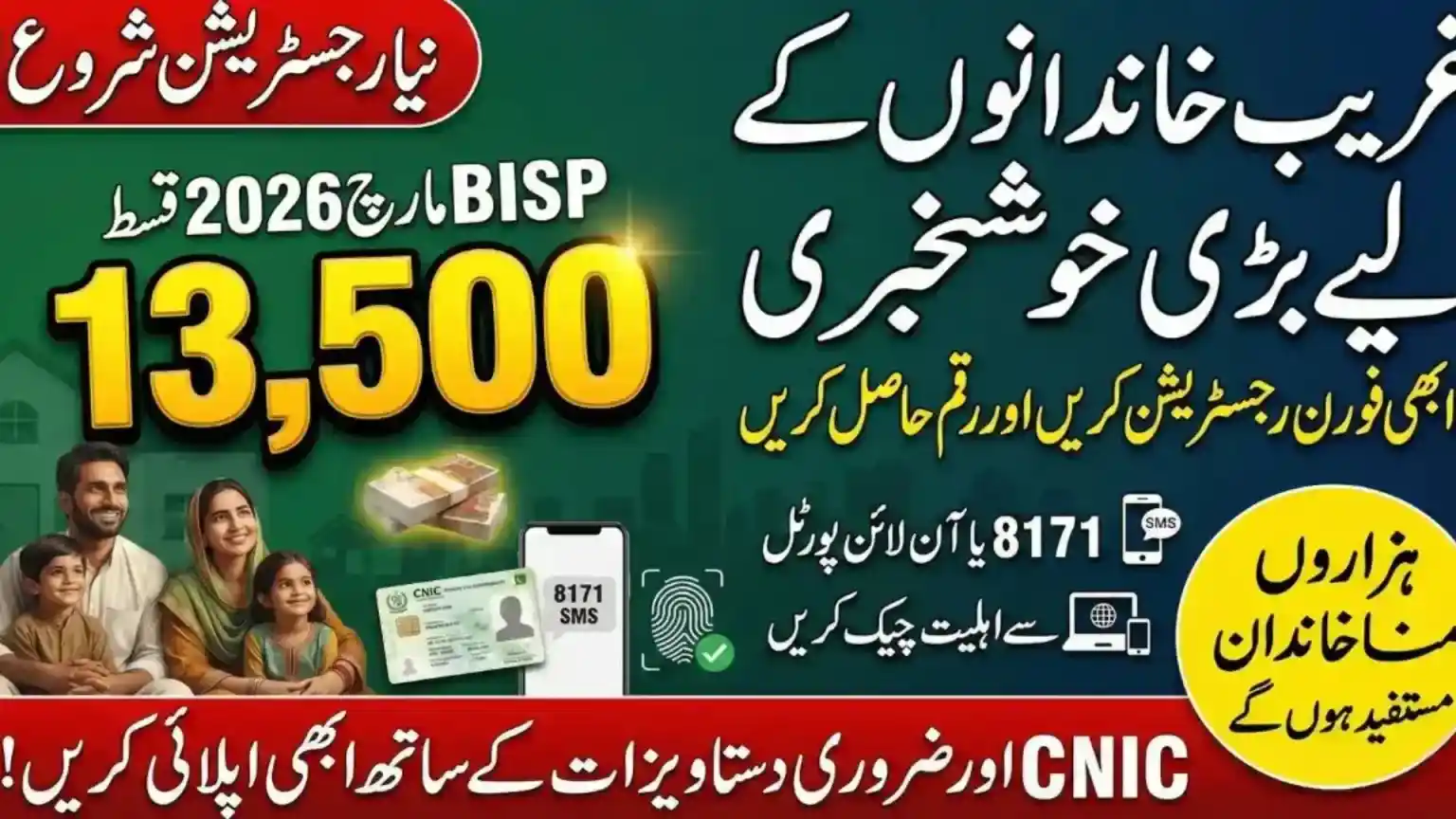
The Benazir Income Support Programme has announced a major update for 2026 that brings significant relief to millions of low-income households across the country. Due to rising inflation and increased living expenses, the quarterly Kafaalat payment has been increased, allowing eligible families to receive higher financial support during the current year.
This update is especially important because the new payment structure is already active for the March 2026 installment, which coincides with the holy month of Ramadan. The government has added a special Ramadan relief bonus, increasing the total amount many beneficiaries will receive in this cycle.
Through these changes, the Government of Pakistan aims to strengthen its social protection system and support vulnerable families struggling with the rising cost of food, utilities, and daily necessities.
BISP 2026 New Payment Amount
The most important update for beneficiaries is the increase in the quarterly payment amount.
Updated Payment Structure
| Benefit Type | Amount (PKR) | Details |
|---|---|---|
| Kafaalat Base Payment | Rs. 13,500 | Regular quarterly installment |
| Ramadan Relief Bonus | Rs. 1,000 | Special top-up for Ramadan |
| Total March Payment | Rs. 14,500 | Combined amount for eligible families |
| Taleemi Wazaif Increase | + Rs. 500 per child | Education stipend increase |
Because of the additional education stipends under the Benazir Taleemi Wazaif, some households with school-going children may receive Rs. 18,000 to Rs. 20,000 or more in total support during this cycle.
This payment increase reflects the government’s effort to help families cope with inflation while ensuring children remain enrolled in school.

Why the Government Increased BISP Payments
The payment adjustment for 2026 was introduced to address several economic challenges faced by vulnerable households.
Key reasons include:
- rising food prices and inflation
- increased seasonal expenses during Ramadan
- expansion of social protection programs
- support for children’s education
The BISP Kafaalat program currently supports more than 9 million families nationwide, making it one of the largest welfare initiatives in Pakistan.

March 2026 BISP Payment Schedule
To avoid overcrowding at payment centers, the government has implemented a phase-based distribution system.
Phase 1 – Major Urban Cities
Payments began around March 5, 2026 in large cities including:
- Islamabad
- Lahore
- Karachi
- Rawalpindi
- Peshawar
- Multan
Beneficiaries in these cities are already receiving payments.
Phase 2 – Semi-Urban Districts
Payments in semi-urban areas started earlier in some districts such as:
- Faisalabad
- Sahiwal
- Sargodha
- Bahawalpur
- Sukkur
- Hyderabad
These areas are currently active in the payment distribution process.
Phase 3 – Remote Regions
The final phase will begin around March 10, 2026 and includes remote districts such as:
- Tharparkar
- Rajanpur
- Chitral
- several districts in Balochistan
This staggered system helps ensure smooth payment distribution and reduces congestion at collection centers.

BISP 8171 New Registration March 2026
Alongside the payment increase, the 8171 registration system remains the official gateway for families seeking inclusion in the program.
However, new registration still requires completion of the National Socio-Economic Registry survey.
Registration Process Overview
- Visit your nearest BISP Tehsil Office.
- Provide your original CNIC issued by NADRA.
- Participate in the household NSER dynamic survey.
- Complete biometric fingerprint verification.
- Receive a confirmation slip containing a tracking ID.
This survey collects detailed information about household income, family members, employment status, and living conditions to determine eligibility.

Eligibility Criteria for BISP 8171 Program
Applicants must meet specific socio-economic requirements before being approved for financial assistance.
Basic Eligibility Conditions
Applicants must:
- possess a valid CNIC
- belong to a low-income household
- have a Proxy Means Test (PMT) score below 32
- not be high-income tax filers
- not own luxury vehicles or large commercial property
Priority is often given to vulnerable groups such as:
- widows
- divorced women
- persons with disabilities
Meeting these conditions significantly improves approval chances.
How to Check BISP 8171 Status
Beneficiaries can verify their eligibility and payment status using two official methods.
Method 1 – SMS Service
Steps:
- Open the SMS application on your phone.
- Type your 13-digit CNIC number.
- Send the message to 8171.
You will receive a reply indicating your eligibility status.
Method 2 – 8171 Web Portal
Steps:
- Visit 8171.bisp.gov.pk.
- Enter your CNIC number.
- Complete the captcha verification.
- View your payment status.
The portal will display messages such as:
- Payment Released
- Eligible
- Survey Required
- Ineligible
Where Beneficiaries Can Collect Payments
BISP payments are distributed through several official channels to make collection easier.
Payment Collection Options
- BISP campsites
- Habib Bank Limited ATMs
- Bank Alfalah ATMs
- mobile payment systems such as JazzCash and EasyPaisa in some regions
Biometric verification is required to ensure that the payment reaches the correct beneficiary.
Important Alert: “Survey Required” Status
Some beneficiaries may see “Survey Required” when checking their status.
This means:
- their previous survey data is outdated
- they must complete a new NSER dynamic survey
Until the survey is updated, their payments may remain temporarily suspended.
Beneficiaries should visit the nearest BISP office as soon as possible to update their information.
Fraud Prevention Warning
Officials have also warned beneficiaries about fraud attempts related to BISP payments.
Important safety tips include:
- BISP messages only come from 8171
- registration is completely free
- never share your OTP or personal data with strangers
- do not pay agents or middlemen
Following these precautions can help protect beneficiaries from scams.
Conclusion
The BISP Payment Increase 2026 marks an important step toward strengthening Pakistan’s social welfare system. With the quarterly installment raised to Rs. 13,500 and the addition of a Ramadan relief bonus, many families will now receive Rs. 14,500 or more during the March payment cycle.
Combined with increased Taleemi Wazaif stipends, expanded registration efforts, and improved payment distribution methods, the program continues to provide essential financial support to millions of vulnerable households across the country.