
Babar Azam’s Form & Strike Rate Spark Batting Position Change
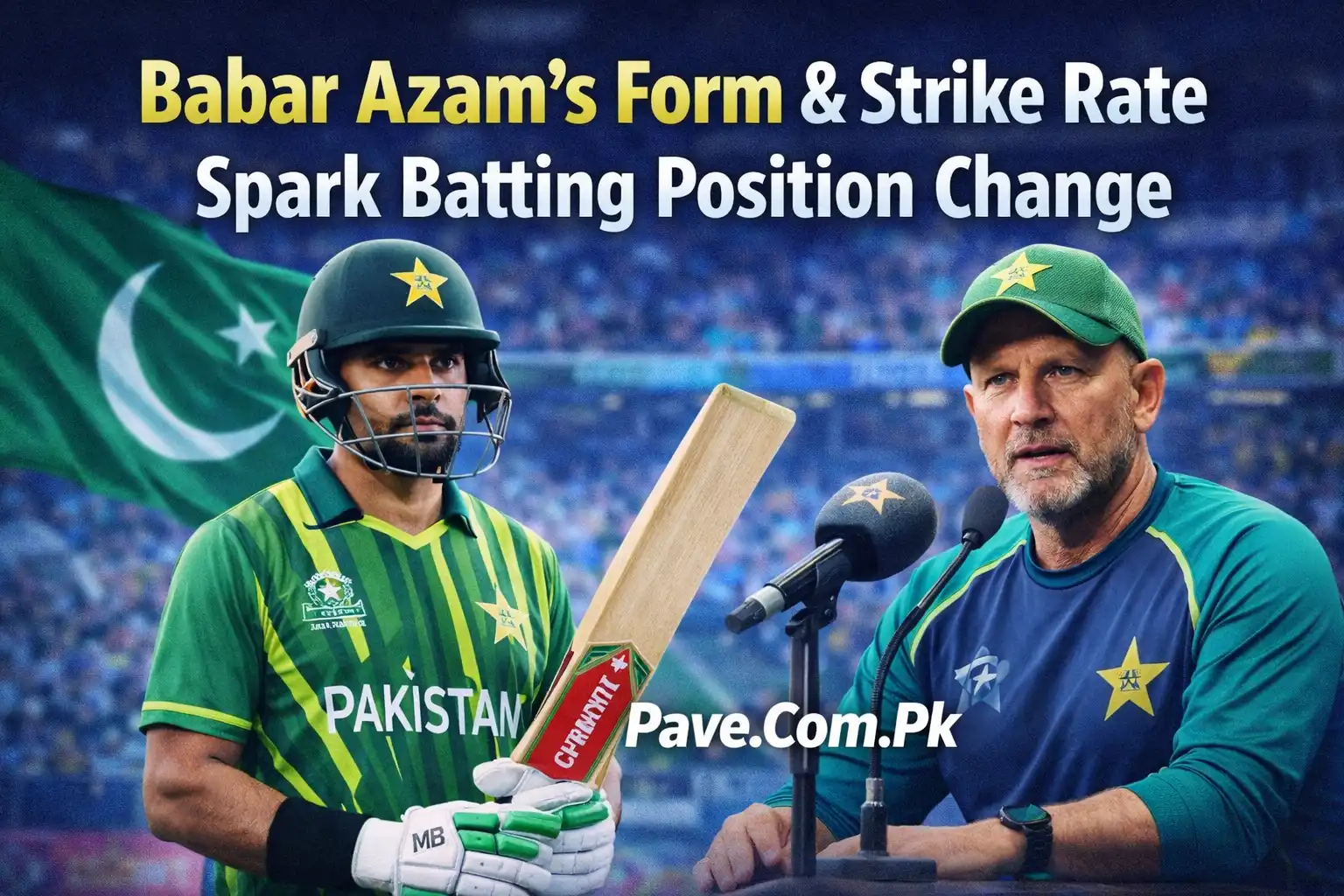
Pakistan head coach Mike Hesson has finally addressed the growing debate surrounding Babar Azam’s batting position during the ICC Men’s T20 World Cup. The discussion has intensified among fans and analysts after Pakistan’s recent matches, especially following their qualification for the Super Eight stage.
With Pakistan preparing for a crucial Super Eight clash against New Zealand national cricket team, questions were raised about why Babar Azam is no longer opening the innings — a role he traditionally held in T20 cricket.
In this detailed article, we explain:
- Why Babar Azam is not opening in T20 World Cup 2026
- Mike Hesson’s full statement
- Powerplay strike rate concerns
- Tactical decisions against Namibia
- Pakistan’s Super Eight strategy
- Fan reactions and expert analysis
- FAQs
- Meta description and focus keywords
Background: Babar Azam’s Traditional Role in T20 Cricket
For many years, Babar Azam has been Pakistan’s primary opener in T20 cricket. His role was to:
- Anchor the innings
- Build partnerships
- Rotate strike efficiently
- Accelerate after settling
However, in modern T20 cricket, especially in World Cups, teams demand explosive starts in the powerplay.

The Powerplay Problem – Strike Rate Below 100
During a press conference in Colombo, head coach Mike Hesson gave a direct explanation.
He said:
“It’s about what the team requires. Babar Azam is well aware that his strike rate in the World Cup during the powerplay is below 100, so clearly that’s not the role we need from him.”
This statement highlights the core issue: strike rate during the first six overs.
In T20 cricket, teams aim for:
- 45–60 runs in powerplay
- Aggressive intent
- Boundary-hitting from ball one
If a batter struggles to accelerate early, it affects the team’s total.

Why Team Requirements Come First
Modern T20 strategy focuses on:
- Matchups
- Powerplay dominance
- Left-right combinations
- Flexibility in batting order
Hesson emphasized that the decision is not personal but tactical.
Pakistan management believes:
- Babar can contribute better in the middle overs
- Other batters can attack in powerplay
- Role clarity improves overall team balance

The Namibia Match – Tactical Changes Explained
The debate intensified after Pakistan’s win over Namibia national cricket team, which sealed their qualification for the Super Eight stage.
One surprising moment:
Babar Azam was not sent at No. 4. Instead, Pakistan promoted:
- Khawaja Nafay
- Shadab Khan
This raised eyebrows among fans.

Spinner Match-Up Strategy
Mike Hesson explained the tactical reasoning:
- A left-arm spinner was getting sharp turn
- Sending a right-hander at that moment was risky
- Nafay was promoted to counter the spin
Hesson said:
“Babar was the first to recognize that the left-arm spinner was getting sharp turn. It wouldn’t have been a smart move to send a right-hander in at that stage.”
This shows that the decision was situational, not based on lack of trust
Super Eight Stage – Bigger Challenges Ahead
Now that Pakistan has reached the Super Eight stage of the ICC Men’s T20 World Cup, the competition becomes tougher.
Against teams like New Zealand:
- Fast starts are crucial
- Powerplay strike rate matters
- Middle overs stability is key
- Matchups are critical
The team management is preparing flexible strategies rather than sticking to fixed roles.
Babar Azam’s Form – Temporary Dip?
Another concern is Babar’s recent dip in form.
Experts believe:
- Every great batter goes through lean patches
- Confidence can return quickly
- Adjusting roles can reduce pressure
By shifting him from the powerplay role, Pakistan may allow him to:
- Play with freedom
- Anchor during middle overs
- Finish innings when needed
Modern T20 Cricket – Evolution of Roles
T20 cricket has evolved significantly.
Earlier approach:
- Openers anchor innings
- Acceleration happens later
Current approach:
- Attack from ball one
- Powerplay maximization
- Flexible batting order
Teams like England, Australia, and India often change batting positions based on conditions.
Pakistan seems to be adopting a similar strategy.\
Fan Reaction & Social Media Debate
The decision has divided fans:
Supporters say:
- Team comes first
- Tactical flexibility is smart
- Strike rate matters more than reputation
Critics argue:
- Babar is a natural opener
- Changing positions affects rhythm
- He should be backed in his usual role
The debate continues across sports platforms and cricket discussions.
What This Means for Pakistan’s Campaign
If the new strategy works:
- Pakistan can post bigger totals
- Middle order becomes stronger
- Opposition bowling plans get disrupted
If it fails:
- Questions about team management may intensify
- Pressure on Babar may increase
The Super Eight matches will determine whether this tactical shift was correct.
Key Highlights
- Mike Hesson clarified Babar’s batting role
- Powerplay strike rate below 100 cited
- Tactical promotions against Namibia
- Left-arm spinner influenced decision
- Team requirements prioritized
- Super Eight stage crucial for Pakistan
Conclusion
The decision to adjust Babar Azam’s batting position reflects Pakistan’s evolving T20 strategy. In modern cricket, flexibility and powerplay dominance are essential. Mike Hesson’s explanation shows that the move is based on tactical requirements rather than criticism of Babar’s ability.
As Pakistan enters the crucial Super Eight stage of the ICC T20 World Cup 2026, this strategy will be closely watched. Whether it proves successful will depend on performance in high-pressure matches ahead.
For now, the message from the team management is clear: Team needs come first.