Is Pakistan Supporting Iran or Israel? Latest Government Position Explained
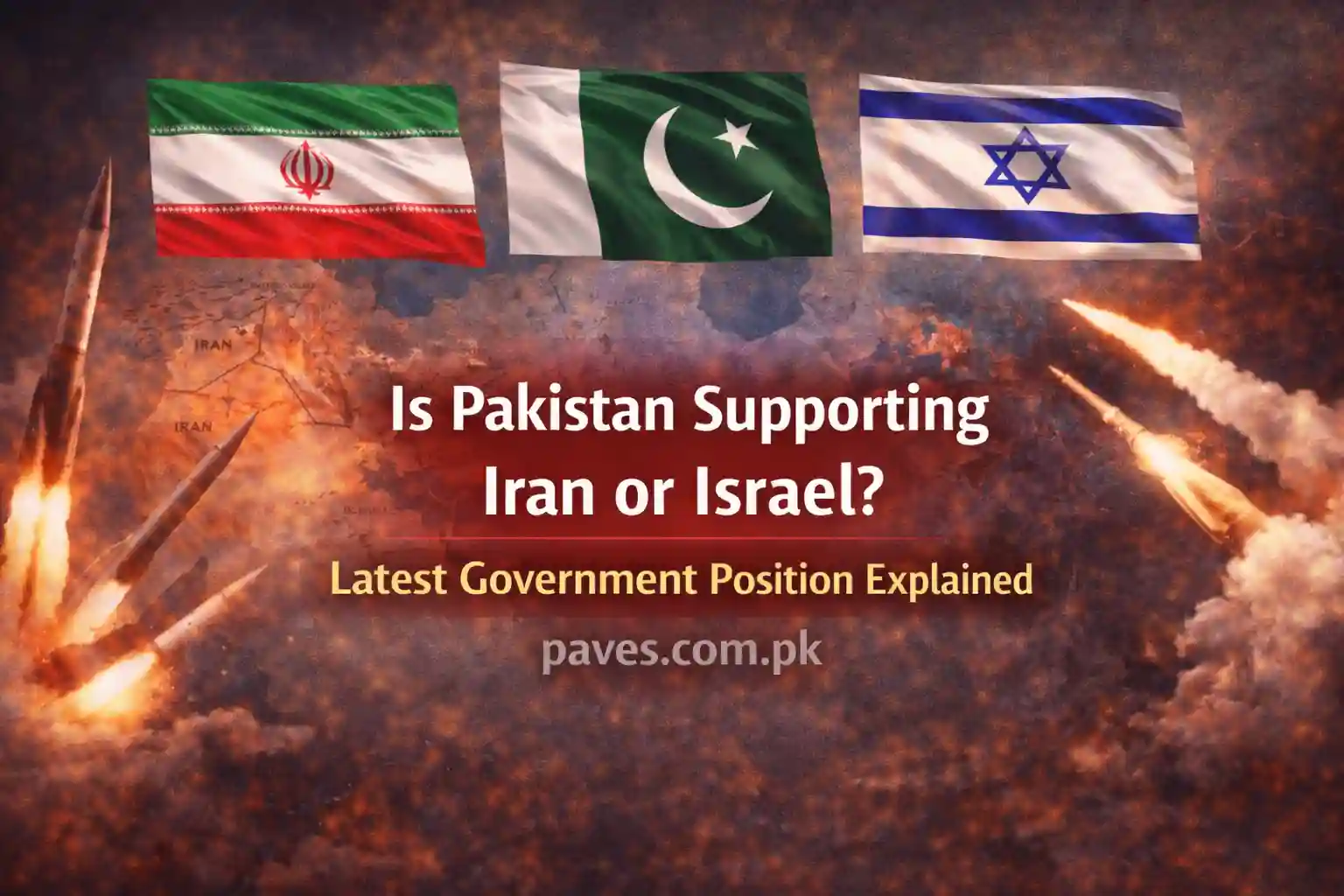
As of March 4, 2026, Pakistan has adopted a position of strategic neutrality and diplomatic balance regarding the ongoing conflict involving Iran, Israel, and the United States. While the government has expressed concern over military strikes against Iran and emphasized respect for sovereignty, it has also avoided any direct military involvement in the conflict.
Pakistan’s leadership is currently navigating a complex geopolitical situation. On one side, the country maintains historic religious, cultural, and economic ties with Iran, its neighboring state. On the other side, Pakistan also has important diplomatic, security, and economic relations with the United States and Western allies.
Because of these competing interests, Islamabad has chosen a policy often described by officials as “constructive neutrality”, focusing on diplomacy, regional stability, and preventing escalation in the Middle East.
Pakistan’s Official Government Stance on the Iran–Israel Conflict
Pakistan’s official stance can be summarized as support for peace, respect for sovereignty, and avoidance of military participation.
After a closed-door in-camera briefing for political leaders on March 4, 2026, the government outlined a two-track diplomatic approach.
1. Condemnation of Military Strikes
Prime Minister Shehbaz Sharif publicly criticized attacks on Iranian territory, calling them a “violation of national sovereignty and international law.”
Pakistan’s position emphasizes that:
- sovereignty of nations must be respected
- military escalation could destabilize the region
- dialogue should replace armed conflict
The government has repeatedly called for immediate de-escalation and diplomatic negotiations.
2. Pakistan Offering Diplomatic Mediation
Deputy Prime Minister Ishaq Dar stated that Pakistan is willing to facilitate peace talks between Iran and the United States if required.
This reflects Pakistan’s traditional role as a regional diplomatic mediator.
Pakistan has previously played similar roles in international diplomacy, including:
- peace negotiations in Afghanistan
- mediation efforts in the Muslim world
- cooperation in international security forums
By offering diplomatic assistance, Pakistan aims to prevent the conflict from expanding into a wider regional war.

Does Pakistan Support Israel or Iran?
Pakistan’s policy toward Israel and Iran is shaped by its long-standing foreign policy principles.
Pakistan’s Position on Israel
Pakistan does not officially recognize Israel as a state. This policy has existed since the country’s creation in 1947.
Pakistan has consistently stated that diplomatic recognition of Israel will only happen after:
- the establishment of an independent Palestinian state
- a peaceful resolution of the Palestine–Israel conflict
Because of this position, Pakistan has historically supported Palestinian rights in international forums.
Pakistan’s Relationship with Iran
Pakistan and Iran share a 900-kilometer border and strong cultural ties. The two countries cooperate in several areas including:
- regional security
- trade and energy
- border management
- Islamic diplomatic cooperation
Pakistan often refers to Iran as a “brotherly neighboring country.”
However, despite this relationship, Pakistan has not provided military support to Iran in the current conflict.

The Airspace Controversy – Are U.S. Jets Using Pakistan?
During the recent escalation, speculation emerged that U.S. military aircraft may have used Pakistani airspace or bases for operations against Iran.
Pakistan’s government strongly rejected these claims.
Official Government Response
The Ministry of Information and the Foreign Office described the reports as:
- misinformation
- propaganda
- unverified speculation
Officials confirmed that Pakistan has not provided military bases or operational support for strikes against Iran.
Airspace Restrictions Explained
Some confusion arose after the Pakistan Airports Authority issued a NOTAM (Notice to Airmen) restricting certain air routes.
These restrictions affected areas near:
- Karachi
- Lahore
However, authorities clarified that the notice was issued for civil aviation safety and operational reasons, not for military activity.

Domestic Reaction Inside Pakistan
The regional conflict has also triggered significant political and public reactions within Pakistan.
Nationwide Protests
Following reports related to the conflict, protests occurred in several cities including:
- Karachi
- Lahore
- Islamabad
- Peshawar
Some demonstrations were directed at U.S. foreign policy and Israeli military actions.
In Karachi, clashes near the U.S. Consulate reportedly resulted in casualties, leading the United States to temporarily suspend operations at some diplomatic missions.
Security Measures and Curfews
Authorities introduced security measures in sensitive regions.
In some parts of Gilgit-Baltistan, temporary curfews were imposed to control unrest and prevent escalation of demonstrations.
Security forces were deployed to maintain public order.
Political Pressure from Opposition Parties
Several opposition parties have called on the government to adopt a stronger position against Israel and the United States.
Some political groups have organized protests demanding:
- stronger diplomatic condemnation
- suspension of cooperation with Israel’s allies
- increased support for Iran and Palestine
The government, however, continues to emphasize diplomatic neutrality and regional stability.

Pakistan’s Strategic Balancing Act
Pakistan’s foreign policy approach reflects a delicate balancing act between multiple geopolitical relationships.
Relations with Iran
Pakistan maintains:
- border cooperation
- trade agreements
- energy discussions
Both countries also work together on security issues along their shared border.
Relations with the United States
At the same time, Pakistan continues diplomatic and economic engagement with the United States.
Key areas of cooperation include:
- economic assistance programs
- counterterrorism cooperation
- international financial institutions
- trade partnerships
Because of these connections, Pakistan avoids policies that could severely damage relations with Washington.
Why Pakistan Avoids Military Involvement
Pakistan has strong reasons to avoid direct participation in Middle Eastern conflicts.
Key strategic concerns
- Economic stability
Pakistan depends on international financial institutions and trade relationships that require diplomatic balance.
- Regional security
Military involvement could destabilize Pakistan’s borders and security environment.
- Energy supply risks
Escalation in the Middle East could disrupt global oil supply routes, affecting Pakistan’s economy.
- Refugee pressure
Large-scale war could trigger refugee movements toward neighboring regions.
Because of these risks, Pakistan prioritizes diplomatic solutions rather than military engagement.
Why Did Iran Attack Pakistan Previously?
Earlier tensions between Iran and Pakistan occurred due to border security operations targeting militant groups.
In January 2024, Iran conducted strikes inside Pakistani territory claiming it was targeting militant groups operating near the border.
Pakistan responded with limited retaliatory strikes, but both countries quickly moved to reduce tensions.
Following diplomatic discussions, both governments agreed to:
- restore diplomatic relations
- strengthen border security cooperation
- prevent future escalation
Since then, relations between the two countries have stabilized.
Pakistan’s Current Position Matrix (2026)
| Issue | Pakistan’s Position |
|---|---|
| U.S./Israel strikes on Iran | Condemned as violation of sovereignty |
| Military participation | No involvement |
| Airspace support | Officially denied |
| Relationship with Iran | Friendly neighbor and strategic partner |
| Relationship with the U.S. | Maintaining diplomatic and economic ties |
| Policy goal | De-escalation and regional stability |
FAQs
Is Pakistan supporting Iran
Pakistan supports Iran diplomatically and calls for respect for its sovereignty, but it has not provided military support.
Does Pakistan support Israel
Pakistan does not officially recognize Israel and supports the establishment of a Palestinian state.
What is Pakistan’s stance on the Iran–Israel conflict
Pakistan supports peaceful dialogue, diplomatic negotiations, and regional stability while avoiding military involvement.
Why did Iran attack Pakistan previously
Previous tensions were linked to cross-border militant groups, but both countries resolved the situation through diplomacy.
Final Analysis
Pakistan’s approach to the Iran–Israel conflict in 2026 reflects a carefully calculated diplomatic strategy. While Islamabad has condemned attacks on Iranian territory and expressed solidarity with its neighboring country, it has also avoided direct military involvement to protect its broader national interests.