Govt Imposes Fixed Charges on Three-Phase Meter and Solar Users
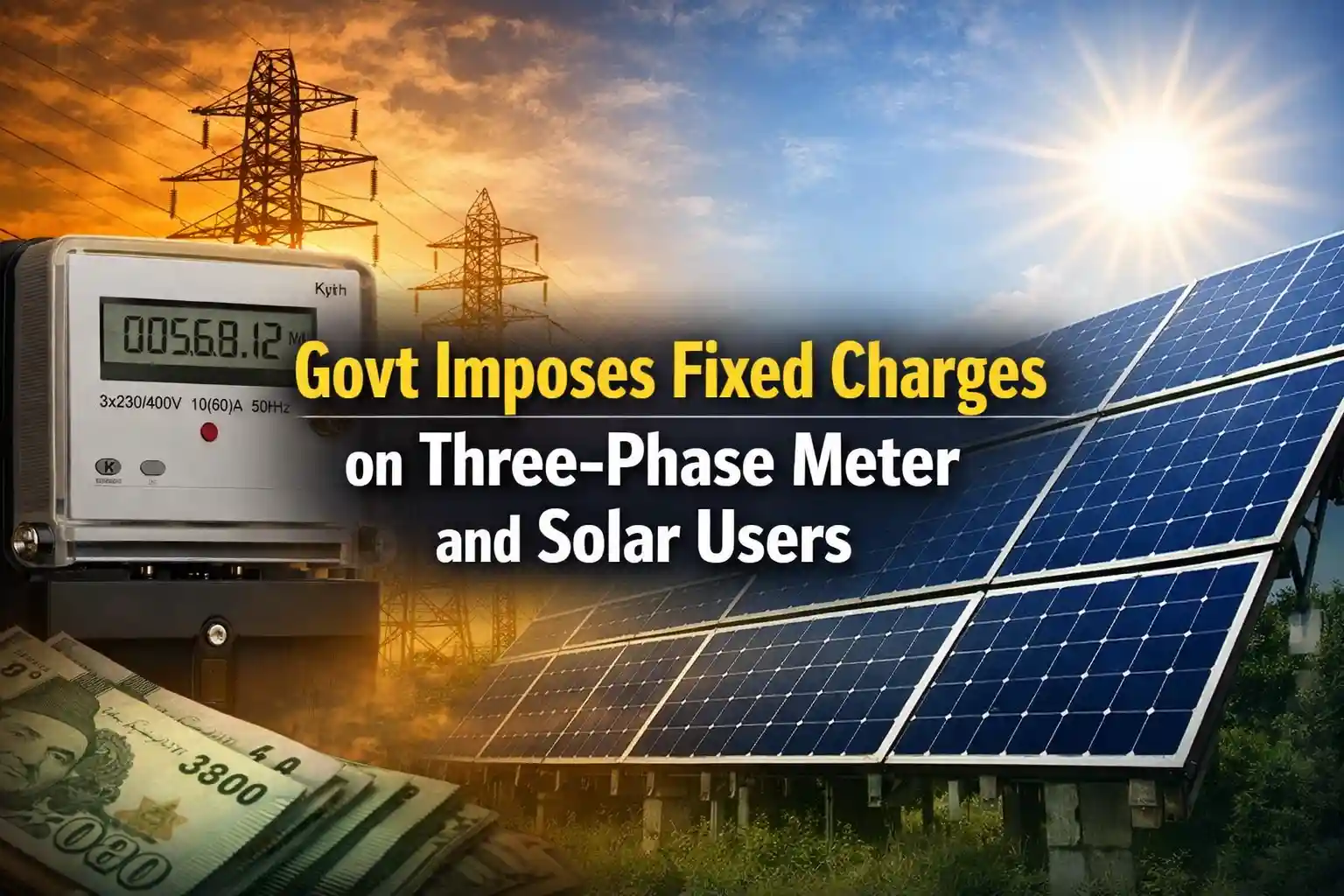
The Government of Pakistan has recently introduced new fixed charges for electricity consumers using three-phase meters and solar systems. This decision has sparked debate among residential, commercial, and industrial consumers across the country. With the increasing adoption of solar energy and higher electricity demand, the government aims to restructure electricity tariffs and ensure stability in the national power system.
The announcement of fixed charges on three-phase meter and solar users is part of broader energy reforms intended to improve revenue collection for power distribution companies and address the growing circular debt in the energy sector. Many consumers are concerned about how these new charges will impact their monthly electricity bills.
In this article, we will explain everything about the government’s decision to impose fixed charges on three-phase meter and solar users, including the reasons behind the policy, its impact on consumers, and what electricity users should expect in the coming months.
What Are Fixed Charges on Three-Phase Meter and Solar Users?
Fixed charges are a mandatory amount that electricity consumers must pay regardless of how much electricity they consume. These charges are applied to cover infrastructure costs, maintenance of the electricity network, and administrative expenses of power distribution companies.
Under the new policy, consumers with three-phase electricity meters and those who have installed solar energy systems will be required to pay a specific fixed monthly charge. The amount will depend on the category of the electricity connection and the size of the power load.
Three-phase meters are commonly used in homes with higher electricity consumption, commercial buildings, factories, and large residential houses. Solar users, especially those connected through net metering systems, are also included in the new policy framework.
The government argues that fixed charges are necessary to maintain the electricity grid infrastructure even when consumers generate their own electricity through solar systems.

Why the Government Imposes Fixed Charges on Three-Phase Meter and Solar Users
The decision to impose fixed charges on three-phase meter and solar users is driven by several economic and energy-related factors.
Addressing Circular Debt in the Power Sector
Pakistan’s power sector has been struggling with circular debt for years. Circular debt occurs when power generation companies, distribution companies, and the government fail to settle payments within the energy supply chain. By introducing fixed charges, the government hopes to generate stable revenue to reduce this financial burden.
Maintaining Electricity Infrastructure
Even when solar users generate electricity during the daytime, they still rely on the national grid during the night or cloudy weather. Maintaining the grid requires constant investment in transmission lines, transformers, and distribution networks. Fixed charges help cover these infrastructure costs.
Ensuring Fair Cost Distribution
According to policymakers, some solar users benefit from the grid without paying their full share of maintenance costs. The new fixed charge policy aims to ensure that all electricity consumers contribute fairly to maintaining the power system.
Stabilizing the National Power Grid
A sudden increase in solar installations across Pakistan has changed electricity demand patterns. Power authorities believe that fixed charges can help stabilize the grid and manage fluctuations caused by distributed energy generation.

Impact of Fixed Charges on Three-Phase Meter Consumers
The introduction of fixed charges will significantly affect households and businesses that use three-phase electricity meters.
Higher Monthly Electricity Bills
Consumers with three-phase meters may see an increase in their electricity bills because fixed charges must be paid even if electricity consumption remains low.
Effect on Small Businesses
Many small businesses such as workshops, small factories, and commercial shops use three-phase connections. The new fixed charges could increase operational costs for these businesses.
Load-Based Billing Structure
The government may apply fixed charges based on the sanctioned load of the electricity connection. This means consumers with higher load capacity will likely pay higher fixed charges.
Encouraging Energy Efficiency
Some experts believe that the policy might encourage consumers to reduce unnecessary electricity load and adopt more efficient energy usage practices.
Impact of Fixed Charges on Solar Energy Users in Pakistan
Solar energy adoption has increased rapidly in Pakistan due to rising electricity prices and frequent power outages. The new fixed charges policy may influence how people view solar investment.
Additional Cost for Solar System Owners
Solar users who are connected to the grid through net metering will now be required to pay fixed monthly charges even if their solar systems produce sufficient electricity.
Possible Slowdown in Solar Adoption
Some analysts fear that new charges could discourage people from installing solar systems in the future because the return on investment may become slightly lower.
Continued Dependence on the National Grid
Even solar users need grid support when solar generation is low. Fixed charges are intended to cover the cost of providing backup electricity supply.
Long-Term Policy Adjustments
The government may review solar policies in the future to balance renewable energy growth with grid sustainability.

Public Reaction to Fixed Charges on Three-Phase Meter and Solar Users
The announcement of fixed charges has generated mixed reactions among electricity consumers and industry experts.
Concerns from Solar Users
Many solar system owners argue that they invested in renewable energy to reduce their electricity bills and support clean energy. They believe additional fixed charges may reduce the benefits of solar adoption.
Support from Power Distribution Companies
Electricity distribution companies support the policy because it ensures stable revenue for maintaining the electricity infrastructure.
Debate Among Energy Experts
Energy analysts are divided on the issue. Some believe fixed charges are necessary for the sustainability of the electricity system, while others argue that the policy should encourage renewable energy rather than impose additional costs.
Government’s Future Energy Policy in Pakistan
The introduction of fixed charges on three-phase meter and solar users is part of a broader reform strategy in Pakistan’s energy sector.
Expansion of Renewable Energy
Despite the new charges, the government continues to support renewable energy projects, including solar and wind power installations.
Improving Electricity Distribution System
Authorities are planning upgrades in the national electricity grid to reduce power losses and improve supply reliability.
Digital Metering and Smart Energy Systems
Future reforms may include smart meters and digital monitoring systems that allow more efficient electricity management.
Long-Term Tariff Reforms
Pakistan’s energy regulators may continue adjusting electricity tariffs to balance consumer affordability with power sector sustainability.
How Consumers Can Manage Electricity Costs
Consumers who are concerned about new fixed charges can take several steps to manage their electricity expenses.
Improve Energy Efficiency
Using energy-efficient appliances, LED lighting, and smart power management systems can help reduce electricity consumption.
Optimize Solar System Usage
Solar users should ensure their systems are properly maintained and operating at maximum efficiency.
Monitor Electricity Load
Consumers with three-phase meters can review their load requirements and adjust if necessary to avoid unnecessary costs.
Stay Updated on Energy Policies
Keeping track of government announcements and electricity tariff updates can help consumers plan their energy expenses more effectively.
Conclusion: Govt Imposes Fixed Charges on Three-Phase Meter and Solar Users
The government’s decision to impose fixed charges on three-phase meter and solar users represents a significant change in Pakistan’s electricity tariff structure. While the policy aims to strengthen the financial stability of the power sector and ensure fair cost distribution, it has also raised concerns among consumers and renewable energy advocates.
As Pakistan continues to face energy challenges, balancing the growth of solar power with the sustainability of the national grid will remain an important policy issue. Consumers should stay informed about electricity regulations and adopt efficient energy practices to manage the impact of these new charges.
FAQs Govt Imposes Fixed Charges on Three-Phase Meter and Solar Users
What are fixed charges on three-phase meter and solar users?
Fixed charges are a mandatory monthly fee that electricity consumers must pay regardless of their electricity consumption. These charges help cover the cost of maintaining the electricity grid infrastructure.
Why did the government impose fixed charges on solar users?
The government introduced fixed charges to ensure that solar users contribute to the maintenance of the national electricity grid, which they still rely on when solar generation is insufficient.
Will electricity bills increase due to fixed charges?
Yes, consumers with three-phase meters and solar systems may see an increase in their electricity bills because fixed charges are added regardless of electricity usage.
Do solar users still benefit after fixed charges?
Yes, solar systems can still reduce electricity bills significantly. However, the new fixed charges may slightly reduce the overall financial savings.
Are fixed charges applied to all electricity consumers?
No, the fixed charges mainly target consumers with three-phase electricity connections and those using solar systems connected to the national grid.