Is Iran a Nuclear Power? Latest 2026 March Update
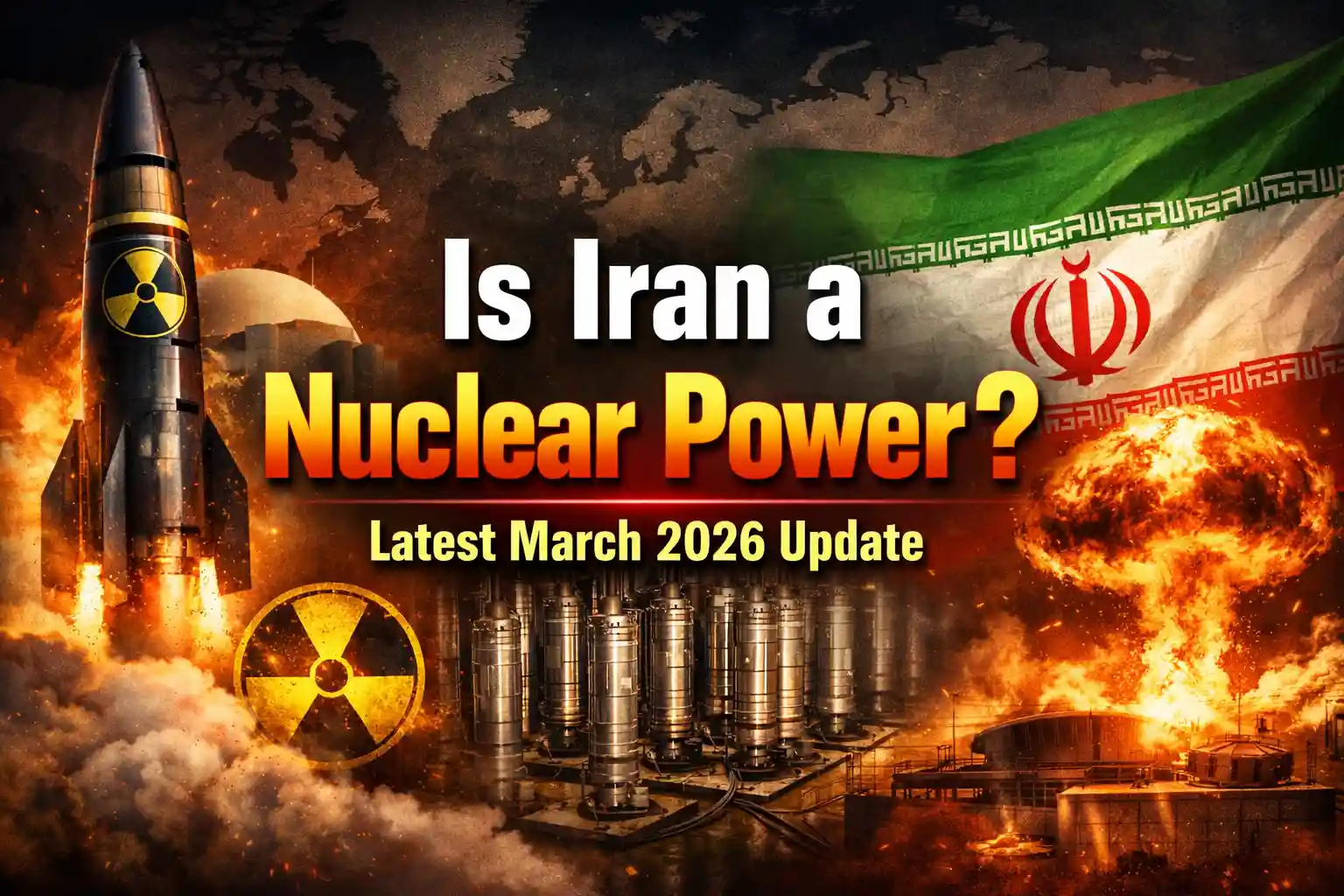
The question “Is Iran a nuclear power?” has become one of the most important geopolitical issues in the world. As of March 2026, Iran has a highly advanced nuclear program, but it is not officially recognized as a nuclear weapon state. There is still no confirmed evidence that Iran possesses a nuclear bomb.
However, Iran’s uranium enrichment progress and growing nuclear stockpile have increased global concerns. Experts believe Iran now has the technical capability to produce nuclear weapons if it chooses to do so, which is why it is often described as a “nuclear threshold state.”
This article explains the latest 2026 update on Iran’s nuclear program, uranium enrichment levels, international concerns, and whether Iran can become a nuclear power in the near future.
Iran Nuclear Program Overview
Iran’s nuclear program began in the 1950s during the reign of Shah Mohammad Reza Pahlavi. At that time, Iran cooperated with Western countries under the “Atoms for Peace” initiative to develop civilian nuclear energy.
After the 1979 Islamic Revolution, the program slowed down for some years but later resumed and expanded significantly.
Today Iran operates several major nuclear facilities, including:
- Natanz Fuel Enrichment Plant
- Fordow Fuel Enrichment Facility
- Isfahan Nuclear Technology Center
- Bushehr Nuclear Power Plant
These facilities are used for uranium enrichment, nuclear fuel production, scientific research, and electricity generation.
Iran insists that its nuclear program is intended for peaceful purposes such as energy production and medical research, but many Western countries suspect that the technology could eventually be used to build nuclear weapons.

Does Iran Have Nuclear Weapons in 2026?
As of March 2026, there is no confirmed proof that Iran has built or tested a nuclear weapon.
International monitoring organizations have not verified the existence of Iranian nuclear warheads. Iran is also a signatory to the Nuclear Non-Proliferation Treaty (NPT), which prohibits member countries from developing nuclear weapons.
However, global experts warn that Iran has developed significant nuclear capabilities that could potentially be used for weapons development in the future.
Because of this situation, Iran is often described as a country that is very close to nuclear weapons capability but has not officially crossed that threshold.

Uranium Enrichment Levels in Iran
The most controversial part of Iran’s nuclear program is its uranium enrichment activities.
Uranium enrichment refers to increasing the concentration of uranium-235, which can be used in nuclear reactors or nuclear weapons.
Typical enrichment levels include:
- 3 to 5 percent for nuclear power plants
- Around 20 percent for research reactors
- About 90 percent for nuclear weapons
Iran has enriched uranium to around 60 percent purity, which is significantly higher than levels normally required for civilian energy programs.
This level of enrichment is considered very close to weapons-grade uranium, which is around 90 percent.
International nuclear inspectors previously estimated that Iran had hundreds of kilograms of uranium enriched to 60 percent, which could theoretically be used to produce several nuclear bombs if further enriched.
However, possessing enriched uranium alone does not mean a country has nuclear weapons, because weapon design, testing, and missile integration are also required.
Why Iran Is Called a Nuclear Threshold State
Many analysts describe Iran as a nuclear threshold country.
This means the country has:
- Advanced uranium enrichment technology
- Large stockpiles of enriched uranium
- Skilled nuclear scientists and engineers
- Advanced centrifuge technology
These factors allow Iran to potentially produce nuclear weapons in a relatively short time if it decides to do so.
Some nuclear experts estimate that Iran could theoretically produce weapons-grade uranium within a few months if enrichment continues to higher levels.
However, building an operational nuclear weapon also requires additional complex steps such as warhead design, miniaturization, and delivery systems.

International Concerns About Iran’s Nuclear Program
Iran’s nuclear activities have created major concerns among Western countries and regional powers.
The main concerns include:
Regional Nuclear Arms Race
If Iran develops nuclear weapons, other Middle Eastern countries such as Saudi Arabia, Turkey, and Egypt might also pursue nuclear programs.
Missile Capabilities
Iran already has advanced ballistic missile technology, which could potentially deliver nuclear warheads if Iran develops them in the future.
Reduced Nuclear Monitoring
In recent years, international nuclear inspectors have faced limited access to Iranian nuclear sites, making it harder to verify Iran’s nuclear activities.
Because of these issues, Iran’s nuclear program remains one of the most closely monitored security concerns in global politics.
Military Attacks and Damage to Iranian Nuclear Sites
Iran’s nuclear facilities have been targeted in several military and cyber operations in recent years.
Some reports indicate that air strikes and sabotage operations damaged parts of the Natanz nuclear facility, which is one of Iran’s main uranium enrichment sites.
Despite these attacks, analysts believe that Iran still retains significant nuclear infrastructure and expertise, meaning its nuclear program has not been completely destroyed.
Many Iranian nuclear facilities are also built deep underground, which makes them difficult to destroy through conventional military strikes.
Iran’s Official Position on Nuclear Weapons
Iran has consistently denied any intention of developing nuclear weapons.
Iranian officials argue that:
- Nuclear weapons are against Islamic principles
- Iran’s nuclear program is purely peaceful
- The program is designed to support energy independence and scientific research
Iran also claims that Western accusations about nuclear weapons development are politically motivated.
However, critics argue that some aspects of Iran’s program, especially high-level uranium enrichment, go beyond what is necessary for civilian nuclear energy.
How Close Is Iran to a Nuclear Bomb?
The exact timeline for Iran to produce a nuclear weapon is uncertain.
Some analysts believe Iran could produce enough weapons-grade uranium within several months if it chooses to enrich its current stockpile further.
Recent estimates suggest Iran has more than 400 kilograms of uranium enriched to about 60 percent, which could theoretically be converted into weapons-grade material if enrichment continues.
However, there is still no confirmed evidence that Iran has started building a nuclear bomb.
The final decision would depend on political leadership, international pressure, and security considerations.
Countries That Currently Possess Nuclear Weapons
To understand Iran’s status, it is helpful to compare it with countries that already have nuclear weapons.
The officially recognized nuclear powers are:
- United States
- Russia
- China
- United Kingdom
- France
Other countries widely believed to possess nuclear weapons include:
- India
- Pakistan
- Israel
- North Korea
Iran is not currently included in this list of nuclear weapon states.
Future of Iran’s Nuclear Program
The future of Iran’s nuclear program depends on several factors, including:
- Diplomatic negotiations with global powers
- International sanctions
- Regional security tensions
- Domestic political decisions within Iran
Ongoing negotiations between Iran and global powers aim to limit Iran’s nuclear activities and prevent the development of nuclear weapons.
However, tensions in the Middle East continue to complicate diplomatic efforts.
If diplomatic solutions fail, experts warn that Iran could eventually decide to develop nuclear weapons as a deterrent strategy.
Conclusion
As of March 2026, Iran is not officially a nuclear weapon state. There is no confirmed evidence that Iran possesses nuclear bombs.
However, Iran has developed advanced nuclear technology and significant uranium enrichment capabilities, bringing it closer to potential nuclear weapons capability than ever before.
Because of these developments, Iran is widely considered a nuclear threshold state, meaning it has the knowledge and resources needed to build nuclear weapons if it decides to take that step.
The international community continues to monitor Iran’s nuclear activities closely because the future of its nuclear program could have major implications for global security and Middle Eastern stability.
FAQs Is Iran a Nuclear Power? Latest 2026 March Update
Is Iran a nuclear power in 2026?
No. Iran is not officially recognized as a nuclear weapon state, and there is no confirmed evidence that it currently possesses nuclear weapons.
How much uranium has Iran enriched?
Iran has enriched uranium up to 60 percent purity, which is much higher than levels normally used for civilian nuclear energy.
Can Iran build a nuclear bomb quickly?
Some experts believe Iran could potentially produce weapons-grade uranium within a few months if enrichment continues.
Why is Iran’s nuclear program controversial?
Many countries fear that Iran could eventually develop nuclear weapons, which could trigger a nuclear arms race in the Middle East.
Does Iran say its nuclear program is peaceful?
Yes. Iran maintains that its nuclear activities are intended for energy production, research, and medical applications, not nuclear weapons.