
Breaking News: Punjab Releases Rs. 309 Million For Hospital Waste Management in 2026
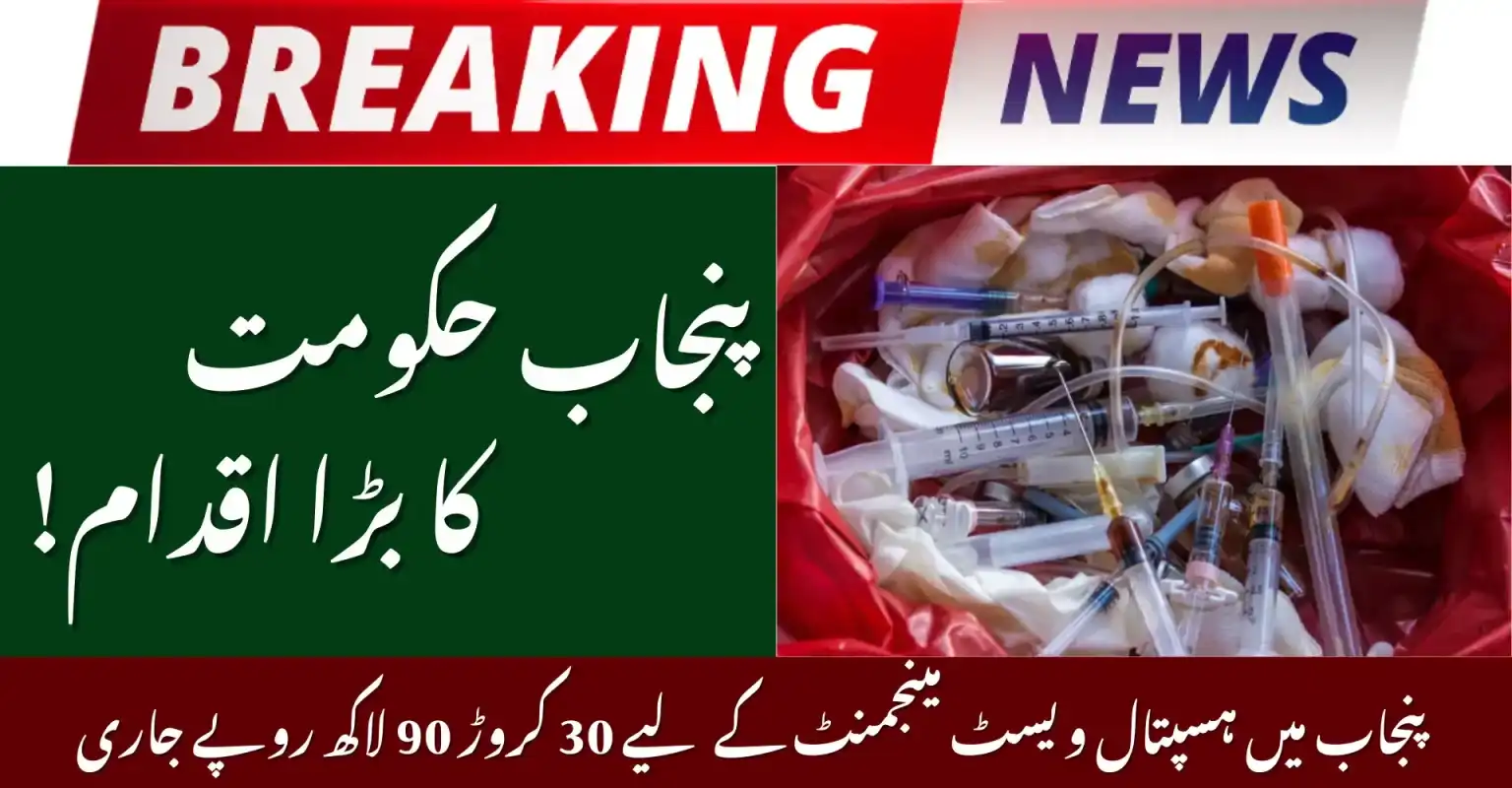
The Punjab government has released Rs. 309 million in 2026 to strengthen hospital waste management systems across public healthcare facilities. The funding aims to improve sanitation standards, ensure safe disposal of biomedical waste, and protect both healthcare workers and nearby communities from potential health hazards.
This financial allocation reflects the province’s growing focus on modern healthcare infrastructure, infection control, and environmental safety. With public hospitals generating large volumes of medical waste every day, the initiative is expected to significantly improve the way hospitals handle hazardous materials such as used syringes, contaminated dressings, gloves, masks, and laboratory waste.
Officials say the funds will primarily support hospitals operating under the Punjab Specialised Healthcare and Medical Education Department (SHC&MED), which manages many of the province’s largest teaching and tertiary care hospitals.
Punjab Allocates Rs. 309 Million for Hospital Waste Management
The Punjab Finance Department recently approved the release of Rs. 309 million to improve sanitation systems and strengthen biomedical waste disposal in government hospitals.
Public hospitals generate thousands of kilograms of medical waste daily. If this waste is not managed properly, it can lead to serious health risks, environmental contamination, and disease transmission.
The new funding will help hospitals upgrade their waste management infrastructure by improving:
- Hospital sanitation facilities
- Biomedical waste segregation systems
- Safe transportation of medical waste
- Modern waste treatment equipment
- Training programs for hospital staff
Health officials emphasize that the initiative will help hospitals meet international hygiene and infection control standards while ensuring safer working conditions for doctors, nurses, and sanitation workers.

Why Hospital Waste Management Is Important
Effective hospital waste management is a critical component of any modern healthcare system. Medical waste often contains infectious materials, sharp objects, chemical substances, and biological contaminants that can be dangerous if handled improperly.
Without proper disposal systems, hospitals may become sources of serious infections and environmental pollution.
Key Reasons Medical Waste Management Matters
| Factor | Why It Matters |
|---|---|
| Infection Control | Prevents spread of diseases inside hospitals |
| Environmental Safety | Reduces contamination of soil, water, and air |
| Public Health Protection | Protects communities near healthcare facilities |
| Regulatory Compliance | Ensures hospitals follow government health policies |
| Workplace Safety | Protects doctors, nurses, and sanitation workers |
Improper handling of medical waste can expose people to dangerous diseases such as hepatitis, HIV, and bacterial infections. Strengthening waste management systems reduces these risks and improves overall hospital safety.

Hospitals Under the Punjab Specialised Healthcare Department
The newly allocated funds will mainly support hospitals operating under the Punjab Specialised Healthcare and Medical Education Department.
This department supervises some of the largest healthcare institutions in the province, including teaching hospitals, medical universities, and specialized treatment centers.
Major institutions expected to benefit include
- Teaching hospitals across Punjab
- Specialized medical institutes
- Government tertiary care hospitals
- Medical universities with clinical facilities
Many of these institutions serve thousands of patients daily, which significantly increases the volume of biomedical waste produced.
Implementing modern waste management systems is therefore essential to maintain safe hospital environments.

How the Funds Will Improve Hospital Sanitation
The Rs. 309 million allocation will support several upgrades designed to improve sanitation and infection control standards in public hospitals.
1. Advanced Waste Segregation Systems
One of the most important improvements will be the introduction of modern waste segregation systems.
Hospitals will separate different categories of medical waste such as:
- Infectious waste
- Sharps and needles
- Chemical waste
- Pharmaceutical waste
- Non-hazardous general waste
Proper segregation helps prevent contamination and ensures each waste category is treated using the correct disposal method.
2. Installation of Modern Disposal Equipment
Many hospitals will upgrade or install advanced waste treatment equipment to safely process hazardous materials.
Examples include:
- Autoclaves for sterilizing infectious waste
- Medical incinerators for controlled burning of hazardous waste
- Waste shredders for reducing waste volume
- Sterilization units for contaminated materials
These technologies ensure medical waste is treated safely before final disposal.
3. Improved Waste Collection and Transport
Internal waste transportation inside hospitals is another major challenge.
The new funding will support:
- specialized waste containers
- covered waste transportation carts
- separate storage areas for hazardous waste
These systems help prevent dangerous materials from mixing with general hospital waste.
4. Staff Training and Safety Protocols
Medical waste handling requires trained personnel.
Hospitals will conduct training programs for doctors, nurses, sanitation workers, and laboratory staff.
Training will focus on:
- safe biomedical waste handling
- proper disposal procedures
- infection prevention measures
- correct use of protective equipment (PPE)
Well-trained staff play a critical role in maintaining hospital safety.

Rs. 250 Million Allocated for New Children’s Hospital in Rawalpindi
Alongside the sanitation funding, the Punjab government has also allocated Rs. 250 million for the construction of a new children’s hospital in Rawalpindi.
The project aims to expand pediatric healthcare services in northern Punjab, where demand for specialized child treatment has increased significantly.
Expected benefits of the new hospital
- improved pediatric healthcare services
- better emergency treatment for children
- reduced burden on existing hospitals
- expanded access to specialized medical care
Once completed, the hospital will strengthen the regional healthcare network and improve access to child healthcare services.
Tourism Development Corporation of Punjab Receives Rs. 25 Million
In addition to healthcare initiatives, the Tourism Development Corporation of Punjab (TDCP) has received Rs. 25 million to promote tourism across the province.
Punjab hosts numerous historic and cultural attractions, including:
- Lahore Fort
- Badshahi Mosque
- Kartarpur Corridor
- Rohtas Fort
- Salt Range tourism sites
The funding will support tourism marketing campaigns, visitor facilities, and heritage promotion projects.
Tourism development contributes significantly to local businesses, hospitality industries, and regional economic growth.
Digital Financial System Ensures Transparency
Government officials confirmed that the funds were transferred through a digital financial management system.
This system ensures:
- transparency in public spending
- accurate monitoring of fund usage
- faster fund allocation to institutions
- reduced administrative delays
Digital monitoring helps ensure that public funds are used efficiently and projects are completed on time.
Impact on Punjab’s Healthcare System
The funding initiative is expected to strengthen the province’s healthcare infrastructure and improve hospital safety standards.
Expected improvements
| Area | Impact |
|---|---|
| Hospital Hygiene | Cleaner and safer healthcare facilities |
| Infection Control | Reduced risk of hospital-acquired infections |
| Waste Management | Safer biomedical waste disposal |
| Pediatric Healthcare | Improved services for children |
| Healthcare Infrastructure | Stronger public hospital system |
These improvements will benefit patients, healthcare professionals, and local communities across Punjab.
Role of Proper Medical Waste Disposal
Biomedical waste management is not only a hospital concern but also a public health and environmental issue.
Improper disposal of medical waste can:
- contaminate drinking water sources
- spread infectious diseases
- harm sanitation workers
- pollute air and soil
By improving waste management systems, Punjab is moving closer to sustainable healthcare practices that protect both people and the environment.
Frequently Asked Questions
Why did Punjab release Rs. 309 million for hospital waste management
The funding was released to improve hospital sanitation, strengthen biomedical waste disposal systems, and ensure safer healthcare environments.
Which department will manage the waste management improvements
Hospitals operating under the Punjab Specialised Healthcare and Medical Education Department will implement the upgrades.
What is biomedical waste in hospitals
Biomedical waste includes used syringes, medical gloves, contaminated materials, laboratory waste, and other hazardous healthcare waste.
How will the new children’s hospital in Rawalpindi help
The hospital will expand pediatric healthcare services and reduce the burden on existing medical facilities in northern Punjab.
Why is proper hospital waste disposal important
Proper waste disposal prevents infections, protects healthcare workers, and reduces environmental pollution.
Conclusion
The release of Rs. 309 million for hospital waste management in 2026 marks a significant step toward improving healthcare standards in Punjab. By upgrading waste disposal systems, introducing modern sanitation infrastructure, and strengthening infection control measures, the government aims to create safer hospitals for patients and medical staff.
Combined with new investments in pediatric healthcare and tourism development, the initiative reflects the province’s broader commitment to modern infrastructure, public health protection, and sustainable development.