
When and Where Are Funeral Prayers for Ayatollah Khamenei? Date, Time & Venue For Iran Supreme Leader
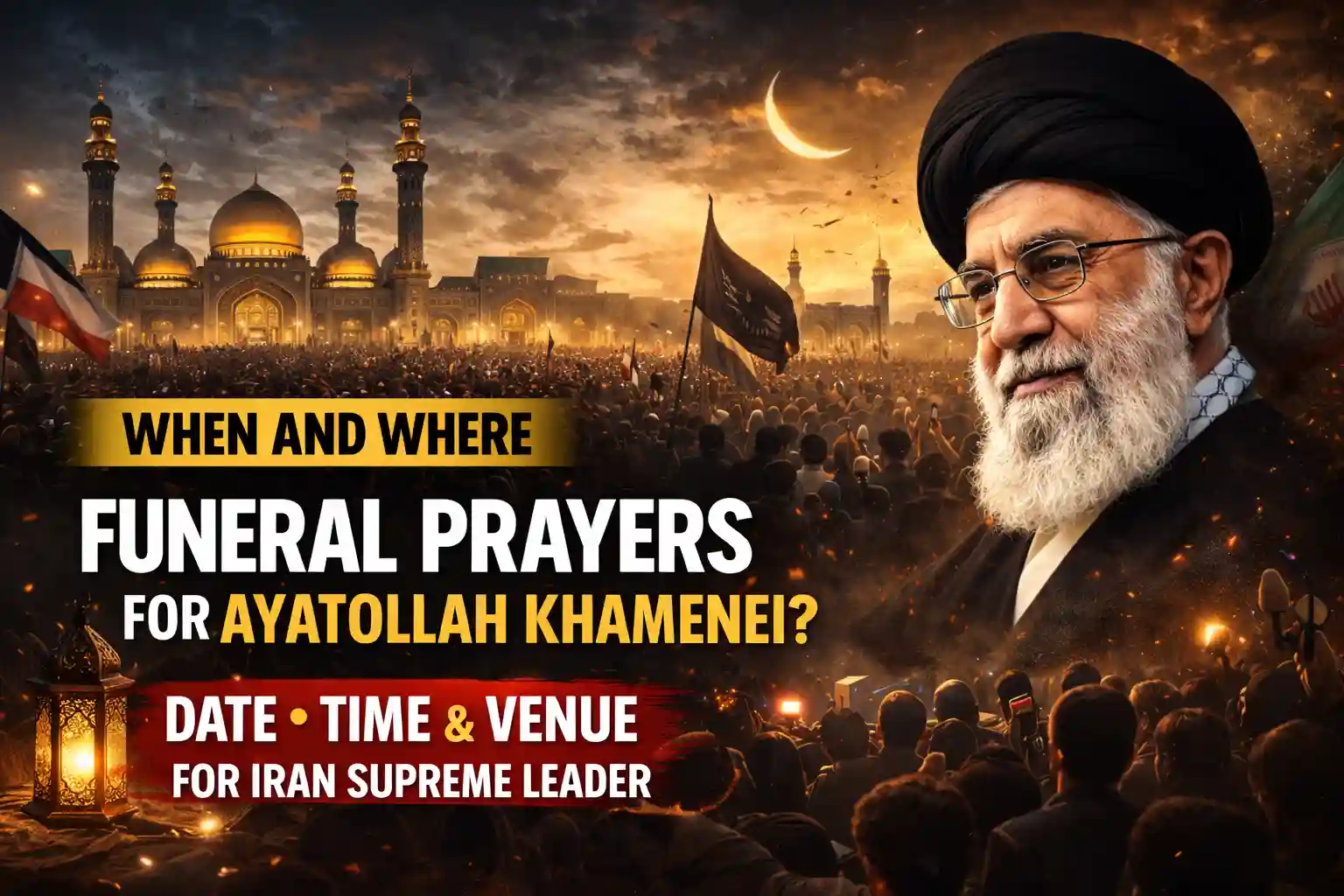
The reported death of Ayatollah Ali Khamenei, the long-serving Supreme Leader of Iran, has drawn global attention and widespread mourning across the Middle East and the wider Muslim world. As Iran’s highest political and religious authority for more than three decades, Khamenei played a decisive role in shaping the country’s policies, ideology, and regional influence.
Following the announcement of his death, Iranian authorities prepared a series of mourning events and funeral ceremonies so that millions of citizens could pay their final respects. Funeral prayers for the late leader are expected to take place in Tehran, followed by burial arrangements in another major Iranian city.
This article explains when and where the funeral prayers for Ayatollah Khamenei will be held, the expected schedule of ceremonies, the venue of the prayer gathering, and the significance of the funeral event for Iran and the world.
Funeral Prayers for Ayatollah Khamenei: Date, Time & Venue
The funeral ceremonies for Ayatollah Ali Khamenei are expected to begin with a large public farewell event in the Iranian capital, Tehran.
According to early reports from Iranian officials, a three-day farewell ceremony will be organized so citizens and officials can gather and pay tribute to the late Supreme Leader. The public viewing and mourning events are scheduled to begin at Imam Khomeini Prayer Hall in Tehran, one of the largest venues used for national religious ceremonies.
Key Details of the Funeral Ceremony
Date of Ceremony
The farewell ceremonies are expected to begin in early March 2026 and continue for several days as part of nationwide mourning.
Time
Public viewing of the body is expected to begin around 10 PM local time at the prayer hall where citizens can attend the ceremony and offer condolences.
Venue
The main gathering location for funeral prayers and mourning ceremonies will be Imam Khomeini Prayer Hall in Tehran.
Public Attendance
Authorities have indicated that the ceremony will be open to the public, allowing large crowds to attend and participate in prayers.
Because of Khamenei’s influence and status, millions of people are expected to gather for the funeral ceremonies.

National Mourning in Iran After the Death of Ayatollah Khamenei
The death of the Iranian Supreme Leader has triggered nationwide mourning across the country. Iranian authorities have organized a series of ceremonies, religious gatherings, and commemorations.
Major cities where mourning ceremonies are expected include:
Tehran
Qom
Mashhad
Isfahan
Tabriz
Government buildings, mosques, and religious institutions across Iran are expected to host prayer gatherings and Quran recitations during the mourning period.
Large crowds have already begun gathering in Tehran ahead of the official funeral prayers, reflecting the political and religious significance of the event.

Burial Location of Ayatollah Khamenei
After the funeral prayers and mourning ceremonies in Tehran, reports suggest that the body of Ayatollah Khamenei will be transferred to Mashhad, the city where he was born.
Mashhad is one of the most sacred cities in Shia Islam and is home to the shrine of Imam Reza, the eighth Shia Imam. Many religious leaders and scholars from Iran have been buried in Mashhad due to its spiritual importance.
Iranian media reports indicate that burial arrangements are expected to take place there after the Tehran funeral ceremonies conclude.

Who Was Ayatollah Ali Khamenei?
Ayatollah Ali Khamenei was one of the most powerful figures in Iran’s modern political history. He served as the Supreme Leader of Iran since 1989, following the death of the founder of the Islamic Republic, Ayatollah Ruhollah Khomeini.
Basic Facts About Ayatollah Khamenei
Born
1939 in Mashhad, Iran
Political Position
Supreme Leader of Iran (1989–2026)
Previous Role
President of Iran (1981–1989)
Religious Status
Senior Shia cleric and Ayatollah
As Supreme Leader, he controlled major state institutions including the military, judiciary, and key political decisions in Iran.

Why the Funeral of Ayatollah Khamenei Is a Historic Event
The funeral of a Supreme Leader in Iran is not just a religious ceremony but also a major political moment in the country’s history.
Several factors make the funeral of Ayatollah Khamenei extremely important.
Leadership Transition
After the death of a Supreme Leader, Iran’s Assembly of Experts is responsible for selecting a new leader. This process is critical for the future of the country’s political direction.
Regional Political Impact
Khamenei played a major role in shaping Iran’s foreign policy toward countries such as the United States, Israel, Saudi Arabia, and Iraq.
His death may influence future diplomatic relations and regional alliances.
Massive Public Participation
Iran has a history of extremely large funerals for its leaders. For example, the funeral of Ayatollah Ruhollah Khomeini in 1989 attracted millions of mourners and became one of the largest funeral gatherings in modern history.
Experts expect similar large crowds for the funeral of Ayatollah Khamenei.
Religious Importance of Funeral Prayers in Shia Islam
Funeral prayers, known in Islam as Salat al-Janazah, are a significant religious ritual performed before the burial of a deceased Muslim.
The prayer usually includes:
Supplications for forgiveness
Recitation of Islamic prayers
Collective participation of believers
For influential religious leaders such as Ayatollah Khamenei, these prayers are often led by senior clerics and attended by thousands or even millions of followers.
Security Arrangements During the Funeral Ceremony
Because of the political significance of the event and the expected large crowds, security measures will likely be heightened across Tehran during the funeral.
Authorities may deploy:
Police forces
Revolutionary Guard units
Emergency services
Crowd management teams
Security is particularly important due to the ongoing tensions in the Middle East and the presence of international media covering the event.
Global Reactions to the Death of Iran’s Supreme Leader
The death of Ayatollah Khamenei has sparked reactions from political leaders, governments, and religious communities around the world.
Countries in the Middle East and beyond are expected to send official condolences or diplomatic representatives to attend the funeral ceremonies.
Political analysts are also closely watching the developments in Iran as the country prepares to appoint a new Supreme Leader.
Expected Timeline of Funeral Events
Although the full schedule may change depending on official announcements, the funeral events are expected to follow a multi-day structure.
Day One
Public farewell ceremony begins in Tehran.
Day Two
Funeral prayers and religious gatherings take place at Imam Khomeini Prayer Hall.
Day Three
Funeral procession and transfer of the body for burial.
Final Stage
Burial ceremony expected in Mashhad.
These ceremonies are part of a broader mourning period that may last several weeks.
Conclusion
The funeral prayers for Ayatollah Ali Khamenei, Iran’s Supreme Leader for more than three decades, represent one of the most significant religious and political events in the country’s recent history.
The ceremonies are expected to begin in Tehran at Imam Khomeini Prayer Hall, where citizens and officials will gather to offer funeral prayers and pay tribute to the late leader.
Following the Tehran ceremonies, the body is expected to be transferred to Mashhad, his birthplace, where burial arrangements will take place.
Beyond the mourning ceremonies, Khamenei’s death marks a major turning point for Iran as the country prepares for a leadership transition that could shape its political future and regional role.
FAQs When and Where Are Funeral Prayers for Ayatollah Khamenei
When are the funeral prayers for Ayatollah Khamenei?
The funeral ceremonies are expected to begin with a public farewell event in Tehran, with prayers and mourning gatherings continuing for several days.
Where will the funeral prayers for Ayatollah Khamenei be held?
The main funeral prayers are expected to take place at Imam Khomeini Prayer Hall in Tehran, a major venue used for national religious ceremonies.
Where will Ayatollah Khamenei be buried?
Reports suggest he will be buried in Mashhad, his birthplace and one of the holiest cities in Shia Islam.
How long will the mourning period last in Iran?
Iran traditionally observes extended mourning periods for national leaders, and ceremonies may continue for several days or even weeks.
Why is Ayatollah Khamenei important in global politics?
As Iran’s Supreme Leader since 1989, he played a central role in shaping Iran’s political system, foreign policy, and regional influence in the Middle East.