Who Leads Iran Now? Leadership Crisis Explained
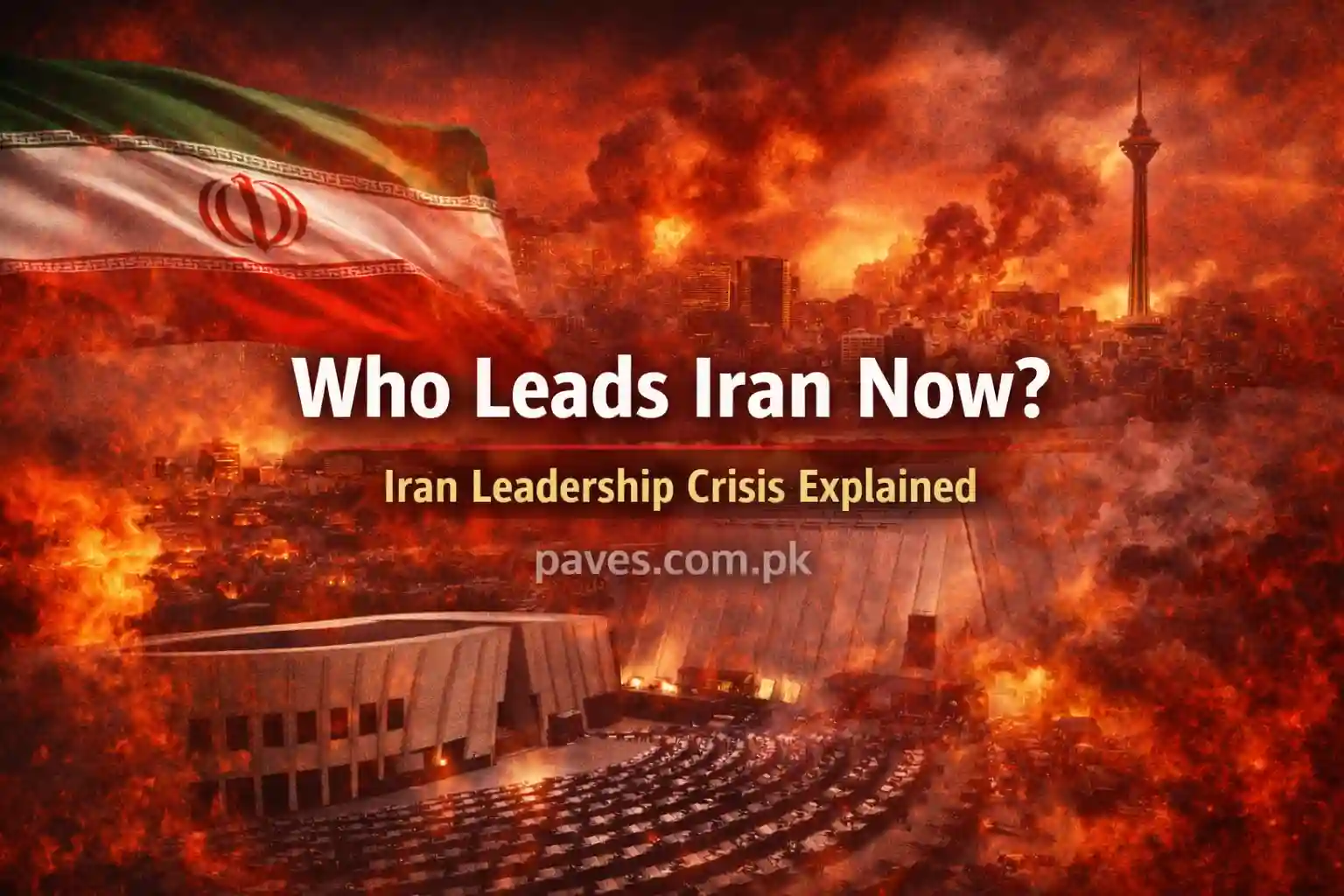
Iran is currently facing one of the most dramatic political transitions in its modern history. Following reports that Ayatollah Ali Khamenei, Iran’s Supreme Leader, was killed during the opening phase of the military conflict in late February 2026, the country has entered a period of uncertainty regarding its leadership structure.
Search trends such as “Iran supreme leader killed today,” “Iran new supreme leader,” “Iran supreme leader successor,” and “who leads Iran now” have surged globally as the situation evolves.
Under Iran’s constitution, the death of a Supreme Leader immediately triggers a temporary governance structure until a permanent successor is chosen. The current political environment is further complicated by the ongoing regional conflict and military escalation.
This guide explains who currently leads Iran, how the leadership transition works, and which figures are most likely to become the next Supreme Leader.
Current Leadership Structure in Iran
At the moment, Iran does not have a formally confirmed permanent Supreme Leader following the reported death of Ayatollah Ali Khamenei.
Instead, governance responsibilities have temporarily shifted to a three-member Interim Leadership Council established under Article 111 of the Iranian Constitution.
This council assumes the duties of the Supreme Leader until the Assembly of Experts selects a permanent successor.
The current interim leadership council reportedly includes:
- Masoud Pezeshkian, President of Iran
- Gholam-Hossein Mohseni-Ejei, Chief Justice
- Ayatollah Alireza Arafi, senior cleric and Guardian Council member
This council manages state affairs, including military coordination and national security decisions, but it does not possess the full authority of a permanent Supreme Leader.

Why the Supreme Leader Position Is So Important
The Supreme Leader of Iran holds the highest authority in the country’s political and religious system.
Unlike the president, who manages government administration, the Supreme Leader controls major national institutions such as:
- the armed forces
- the Islamic Revolutionary Guard Corps (IRGC)
- intelligence agencies
- the judiciary
- state media
- key foreign policy decisions
Because of these powers, the identity of the next Supreme Leader will significantly influence Iran’s domestic politics and its relations with the rest of the world.

Mojtaba Khamenei: The Leading Candidate
Among potential successors, Mojtaba Khamenei, the son of the late Supreme Leader, has emerged as the most widely discussed candidate.
Mojtaba Khamenei is a cleric who has long been considered influential behind the scenes in Iran’s political system.
Several reports indicate that he enjoys strong support from elements within the Islamic Revolutionary Guard Corps (IRGC), which is one of the most powerful institutions in Iran.
Support from the IRGC is widely seen as a key factor in determining the next Supreme Leader, especially during a period of military conflict.
If Mojtaba Khamenei is formally selected, it would represent a rare example of quasi-dynastic succession within Iran’s clerical political system, something that remains controversial among many religious scholars.
The Role of the Assembly of Experts
The final decision about Iran’s next Supreme Leader rests with the Assembly of Experts, an 88-member body composed of senior clerics.
This council has the constitutional authority to:
- appoint the Supreme Leader
- supervise the Supreme Leader
- remove the Supreme Leader if necessary
Following the death of the previous leader, the Assembly of Experts must meet to deliberate and vote on the successor.
Because of the current security situation and ongoing military tensions, these meetings may be held in secure or undisclosed locations.
A formal public announcement of the new leader is expected only once the political environment stabilizes.
Other Possible Candidates for Supreme Leader
Although Mojtaba Khamenei is widely viewed as the front-runner, several other influential figures are also being discussed.
Ali Larijani
Ali Larijani is a veteran Iranian political figure who previously served as Speaker of Parliament and held senior security positions.
He is considered politically experienced and respected among parts of Iran’s establishment.
Some analysts believe Larijani could emerge as a compromise candidate if consensus around Mojtaba Khamenei proves difficult.
Hassan Khomeini
Hassan Khomeini is the grandson of Ayatollah Ruhollah Khomeini, the founder of the Islamic Republic.
He is often associated with moderate or reformist factions within Iranian politics.
While his family legacy gives him symbolic influence, he currently lacks the strong institutional backing that candidates supported by the IRGC may possess.
Alireza Arafi
Ayatollah Alireza Arafi, a member of the interim leadership council, is also mentioned as a potential compromise figure.
As a respected religious scholar, he could potentially serve as a unifying candidate if political divisions deepen during the succession process.
How the War Is Affecting Iran’s Leadership Transition
The leadership crisis is unfolding during an intense military conflict involving Iran and several regional actors.
This conflict has forced Iran’s political and military institutions to focus heavily on national security and defense operations.
Because of these circumstances, decision-making power has increasingly shifted toward military institutions such as the Islamic Revolutionary Guard Corps.
The IRGC now plays a central role in coordinating defense strategy, missile operations, and military responses.
As a result, analysts believe that any future Supreme Leader will likely need strong support from the IRGC to effectively govern during wartime conditions.
Iran’s Political System During a Leadership Transition
Iran’s constitution provides mechanisms designed to maintain stability during leadership changes.
These mechanisms include:
- the Interim Leadership Council managing state affairs
- the Assembly of Experts selecting a new leader
- continued operation of the government and security institutions
This framework was originally designed to prevent political instability following the death of a Supreme Leader.
However, the current situation is unusually complex because it coincides with a major military conflict.
Why the Iran Leadership Crisis Is Important Globally
The identity of Iran’s next Supreme Leader will have major implications for international politics.
Key areas affected include:
- Iran’s nuclear policy
- regional military strategy
- diplomatic relations with Western countries
- relations with allies such as Russia and China
The new leader will ultimately shape how Iran responds to both internal political pressures and external geopolitical challenges.
Current Leadership Situation Summary
| Position | Current Status |
|---|---|
| Supreme Leader | Vacant following reported death of Ali Khamenei |
| Acting Authority | Interim Leadership Council under Article 111 |
| Key Members | President Masoud Pezeshkian, Chief Justice Mohseni-Ejei, Ayatollah Arafi |
| Leading Candidate | Mojtaba Khamenei |
| Selection Authority | Assembly of Experts |
Final Analysis of Iran’s Leadership Crisis
Iran is currently navigating a sensitive transition period that could reshape the country’s political future.
With the Supreme Leader position vacant, the interim leadership council is managing state affairs while the Assembly of Experts prepares to appoint a permanent successor.
Among the potential candidates, Mojtaba Khamenei appears to be the most prominent contender, though other political and religious figures remain in consideration.