
Chi Si Prende Cura Di Chi Cura? Europe’s Care Crisis Explained
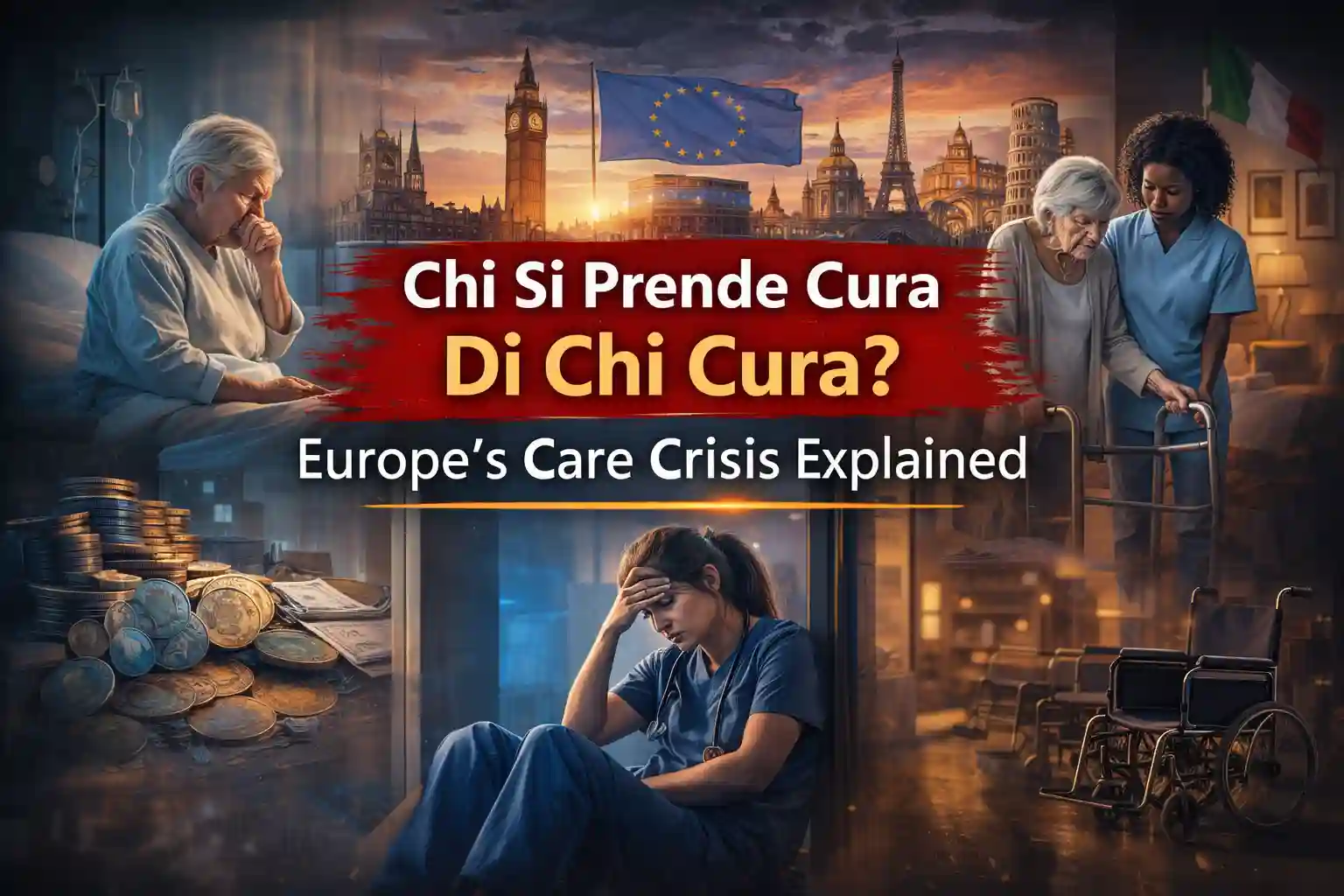
Chi Si Prende Cura Di Chi Cura?” means “Who takes care of those who care?” This powerful Italian phrase reflects one of the most urgent social challenges facing Europe today: the growing care crisis. Across the continent, millions of caregivers support elderly parents, disabled relatives, and chronically ill family members. Yet the caregivers themselves often lack financial protection, emotional support, and institutional recognition.
Europe’s demographic shift, shrinking workforce, and rising healthcare costs have created a structural imbalance. The demand for long term care services is increasing rapidly, while the supply of professional and informal caregivers is not keeping pace. This article explains the causes, consequences, and possible solutions to Europe’s care crisis in clear and structured detail.
What Is Europe’s Care Crisis? Understanding the Core Issue
Europe’s care crisis refers to the widening gap between people who need care and the systems available to provide it. This includes elderly individuals, people with disabilities, and those suffering from chronic illnesses.
Several factors contribute to the crisis:
• Rapid population aging
• Declining birth rates
• Shortage of professional care workers
• Heavy dependence on unpaid family caregivers
• Increasing pressure on public welfare systems
Countries such as Italy, Germany, France, and Spain are among the most affected due to their aging populations. As the proportion of elderly citizens rises, so does the demand for daily assistance, medical supervision, and long term residential care.

Aging Population and Long Term Care Demand in Europe
Europe has one of the highest life expectancies in the world. While this is a positive achievement, it also creates complex social and economic challenges. Many people are living longer, but not necessarily healthier lives.
By 2050, a significant share of Europe’s population will be over the age of 65. This means:
• Higher rates of dementia and chronic diseases
• Greater need for home based support
• Expansion of nursing homes and assisted living facilities
• Increased healthcare spending
Public systems were not originally designed to manage such a large elderly population for extended periods. Pension systems, healthcare budgets, and social services are under growing strain.

Unpaid Family Caregivers: The Hidden Pillar of Europe’s Care System
The majority of caregiving in Europe happens inside homes. Family members provide daily support without formal contracts or salaries. Women represent the largest share of unpaid caregivers.
Unpaid caregivers often face:
• Reduced working hours
• Career interruptions
• Financial stress
• Emotional exhaustion
• Social isolation
The economic value of unpaid care is enormous, but it is rarely included in official economic calculations. Many caregivers struggle silently, balancing employment and family responsibilities. The phrase “Chi Si Prende Cura Di Chi Cura” highlights this imbalance. Caregivers support others, yet they themselves are often unsupported.

Professional Care Worker Shortage Across Europe
Europe is also experiencing a shortage of professional care workers. The sector faces structural problems including low wages, limited job security, and demanding working conditions.
In countries such as Poland and Romania, many trained care workers migrate to wealthier nations like Germany and Italy for better pay. However, as Eastern European economies improve, fewer workers choose to migrate, worsening shortages in Western Europe.
Without improved compensation and working conditions, the care profession struggles to attract and retain workers.

Economic Impact of Europe’s Care Crisis
The care crisis affects labor markets, productivity, and national budgets.
When individuals reduce working hours to provide care, overall economic productivity declines. Women are disproportionately affected, which widens gender income gaps and pension inequality.
Public spending on healthcare and social protection continues to rise. Governments must balance investments in care services with other priorities such as education and infrastructure.
Failing to address the care crisis could slow economic growth and increase social inequality.
Gender Inequality and the Care Burden
Care responsibilities are not distributed equally. Women perform the majority of unpaid caregiving work across Europe. This reinforces structural gender inequality.
Consequences include:
• Lower lifetime earnings
• Reduced career advancement
• Higher risk of poverty in old age
• Increased mental health strain
Addressing Europe’s care crisis requires policies that encourage shared caregiving responsibilities and support women’s full participation in the labor market.
Policy Solutions to Europe’s Care Crisis
Several policy measures are being discussed and implemented across Europe:
• Paid caregiver leave
• Financial allowances for family caregivers
• Increased wages for care professionals
• Public investment in home care services
• Expansion of long term care insurance
• Training and certification programs
While healthcare remains largely under national control, coordination at the European level encourages social protection reforms and workforce development.
Sustainable reform requires long term political commitment and public awareness.
Technology and Innovation in the Care Sector
Technology offers partial solutions to Europe’s care crisis. Remote health monitoring systems, telemedicine platforms, and digital scheduling tools can reduce pressure on caregivers.
Smart home devices allow elderly individuals to live independently for longer periods. However, technology cannot fully replace human interaction and physical assistance.
The goal should be to integrate innovation in ways that enhance human care rather than substitute it.
The Future of Care in Europe
Europe’s care crisis will continue to intensify unless structural reforms are implemented. Demographic trends are predictable. The aging population will grow, and the demand for long term care will increase.
The key questions include:
• How can governments fund sustainable care systems?
• How can societies value caregivers more fairly?
• How can gender inequality in caregiving be reduced?
• How can the care profession become more attractive?
If Europe fails to answer these questions, the social and economic consequences could be severe.
FAQs About Chi Si Prende Cura Di Chi Cura and Europe’s Care Crisis
What does Chi Si Prende Cura Di Chi Cura mean?
It means “Who takes care of those who care?” The phrase reflects the lack of support for caregivers in Europe.
Why is Europe facing a care crisis?
Europe is aging rapidly, fertility rates are declining, and there is a shortage of professional care workers. This creates a gap between demand and supply.
Which countries are most affected?
Countries with older populations such as Italy, Germany, France, and Spain face significant care system pressure.
How does the crisis affect women?
Women provide most unpaid caregiving, which reduces their income, career opportunities, and long term financial security.
What solutions are being proposed?
Governments are considering caregiver allowances, better wages for professionals, expanded home care services, and stronger social protection systems.
Can technology solve Europe’s care crisis?
Technology can support care delivery but cannot fully replace human caregivers. A balanced approach is necessary.
Conclusion: Why Europe Must Support Its Caregivers
The phrase “Chi Si Prende Cura Di Chi Cura” captures the emotional and structural reality of Europe’s care crisis. Caregivers are the foundation of social well being, yet they often lack recognition and protection.
Europe must invest in sustainable care systems, fair compensation, and gender balanced policies. Supporting caregivers is not only a moral responsibility but also an economic necessity.