How Iran Will Choose a New Supreme Leader After Khamenei – Latest Updates
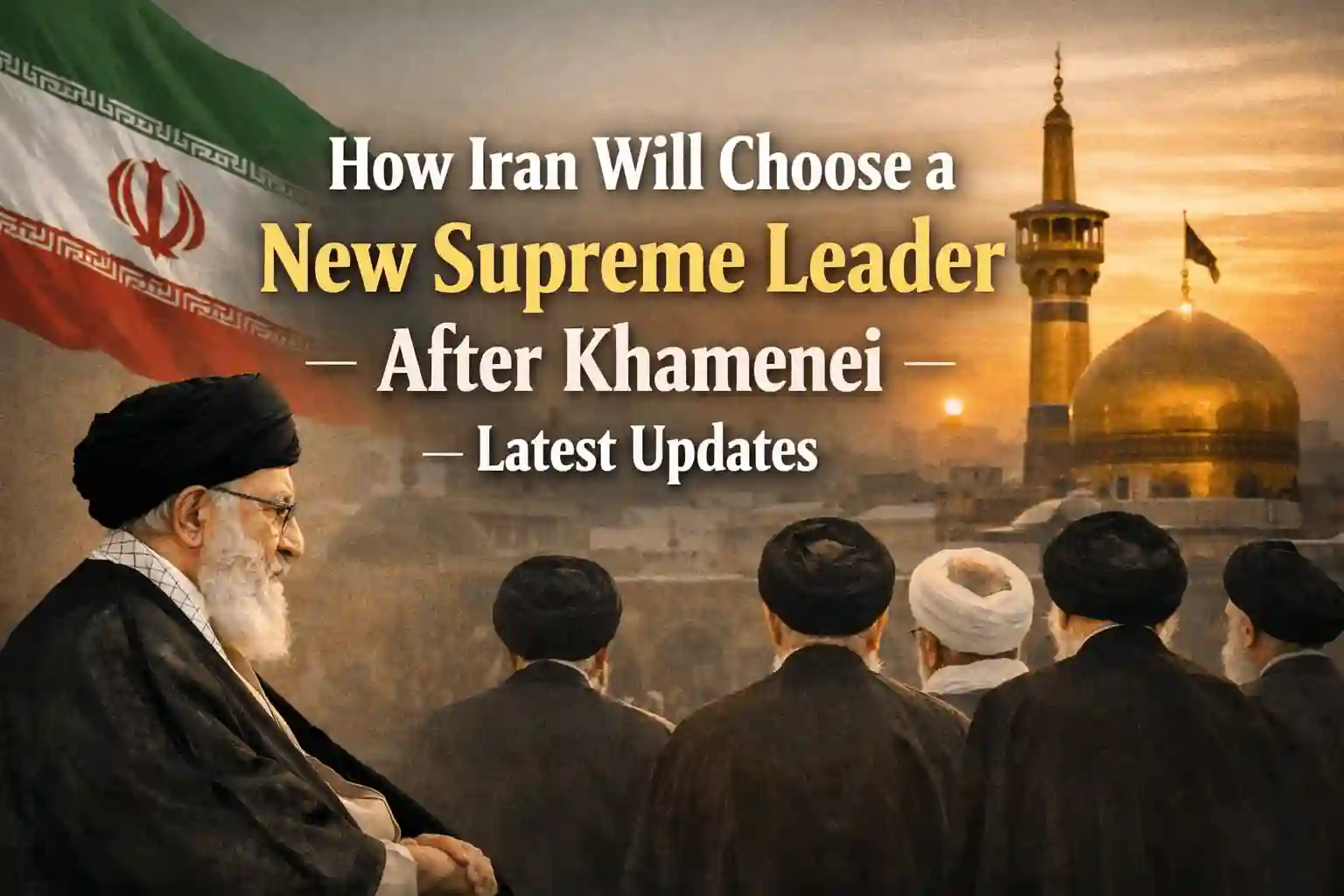
Iran is entering a historic and sensitive political phase as discussions intensify over how the country will choose its next Supreme Leader after Ali Khamenei. As the highest authority in the Islamic Republic, the Supreme Leader holds ultimate power over Iran’s political system, military structure, judiciary, and foreign policy. Any transition in this position is not only significant for Iran but also for the wider Middle East and global geopolitics.
This article explains how Iran selects a new Supreme Leader, who has the authority to make that decision, what constitutional steps are followed, possible contenders, and what this leadership change could mean for the future of Iran.
Understanding the Role of the Supreme Leader in Iran
The Supreme Leader is the most powerful figure in Iran’s political structure. Unlike the president, who is elected by public vote, the Supreme Leader is appointed through a religious and constitutional process.
The position includes:
- Command over the armed forces
- Control of state broadcasting
- Appointment of key judicial officials
- Oversight of intelligence and security services
- Authority over major foreign policy decisions
- Influence over economic foundations
The Supreme Leader also has direct influence over the powerful Islamic Revolutionary Guard Corps, commonly known as the IRGC. This force plays a major role in Iran’s internal security and regional strategy.
Because of these extensive powers, the selection of a new Supreme Leader is one of the most critical events in Iran’s political system.

How Iran Will Choose a New Supreme Leader – Constitutional Process Explained
The process of selecting the next Supreme Leader is defined clearly in Iran’s constitution.
1. Role of the Assembly of Experts
The responsibility to appoint the new Supreme Leader lies with the Assembly of Experts.
This body consists of 88 Islamic scholars who are elected by the public for eight year terms. However, candidates for this assembly must first be approved by another powerful body called the Guardian Council.
Once the position of Supreme Leader becomes vacant due to death, resignation, or incapacity, the Assembly of Experts convenes to select the successor.
2. Qualifications Required
According to the constitution, the new Supreme Leader must:
- Be a senior Islamic jurist
- Have strong religious knowledge
- Possess political and administrative experience
- Demonstrate leadership capability
- Be committed to the principles of the Islamic Republic
The Assembly members evaluate eligible clerics and then vote. A majority vote is required for appointment.

What Happens Immediately After the Leader’s Position Becomes Vacant
If the Supreme Leader passes away or is unable to perform duties, a temporary leadership arrangement is activated under Article 111 of the constitution.
During this interim period, a council takes over responsibilities to ensure stability and continuity of governance. The council usually includes:
- The President of Iran
- The Chief Justice
- A senior cleric from the Guardian Council
Currently, the Iranian presidency is held by Masoud Pezeshkian, who would be part of the interim authority if such a transition formally occurs.
This temporary structure remains in place until the Assembly of Experts selects the permanent Supreme Leader.

How Long Does the Selection Process Take
The constitution does not specify an exact timeline. However, political analysts expect the process to move quickly to prevent instability.
Iran’s leadership structure is designed to avoid power vacuums. In previous transitions, the selection process was completed relatively fast to maintain order and control.
The Assembly of Experts may already have informal discussions or contingency planning in place, especially given the advanced age of senior clerics in the political system.

Potential Contenders for Iran’s Next Supreme Leader
While no official successor has been announced, several names are often discussed in political circles and media analysis.
Senior Clerics and Judicial Figures
Certain senior clerics who hold strong religious credentials may be considered. Some are closely connected to the judiciary and security institutions.
Influence of the IRGC
Although the IRGC does not directly appoint the Supreme Leader, it has significant political influence. Any candidate who is chosen is likely to have the trust or support of security institutions to ensure regime stability.
Possibility of a Leadership Council
Another theoretical option is replacing the single leader model with a leadership council. The constitution allows for this possibility, although it has never been implemented.
However, most experts believe Iran is likely to continue with a single Supreme Leader rather than restructuring the system.
Political Factors That May Influence the Decision
The selection of the next Supreme Leader is not only a religious decision but also a strategic political one.
1. Internal Stability
Iran has faced economic challenges, public protests, and international sanctions. The Assembly may prioritize a candidate who can maintain internal order.
2. Foreign Policy Direction
Iran’s relationship with the United States, Israel, Gulf countries, and European powers remains complex. The new leader’s foreign policy stance will shape regional tensions and nuclear negotiations.
3. Reformist vs Conservative Balance
Iran’s political system includes both reformist and conservative factions. The Supreme Leader traditionally aligns with conservative ideology. The Assembly may prefer continuity over reform.
Will Ordinary Citizens Have a Direct Vote
No. Iranian citizens do not directly vote for the Supreme Leader.
They vote for members of the Assembly of Experts. Those elected members then choose the leader. However, because candidates for the Assembly must be approved by the Guardian Council, the system ensures ideological alignment with the Islamic Republic.
Could the Succession Process Create Instability
While any leadership transition carries risk, Iran’s political system is designed to minimize uncertainty.
The presence of:
- A constitutional framework
- A temporary leadership council
- A strong security structure
- Institutional continuity
reduces the chances of immediate chaos.
However, public reaction, economic conditions, and regional tensions could still influence stability during the transition period.
What the New Supreme Leader Could Mean for Iran’s Future
The next Supreme Leader will influence Iran’s direction for decades.
Domestic Impact
- Judicial policies
- Social regulations
- Economic strategy
- Internet and media controls
- Protest management
International Impact
- Nuclear negotiations
- Relations with neighboring countries
- Regional military involvement
- Sanctions diplomacy
If the Assembly chooses a hardline figure, policies may remain strict and confrontational. If a relatively pragmatic cleric is selected, some diplomatic flexibility could emerge.
Latest Updates on the Succession Discussion
Recent discussions among political analysts suggest that internal consultations within the Assembly of Experts are likely underway. Although no official announcement has been made, the system appears prepared for an orderly transition.
Observers believe Iran will prioritize continuity, stability, and institutional preservation over dramatic change.
There is currently no confirmed public timeline, but constitutional procedures remain clear and structured.
Frequently Asked Questions
Who chooses Iran’s Supreme Leader?
The Assembly of Experts selects the Supreme Leader through a majority vote.
Can the Iranian public vote directly for the Supreme Leader?
No. Citizens elect the Assembly of Experts, not the Supreme Leader.
What qualifications are required to become Supreme Leader?
The candidate must be a senior Islamic jurist with strong religious and political credentials.
What happens if the Assembly cannot agree?
The constitution allows continued interim leadership until a decision is reached.
Could Iran switch to a leadership council instead of one Supreme Leader?
Yes, the constitution allows it, but historically Iran has maintained a single leader system.
How important is the IRGC in this process?
The IRGC does not officially appoint the leader, but it holds significant political influence.
Will Iran’s foreign policy change under a new leader?
That depends on who is selected. A conservative leader may continue current policies, while a pragmatic cleric could explore diplomatic flexibility.
Conclusion
The process of choosing a new Supreme Leader in Iran is governed by constitutional rules and religious authority structures. The Assembly of Experts plays the central role, supported by interim leadership arrangements to maintain stability.
As Iran prepares for eventual leadership transition after Ali Khamenei, the focus remains on preserving institutional continuity, political stability, and ideological consistency. The next Supreme Leader will not only shape Iran’s internal governance but also influence the balance of power across the Middle East.