
How Iran’s Supreme Leader Ayatollah Khamenei’s Location Was Tracked – Latest Shocking Story Exposed
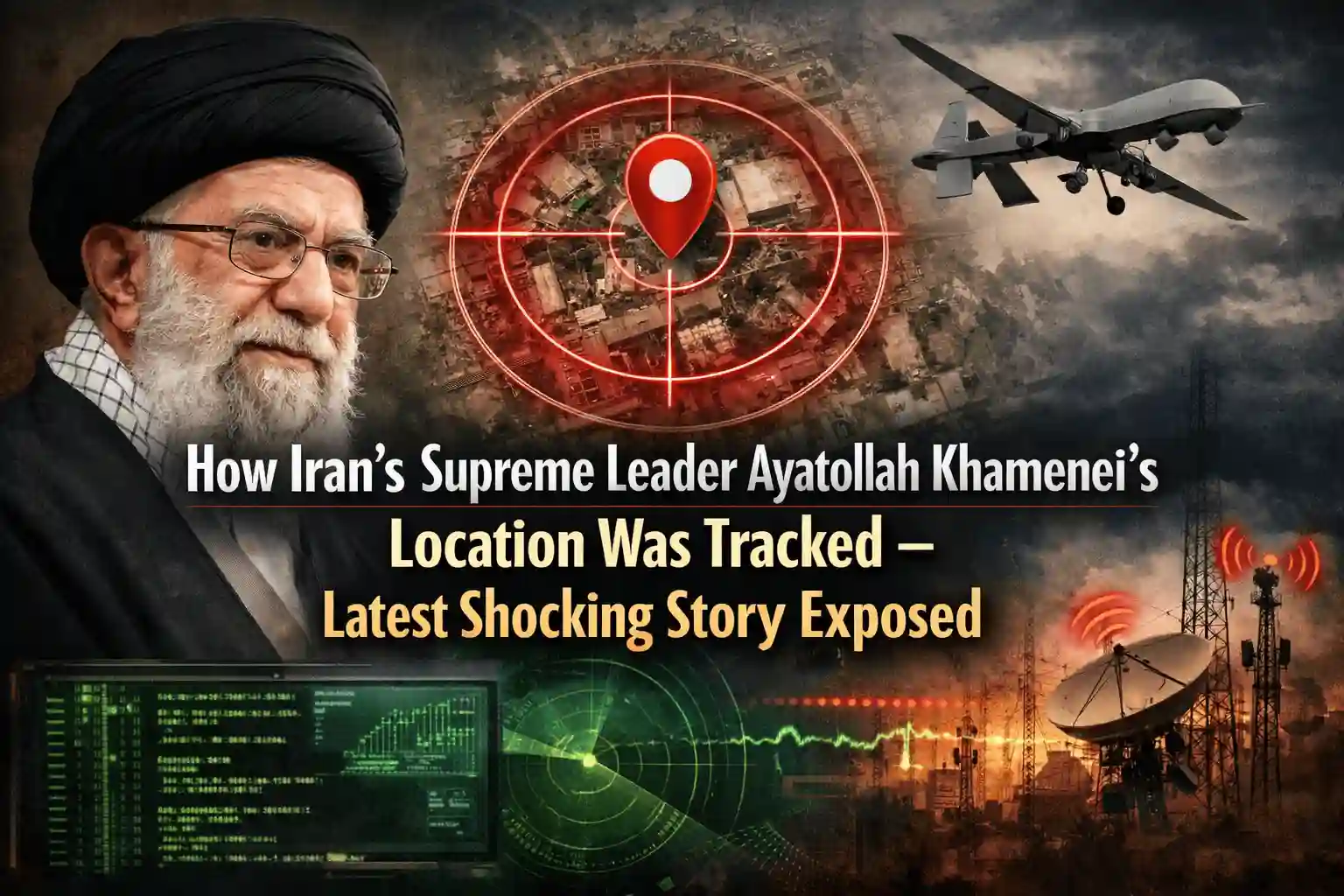
The global political landscape was shaken when reports surfaced claiming that Iran’s Supreme Leader Ayatollah Ali Khamenei’s location had been secretly tracked through advanced intelligence methods. The story quickly became one of the most searched geopolitical topics, raising serious questions about surveillance technology, cyber intelligence, international espionage, and modern warfare tactics.
This detailed report explains how Iran’s Supreme Leader Ayatollah Khamenei’s location was tracked, what intelligence methods were allegedly used, and why this incident is considered a turning point in global security operations.
Who Is Iran’s Supreme Leader Ayatollah Ali Khamenei?
Ayatollah Ali Khamenei has served as Iran’s Supreme Leader since 1989. As the highest political and religious authority in Iran, he holds control over the armed forces, judiciary, state broadcasting, and major policy decisions. Unlike a president, the Supreme Leader has long-term authority and influences both domestic and foreign policy.
Because of his strategic position, his movements are kept extremely confidential. His location is typically protected by layered security systems, elite guards, encrypted communications, and limited public appearances.
This makes the question even more shocking: how was his exact location tracked?

How Iran’s Supreme Leader Ayatollah Khamenei’s Location Was Tracked
According to multiple geopolitical analysts, tracking such a high-profile leader requires a combination of advanced surveillance tools, cyber intelligence systems, and human intelligence networks. The alleged tracking operation reportedly involved the following key elements.

Advanced Surveillance and Pattern of Life Analysis
One of the primary methods used in tracking high-level political figures is something known as pattern of life analysis. This technique involves monitoring movement routines over an extended period to understand habits, meeting locations, travel timing, and security adjustments.
Intelligence agencies use satellite imaging, drone reconnaissance, and urban monitoring systems to build behavioral maps. Even if a leader changes locations frequently, data over time can reveal predictable patterns.
If Khamenei’s location was tracked, analysts likely studied his travel schedules, compound visits, and security movements over months.

Cyber Surveillance and Infrastructure Monitoring
Modern intelligence operations rely heavily on cyber tools. Large cities are equipped with traffic cameras, monitoring systems, and communication networks. If these systems are infiltrated, they can provide real-time movement data.
Cyber infiltration may involve:
• Accessing city surveillance cameras
• Monitoring vehicle convoys
• Tracking unusual security mobilization
• Analyzing encrypted communication signals
If external intelligence gained access to Tehran’s infrastructure monitoring systems, it could have helped pinpoint the Supreme Leader’s compound or meeting location.

Signals Intelligence and Communication Tracking
Signals intelligence plays a critical role in tracking high-profile individuals. Even when leaders avoid personal phone usage, their security teams, advisors, and convoy units rely on encrypted communications.
Advanced agencies can detect:
• Encrypted signal spikes
• Secure convoy coordination
• Frequency changes
• Satellite communication activity
By triangulating signals and analyzing encrypted network behavior, intelligence teams can narrow down exact geographic locations.
Human Intelligence Sources
Technology alone is rarely sufficient. Human intelligence, often referred to as ground assets or informants, remains one of the strongest intelligence tools.
Possible human intelligence factors include:
• Insider leaks
• Security detail insiders
• Government opposition sources
• Local informants
Even one verified confirmation from a trusted source can validate months of technical surveillance data.
Artificial Intelligence and Data Processing
Tracking a protected leader requires analyzing massive volumes of data. Artificial intelligence systems help process:
• Satellite images
• Communication metadata
• Traffic movement patterns
• Convoy speed analysis
• Security radius mapping
AI models can detect anomalies and predict future locations based on historical data. If Khamenei’s location was tracked successfully, AI likely played a major role in refining precision and timing.
Security Breach or Predictive Analysis?
One major debate surrounding this shocking story is whether it involved an actual security breach or simply predictive intelligence.
There are two possible scenarios:
- Direct breach through cyber infiltration or insider leak
- Predictive modeling based on routine movement patterns
Experts believe that predictive analysis combined with signal intelligence is often more powerful than a single hacking event.
Why This Incident Is Considered a Turning Point
If confirmed, the tracking of Iran’s Supreme Leader represents a major shift in modern intelligence warfare. It demonstrates that even the most heavily guarded leaders are vulnerable in the digital age.
Key implications include:
• Rise of cyber warfare dominance
• Increased AI role in military operations
• Reduced dependence on traditional espionage
• Expansion of digital battlefield strategy
Global powers are now likely reviewing their own leadership protection protocols.
Impact on Regional Stability
Iran plays a central role in Middle Eastern politics. Any breach involving its Supreme Leader affects:
• Regional alliances
• Oil market stability
• Diplomatic relations
• Military escalation risks
Such incidents often trigger strategic repositioning by neighboring countries and global superpowers.
Intelligence Technology in Modern Geopolitics
The alleged tracking operation highlights how intelligence gathering has evolved. Traditional espionage once depended on physical infiltration. Today, technology enables remote surveillance with minimal physical presence.
Modern tools include:
• High resolution satellites
• AI powered analytics
• Cyber penetration systems
• Metadata tracking
• Behavioral prediction modeling
This combination creates a powerful intelligence network capable of tracking even the most secure targets.
Public Reaction and Media Coverage
The story quickly gained global attention due to its shocking nature. Citizens worldwide questioned how a heavily protected leader could be located through external intelligence systems.
The incident sparked discussions about:
• Global privacy concerns
• Leadership security vulnerabilities
• Cyber defense modernization
• Ethical boundaries of surveillance
Public interest remains high because the case represents a new era of intelligence capabilities.
Key Takeaways
The tracking of Iran’s Supreme Leader Ayatollah Khamenei’s location reportedly involved a combination of:
• Long term movement pattern analysis
• Cyber infrastructure monitoring
• Signals intelligence tracking
• Human intelligence confirmation
• Artificial intelligence data processing
This case reflects the transformation of global intelligence operations into a highly digital and data driven system.
FAQs – How Iran’s Supreme Leader Ayatollah Khamenei’s Location Was Tracked
Q1: Was Ayatollah Khamenei’s location really tracked?
Reports suggest that advanced intelligence methods were used to identify his location. However, official confirmations remain limited, and details vary across sources.
Q2: What technology is used to track high level political leaders?
Modern tracking may involve satellite surveillance, signals intelligence, cyber monitoring, AI analytics, and human intelligence networks.
Q3: Is it possible to track someone without hacking their phone?
Yes. Intelligence agencies can track patterns through convoy movement, communication metadata, satellite imaging, and surveillance systems without direct device hacking.
Q4: Why is this story considered shocking?
Because the Supreme Leader of Iran is among the most protected figures in the world. Tracking his location would indicate a significant intelligence breakthrough.
Q5: What does this mean for global security?
It signals that digital intelligence capabilities are stronger than ever, and leadership security protocols worldwide may need modernization.
Q6: Could this change future warfare strategies?
Yes. Modern conflicts increasingly rely on cyber operations, AI systems, and intelligence precision rather than conventional large scale military engagement.