Middle East War 2026: Iran Retaliates Against US & Israel
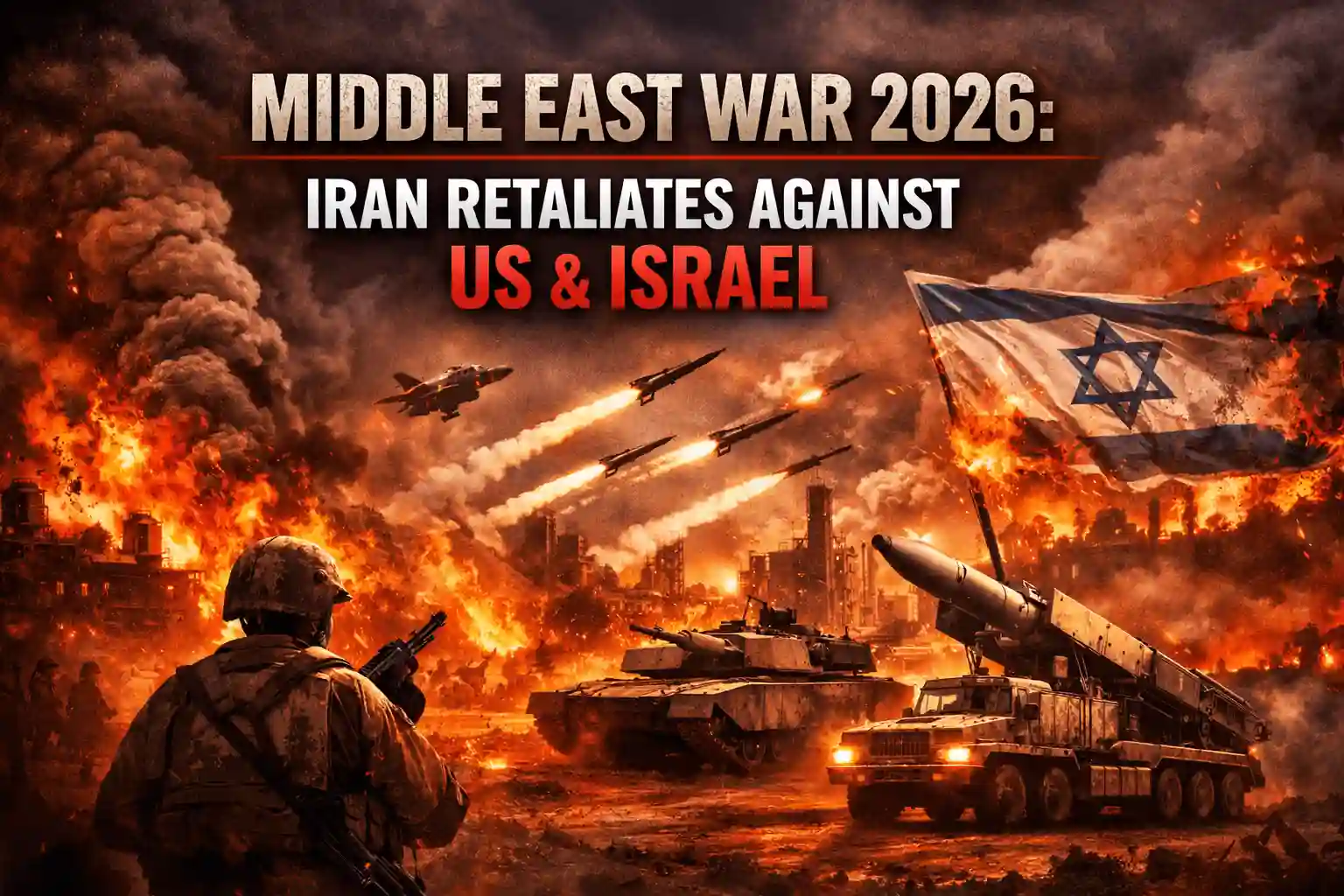
The Middle East War of 2026 marks one of the most consequential military confrontations in recent history. In early 2026, tensions between Iran, the United States, and Israel reached a boiling point. After a major offensive against Iranian military leadership and strategic targets, Iran launched an expansive retaliation campaign targeting U.S. forces and Israeli interests across the region.
This article provides a full breakdown of how the conflict began, why Iran retaliated, the regional escalation, global impacts, and what the future may hold. The content is structured for readers and optimized for strong search performance.
Origins of the Middle East War 2026
In late February of 2026, coordinated military operations by the United States and Israel struck multiple targets inside Iran. These strikes hit military command centers, strategic missile bases, and key infrastructure linked to Iran’s defense capabilities. The offensive resulted in the death of high-ranking Iranian military leaders, including the Supreme Leader.
Iran’s leadership viewed these attacks as a direct assault on its sovereignty. The removal of senior command figures created a power shock within Iran’s military structure, intensifying calls within Tehran for decisive retaliation against the forces responsible.
The conflict quickly transformed from a limited military strike into a full-blown war. Iran’s government declared that it would respond with forceful measures against both the United States and Israel.

Iran’s Retaliatory Campaign Against the United States and Israel
After the initial offensive, Iran launched a series of counterattacks that marked the beginning of its retaliation strategy. Iranian military units, including the Iranian Revolutionary Guard Corps, deployed ballistic missiles, drones, and other advanced weapon systems. Their targets included American military bases in the Middle East, allied facilities, and strategic zones linked to U.S. operations.
Iran also launched strikes against Israeli military positions, including air defense sites and command installations near border regions. The intensity of the retaliation surprised many analysts who had previously expected Iran to respond with limited actions.
In addition to direct military retaliation, Iran deployed missiles toward Gulf Cooperation Council states that host U.S. bases. These included countries like Bahrain and Qatar. Iran’s leadership publicly warned that continued aggression would result in expanded operations across the region.

Regional Escalation and Proxy Involvement
The Middle East War 2026 did not remain confined to direct clashes between Iran, the United States, and Israel. Proxy forces aligned with Tehran also became directly involved.
One of the most active of these groups was Hezbollah, a militia and political force based in Lebanon with strong ties to Iran. Hezbollah launched missile and drone strikes into northern Israel in retaliation for air raids carried out by Israeli forces targeting positions in Lebanon.
This escalation widened the battlefield and increased civilian risks in areas far from the original zone of conflict. Civilians in northern Israel and southern Lebanon faced evacuation warnings as hostilities intensified.
Other Iranian proxies in Iraq and Yemen also increased attacks against coalition forces and commercial shipping in the region. This multi-front escalation raised fears that the conflict could engulf several nations across the Middle East.

Impact on Global Energy and Economy
The war’s effects extended far beyond battlefields and diplomatic channels. One of the most immediate global impacts was on energy markets. Iran’s warnings and attacks related to the Strait of Hormuz — a critical chokepoint for global oil transport — triggered sharp increases in oil prices.
Energy markets reacted to the instability, with crude oil benchmarks rising significantly as traders priced in supply risks. The uncertainty around oil shipments put pressure on gas prices around the world and raised concerns about inflation and economic slowdown in energy-dependent regions.
International shipping companies also rerouted or delayed traffic in the Gulf, adding to logistical costs and global supply chain disruptions.

International Diplomatic Responses
As the Middle East War 2026 expanded, world leaders called for restraint and diplomatic solutions. Many nations expressed deep concern over the rising civilian toll and the broader regional implications.
Several countries criticized the initial strikes that targeted Iranian leadership, calling them provocative actions. Others stressed the importance of reducing tensions and engaging in direct dialogue to prevent further escalation.
United Nations representatives held emergency sessions to discuss ceasefire options and humanitarian aid. Some global powers pushed for negotiations to halt the fighting, though neither side indicated a willingness to stop without achieving strategic objectives.
Human Cost and Displacement
The human impact of the conflict has been severe. Hundreds of deaths have been reported among military personnel and civilians across Iran, Israel, and Lebanon. Missile and drone attacks destroyed infrastructure, residential areas, and public facilities.
Displacement of civilians has increased as families fled conflict zones. Emergency services in border cities faced extreme pressure, trying to treat the wounded and coordinate evacuations.
News from local hospitals reported shortages of medical supplies in some areas, increasing the risk to injured civilians and soldiers alike.
Current Status of the Middle East War 2026
At this stage of the conflict:
- Iran continues to engage in missile and drone attacks targeting U.S. and allied military positions.
- The United States and Israel maintain military pressure on Iranian targets and proxy forces.
- Regional nations have mobilized defenses and increased security measures.
- Global energy markets remain volatile due to disruption risks.
- Diplomatic efforts are ongoing, though progress remains limited.
Experts warn that unless serious negotiations begin, the conflict may continue into the coming months. Analysts emphasize that expanding the scope of the war could increase human suffering and cause far-reaching geopolitical repercussions.
Why the Middle East War 2026 Matters Globally
The events of 2026 in the Middle East are not just a regional crisis. They matter to the wider world for several reasons:
1. Global Energy Security
The Middle East supplies a significant portion of the world’s energy. Disruptions in this region have economic impacts that reach every continent.
2. International Military Alliances
The United States and Israel, as key global allies, draw other nations into diplomatic and strategic calculations. Escalation could affect foreign military policies worldwide.
3. Civilian Humanitarian Concerns
Large-scale conflict puts noncombatants at risk, leading to displacement, suffering, and lasting economic harm.
4. Future of Regional Stability
The Middle East has long been a geopolitically sensitive region. Renewed war could reshape alliances, trade agreements, and political relations across Asia, Europe, and Africa.
Frequently Asked Questions (FAQs)
What triggered the Middle East War 2026?
The war started after joint attacks by the United States and Israel against Iranian military targets resulted in the death of senior Iranian leaders. Iran considered this act a direct assault on its national authority and responded with widespread military retaliation.
Why is Iran targeting both the United States and Israel?
Iran sees the United States and Israel as the primary forces behind the military strikes and views both nations as threats to regional security. Retaliatory actions are aimed at military targets tied to these governments.
Are civilians affected by this conflict?
Yes. Reports indicate that civilians in Iran, Israel, and Lebanon have been killed and injured. Many others have been displaced due to escalating hostilities and infrastructure damage.
Does this conflict affect global oil prices?
Yes. Military actions near major oil transit routes have caused sharp increases in energy prices due to fears of supply disruptions.
Is there a chance for peace negotiations?
International efforts are underway to push for diplomatic talks, but progress remains limited. Both sides have strong military objectives and have yet to agree on ceasefire terms.