
Breaking: Iran Fires Missiles at US Airbase Amid Escalating Conflict
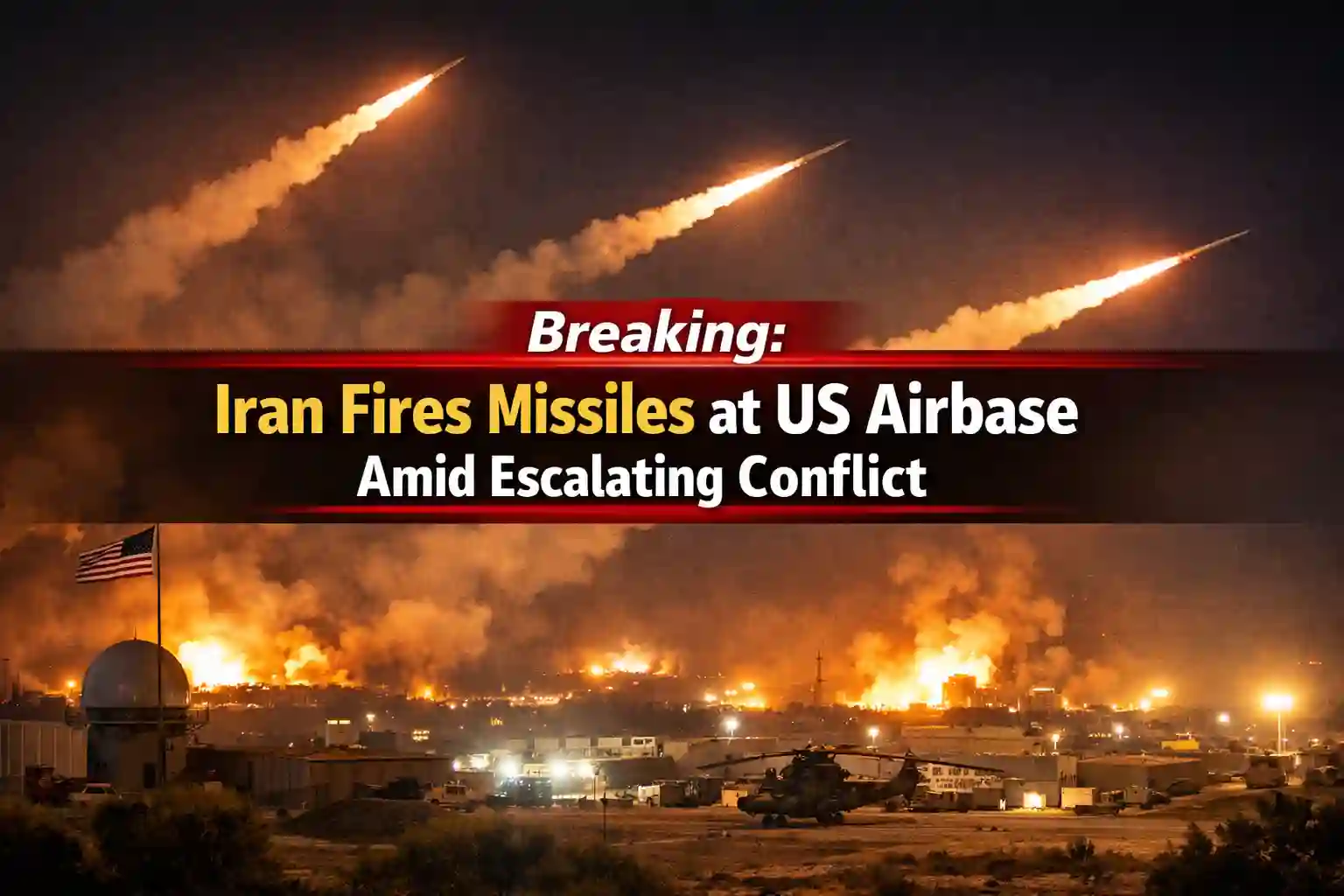
Tensions in the Middle East have sharply escalated after Iran launched missiles at a United States airbase, marking one of the most serious confrontations between the two nations in recent years. The strike has raised global concerns about a possible wider regional war, oil market disruption, and increased military retaliation.
The attack comes at a time when diplomatic efforts between Washington and Tehran remain fragile. Military analysts describe this incident as a significant escalation that could reshape security dynamics across the Gulf region.
Iran Fires Missiles at US Airbase: What Happened?
According to early reports, multiple ballistic missiles and armed drones were launched toward a US military installation in the Gulf region. Air defense systems were activated immediately, and explosions were heard near the base perimeter.
Iranian officials described the strike as a defensive response to recent military actions against Iranian interests. Meanwhile, US defense authorities stated that force protection measures were implemented and damage assessments are ongoing.
Although exact casualty figures have not yet been officially confirmed, the Pentagon emphasized that the United States reserves the right to respond if American personnel were harmed.
The attack has significantly increased the risk of direct confrontation between Iran and the United States.

Why Did Iran Target a US Airbase?
The missile attack is believed to be linked to rising tensions following alleged air operations targeting Iranian military infrastructure. Iranian leadership has repeatedly warned that any aggression would be met with retaliation.
Strategically, US airbases in the Gulf serve as operational hubs for surveillance, rapid deployment, and regional coordination. Targeting such a base sends a strong political and military message.
Iran may be aiming to demonstrate deterrence capability while signaling that it can strike American military assets if provoked. However, such actions also increase the likelihood of counter strikes.

Escalating US Iran Conflict: Regional Impact
The broader US Iran conflict has already affected several neighboring countries. Gulf states have increased air defense readiness, and regional governments are closely monitoring developments.
Possible consequences include:
• Heightened military deployments
• Temporary closure of regional airspace
• Increased oil prices
• Maritime security risks in the Strait of Hormuz
• Disruption of commercial shipping routes
The Strait of Hormuz is particularly important because a significant portion of global oil exports passes through this narrow waterway. Any instability there can immediately impact global energy markets.

US Military Response and Defense Strategy
Following the missile strike, US forces reportedly moved into high alert status. Air defense systems were activated to intercept incoming threats. Military commanders are reviewing response options, which could include:
• Precision strikes
• Increased sanctions
• Cyber operations
• Diplomatic pressure
Historically, the United States has balanced military deterrence with diplomatic messaging in similar situations. The coming days will determine whether this situation stabilizes or escalates further.

Global Reaction to Iran Missile Attack
World leaders have called for restraint. International organizations have urged both nations to avoid steps that could trigger a full scale regional war.
Financial markets reacted cautiously, with oil prices showing volatility amid fears of supply disruptions. Defense analysts warn that prolonged instability could affect global trade and security partnerships.
Allies of both nations are closely observing developments. Some countries have issued travel advisories, while others are preparing contingency evacuation plans for their citizens in the region.
Military Capabilities: How Serious Is the Threat?
Iran possesses a significant missile arsenal, including short range and medium range ballistic missiles. It has also invested heavily in drone technology.
US military installations in the Gulf are equipped with advanced missile defense systems designed to intercept aerial threats. However, saturation attacks involving multiple drones and missiles can challenge even sophisticated defenses.
This confrontation highlights the evolving nature of modern warfare, where drones, missiles, cyber operations, and psychological signaling play critical roles.
Could This Lead to a Larger War?
Security experts suggest several possible scenarios:
- Limited retaliation followed by diplomatic talks
- Controlled escalation with targeted strikes
- Broader regional involvement
- Proxy conflicts intensifying across multiple countries
The key factor will be whether both sides seek de escalation or continue retaliatory actions.
A full scale war between Iran and the United States would have major geopolitical consequences, affecting energy markets, global security alliances, and regional stability.
Economic and Energy Market Impact
Energy markets are highly sensitive to instability in the Gulf. Even the threat of military escalation can push oil prices upward.
If tensions disrupt oil exports or shipping lanes, global fuel costs could rise. Countries dependent on Gulf energy supplies may experience economic pressure.
Stock markets often react to geopolitical risk by shifting toward safe haven assets. Investors typically monitor developments closely during such crises.
Diplomatic Path Forward
Despite rising tensions, diplomatic channels often remain active behind the scenes. Back channel negotiations and third party mediation could help prevent further escalation.
Both Iran and the United States have previously engaged in indirect negotiations during high tension periods. International mediation may again become critical in preventing wider conflict.
Key Takeaways: Iran Fires Missiles at US Airbase
• Iran launched missiles and drones at a US airbase amid rising tensions
• The attack marks a significant escalation in the US Iran conflict
• Regional security and oil markets are on high alert
• Global leaders are calling for restraint and diplomacy
• Future developments depend on military and diplomatic responses
This situation remains fluid, and further updates are expected as official investigations continue.
Frequently Asked Questions
What happened in the Iran missile attack on US airbase?
Iran launched multiple missiles and drones targeting a United States military installation in the Gulf region, escalating regional tensions.
Why did Iran fire missiles at a US airbase?
Iran claims the strike was a response to prior military actions against its interests and a demonstration of deterrence capability.
Were there casualties in the US airbase attack?
Official casualty details have not been fully confirmed. Damage assessments are ongoing.
Could this conflict lead to war?
While escalation is possible, diplomatic efforts may prevent a full scale war. The situation depends on how both sides respond.
How does this affect global oil prices?
Tensions in the Gulf often lead to oil price volatility due to concerns about supply disruption.
Is the Strait of Hormuz at risk?
Any instability in the region increases risks to shipping routes, especially through the Strait of Hormuz, a major global oil transit point.