Iran Shares Viral Video of Underground Missile Tunnel Amid Tensions
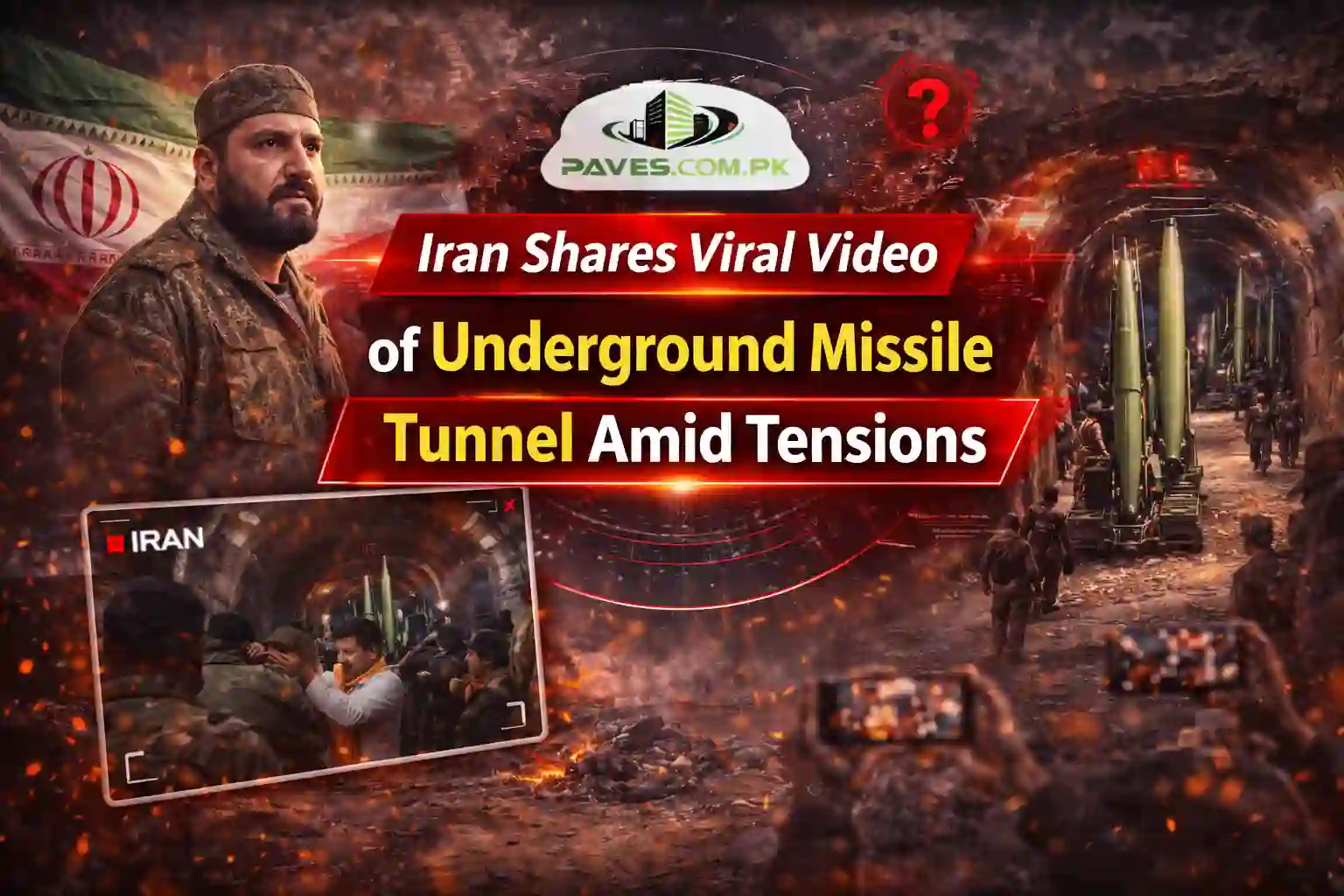
As of March 3, 2026, a 52-second clip released by Fars News Agency has gone viral across YouTube, X, and Telegram, showing what Tehran calls a massive underground “missile city.”
The footage surfaced days after the launch of Operation Epic Fury, the joint U.S.–Israeli air campaign that began on February 28. Iranian officials are framing the video as proof that their strategic missile infrastructure remains intact and operational despite ongoing strikes.
Searches for “Iran shares viral video of underground missile tunnel amid tensions YouTube,” “Iran missile city full video,” and “Iran underground missile base 2026” are now trending globally.
What the Viral Missile Tunnel Video Shows
The high-definition footage provides one of the clearest visual glimpses yet into Iran’s subterranean military network.
1. The Arsenal
The video displays:
- Long rows of drones and unmanned aerial vehicles (UAVs)
- Missile launch platforms positioned inside reinforced tunnels
- Rocket systems staged in parallel alignment
- Heavy-duty concrete infrastructure
Military analysts describe the layout as optimized for rapid deployment.
2. Symbols of Defiance
The tunnel walls feature:
- Iranian national flags
- Large portraits of Ayatollah Ali Khamenei
Khamenei was reportedly killed in the opening phase of Operation Epic Fury. His presence in the imagery is widely interpreted as symbolic resistance messaging.
3. Depth and Engineering Scale
Experts estimate parts of Iran’s underground missile infrastructure may extend as deep as 500 meters (1,600 feet) below mountainous terrain.
These facilities are believed to be designed to withstand:
- Satellite surveillance
- Conventional airstrikes
- Certain bunker-buster munitions
Iran has long invested in underground defense architecture to preserve its second-strike capability.

Why Iran Released the Missile City Video Now
The timing appears strategic.
Response to Operation Epic Fury
Recently, U.S. Central Command (CENTCOM) released footage showing a B-2 Spirit striking what it described as a reinforced ballistic missile facility.
Iran’s counter-video aims to signal that:
- Missile infrastructure remains active
- Underground networks were not neutralized
- Launch capabilities continue
It is a messaging battle as much as a military one.
Retaliatory Campaign: “Truthful Promise 4”
The release coincides with claims by the Islamic Revolutionary Guard Corps (IRGC) that it has launched hundreds of missiles—including the Kheibar Shekan—toward Israel and U.S. bases in the Gulf.
Reported targets include facilities in:
- Qatar
- Kuwait
- The United Arab Emirates
The missile tunnel video reinforces Tehran’s narrative that it retains operational capacity.
Psychological Warfare Dimension
Showing a vast underground arsenal serves multiple strategic purposes:
- Reassures domestic audiences
- Signals deterrence to adversaries
- Influences global oil markets
- Projects survivability after leadership losses
Modern conflict includes narrative dominance alongside battlefield outcomes.

Missile City Facts (2026 Overview)
| Feature | Detail |
|---|---|
| Location | Scattered across Iran, especially mountainous regions near Tabriz and western Iran |
| Strategic Purpose | Storage, assembly, and rapid missile deployment |
| Engineering Depth | Up to 500 meters underground |
| Current Status | Active during “Truthful Promise 4” |
| Vulnerability | Entrances/exits targeted by U.S. and Israeli strikes |
While underground depth offers protection, entrances and ventilation shafts remain structural weak points.

Did Iran Shoot Down a US Drone?
There are intermittent claims that Iran has intercepted or shot down surveillance drones during the current escalation.
Historically, Iran has downed U.S. drones, most notably in 2019. However, as of March 3, 2026, no verified confirmation has established a new successful drone shootdown in this current campaign.
Both sides frequently contest aerial incidents, and independent verification is often limited during active hostilities.

Can Iranian Missiles Reach Israel?
Yes.
Iran possesses medium-range ballistic missiles capable of reaching Israeli territory.
Systems such as:
- Shahab series
- Kheibar Shekan
- Sejjil variants
have reported ranges exceeding 1,000 kilometers.
Geographically, Israel falls within operational reach.
Can Iran Sink USS Abraham Lincoln?
The USS Abraham Lincoln is a U.S. Navy aircraft carrier equipped with layered defense systems including:
- Carrier strike group escorts
- Aegis missile defense
- Electronic warfare systems
- Air superiority fighters
Iran has anti-ship missiles and naval drones. However, sinking a U.S. carrier would require overcoming one of the most sophisticated naval defense networks in the world.
Military analysts consider such a scenario extremely high-risk and escalatory.
How Many Missiles Does Iran Have?
Exact numbers remain classified, but defense estimates suggest Iran possesses:
- Thousands of short-range missiles
- Hundreds of medium-range ballistic missiles
- Extensive drone fleets
Iran has focused heavily on asymmetric missile capability over conventional air force modernization.
Oil Market Reaction
Amid fears that missile exchanges could threaten shipping in the Strait of Hormuz, Brent crude prices surged close to $80 per barrel today.
Roughly 20% of global oil trade passes through that corridor.
Energy markets are highly sensitive to any perceived risk of disruption.
Current Battlefield Reality (March 3, 2026)
While Iran showcases underground missile infrastructure, U.S. and Israeli forces reportedly maintain air superiority over major Iranian urban areas.
This creates a paradox:
- Iran retains underground launch capacity.
- Coalition forces dominate open airspace.
The conflict now hinges on endurance, logistics, and escalation thresholds.
Final Assessment
The Iran underground missile tunnel video is more than propaganda footage. It represents:
- Strategic deterrence messaging
- Psychological resilience signaling
- Confirmation of subterranean missile architecture
- Ongoing escalation dynamics in Operation Epic Fury
As of March 3, 2026:
- Iran’s missile cities remain active.
- U.S.–Israeli air operations continue.
- Regional oil markets are reacting.
- The situation remains volatile.