
Breaking News: Iran’s Supreme Leader Ayatollah Ali Khamenei Confirmed Dead After Major US-Israel Attack
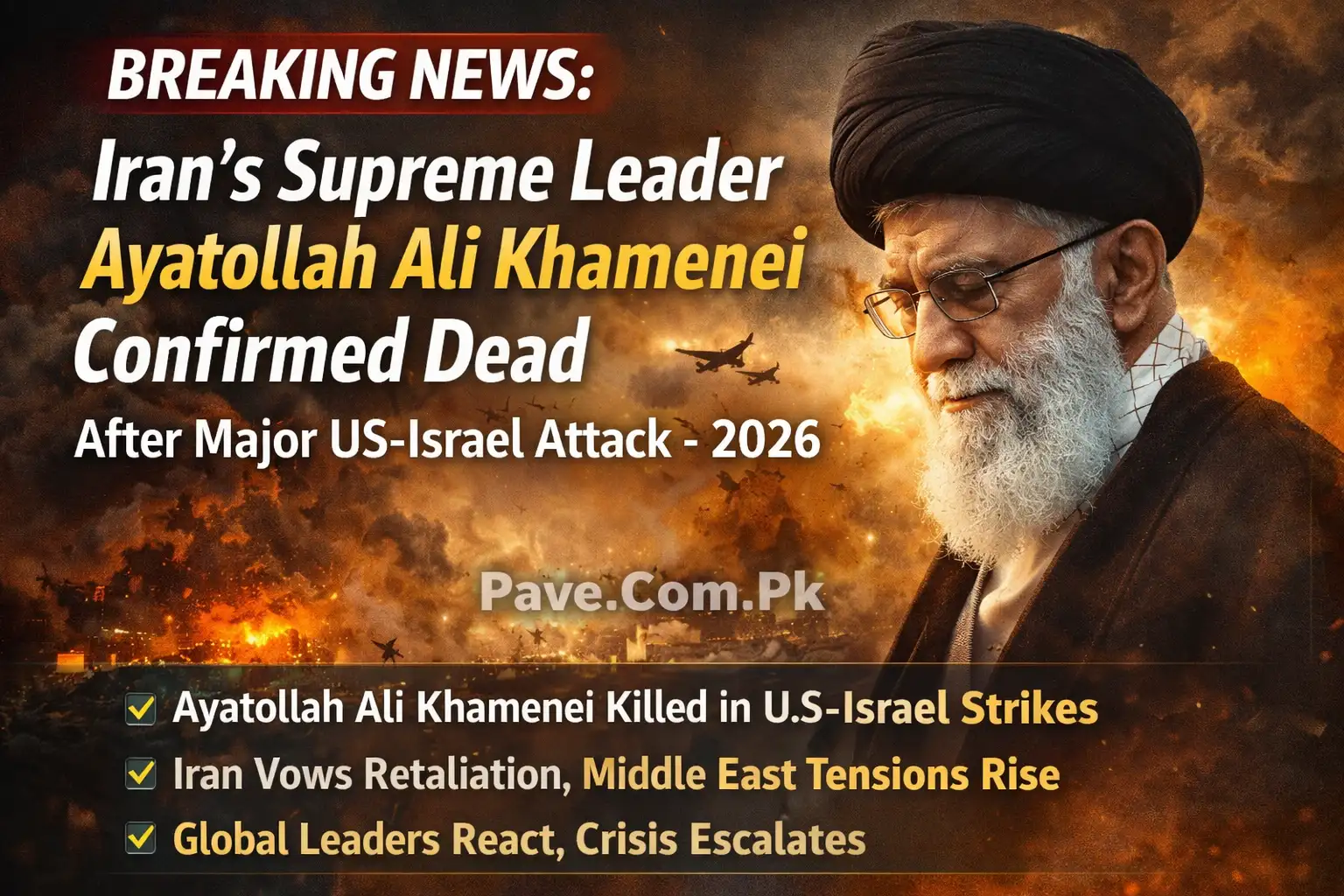
In a historic and unprecedented development in global geopolitics, Iran’s Supreme Leader Ayatollah Ali Khamenei has been confirmed dead following a major joint military attack by the United States and Israel on Iranian territory. This announcement has sent shockwaves through the Middle East and the world, raising questions about regional stability, global security, and the future direction of Iranian leadership.
Latest Confirmation from Iranian State Media
Iranian state media officially confirmed that Ayatollah Ali Khamenei — who had ruled Iran since 1989 — was killed after a coordinated U.S. and Israeli attack on Tehran and surrounding strategic locations. The government announced a 40-day national mourning period and described Khamenei’s death as a moment of “martyrdom” for the Islamic Republic.
This confirmation came after conflicting reports in the first hours following the strikes, which saw both Western officials and Iranian sources provide differing accounts — but eventually Iran’s own media acknowledged his death.

Who Was Ayatollah Ali Khamenei?
Ayatollah Ali Khamenei was one of the most powerful and longest-serving leaders in modern Middle Eastern history. He became Supreme Leader of Iran following the death of Ayatollah Ruhollah Khomeini in 1989, consolidating religious and political control over the nation’s government, military, judiciary, and intelligence forces for more than three decades.
Under his leadership, Iran expanded its regional influence through alliances with proxy groups, strong military posturing, and a firm opposition to the United States and Western powers. His rule was marked by the suppression of internal dissent, economic challenges due to sanctions, and continuous tensions with Israel and the West.
The U.S.–Israel Attack: “Epic Fury” Military Operation
On 28 February 2026, the United States and Israel launched a large-scale military operation aimed at crippling Iran’s strategic military capabilities and leadership structures. This offensive, referred to by some sources as Operation Epic Fury, involved coordinated airstrikes, missile launches, and precision attacks on key sites across Iran, particularly around Tehran, Natanz, and other military facilities.
The strikes targeted:
- Iran’s missile and air defence infrastructure
- Command and control centres of the Islamic Revolutionary Guard Corps (IRGC)
- Strategic nuclear enrichment sites
- Political and military leadership compounds, including Khamenei’s residence
Allied forces stated the goal was to neutralize immediate threats to U.S. and allied security interests and disrupt Iran’s military capabilities.
Confirmation and Reactions From World Leaders
Following the attack, U.S. and Israeli leaders made public statements about the outcome of the strikes:
- President Donald Trump publicly confirmed that Khamenei was killed, calling it “justice” for victims of the Iranian regime and a step toward reducing threats posed by Tehran.
- Israeli Prime Minister Benjamin Netanyahu also announced that there were strong indications of Khamenei’s death, stating that key leadership facilities had been destroyed.
However, in the initial hours after the assault, some Iranian officials briefly disputed reports of his death, adding confusion before full state confirmation.
Impact on Iran’s Government and Succession Crisis
The death of Iran’s Supreme Leader creates a significant power vacuum in a system where leadership is deeply entrenched in religious authority and political control. Iran’s Assembly of Experts, a powerful religious council, is responsible for selecting a new Supreme Leader — but the process is likely to be turbulent given the extraordinary circumstances.
Analysts suggest several possible scenarios:
- The IRGC could seek to consolidate power during the transition
- Moderate leaders may push for reforms
- Internal political struggle could intensify without a clear successor
The absence of Khamenei, who had centralised power for decades, raises uncertainty about Iran’s political stability.
Regional and Global Security Implications
The conflict has quickly escalated into a broader regional crisis with missile and drone strikes launched by Iran against U.S. military bases and Israeli positions in the Middle East in retaliation. Reports suggest that Iran targeted multiple sites, including U.S. bases in the Gulf region, prompting concerns about a prolonged conflict.
The United Nations has urged all parties to return to negotiations to prevent further escalation, warning that continued fighting could destabilise the entire Middle East. Many countries have expressed concern over the conflict’s potential to affect global oil markets, flight routes, and international diplomacy.
Civilian Casualties and Humanitarian Concerns
As the military action unfolded, reports indicated significant civilian casualties and damage to infrastructure. Iranian news agencies and international media documented injuries and deaths in major cities, raising alarm among humanitarian organisations about the safety of non-combatants. The conflict has reportedly resulted in hundreds of casualties on all sides, including children and families caught in the crossfire.
Historical Context: U.S.–Iran Relations
Tensions between the United States and Iran have a long and complex history stretching back to the 20th century. Major flashpoints included:
- The 1979 Iranian Revolution
- The hostage crisis in Tehran
- Iran’s nuclear program
- Proxy conflicts throughout the Middle East
Attempts at diplomacy, such as the 2015 nuclear deal, were overshadowed by ongoing disputes and renewed sanctions. The 2026 military operation represents one of the most significant escalations in this long-standing rivalry.
Iran’s Response and Military Strategy
After confirming its leader’s death, Iran pledged a strong retaliation strategy, launching missiles and drones at targeted locations. Iranian military commanders vowed to defend the nation and pursue strategic responses until their national interests are safeguarded. The Revolutionary Guard has labelled the strikes an act of war, promising “decisive” counter-attacks.
Internal public reactions have been mixed — with some patriotic groups mourning Khamenei as a martyr, while opposition voices see the turmoil as an opportunity for change within the Islamic Republic’s political framework.
International Reactions and World Powers
World leaders have been quick to respond:
- European Union officials called for restraint and demanded humanitarian protections for civilians.
- Russia and China have urged diplomatic negotiations and criticised the escalation of military conflict.
- Arab states have expressed diverse positions, with some supporting regional stability and others caught between strategic alliances.
The crisis has triggered emergency discussions at the UN Security Council, with calls for conflict de-escalation and renewed peace talks. International agencies warn that prolonged warfare could lead to a broader Middle East conflict, affecting global peace and economic stability.
Economic Impact and Future Prospects
The sudden escalation and removal of Iran’s leader have already had economic repercussions:
- Oil prices experienced volatility due to fears about supply disruptions.
- Financial markets reacted to geopolitical risk.
- Businesses in the region face uncertainty.
Experts predict that the outcome of this conflict will influence global trade patterns, energy markets, and defence policy for years to come.
Many analysts believe that diplomacy will play a crucial role moving forward, as military escalation alone cannot resolve deeply rooted geopolitical tensions.
Conclusion
The death of Ayatollah Ali Khamenei following a major US-Israel attack on Iran marks a turning point in 21st-century geopolitics. With Iran now facing a leadership crisis, the Middle East at heightened risk of prolonged conflict, and global powers closely watching developments, the world is on edge as nations seek paths toward stability and peace.