IMF Notes Fiscal Surplus and Current Account Recovery in Pakistan
The International Monetary Fund (IMF) has acknowledged improvement in Pakistan’s economy ahead of its upcoming review mission. According to the IMF, recent policy measures have helped stabilize key economic indicators, strengthen fiscal discipline, and improve external balances.
The IMF delegation is scheduled to visit Pakistan starting February 25 to conduct:
- The third review under the Extended Fund Facility (EFF)
- The second review under the Resilience and Sustainability Facility (RSF)
This review is considered a critical milestone for Pakistan’s economic recovery.

Many people are searching online:
- IMF review Pakistan 2026
- Pakistan economy improvement IMF
- Pakistan fiscal surplus 2025
- Current account surplus Pakistan
- IMF Extended Fund Facility update
In this detailed article, we explain everything in easy English, including fiscal surplus, inflation control, current account improvement, and what the upcoming IMF review means for Pakistan.
What Did IMF Say About Pakistan’s Economy?
IMF Director of Communications Julie Kozack stated that policies implemented under the Extended Fund Facility have contributed to macroeconomic stabilization.
According to IMF observations:
✔ Fiscal performance remained strong
✔ Primary fiscal surplus achieved
✔ Inflation remained under control
✔ Current account surplus recorded
These indicators show signs of economic stabilization.
What Is the Extended Fund Facility (EFF)?
The Extended Fund Facility is an IMF program designed to help countries facing:
- Balance of payment crises
- High fiscal deficits
- External financing gaps
Under EFF, countries commit to structural reforms in exchange for financial assistance.
Pakistan is currently implementing reforms under this facility.
What Is the Resilience and Sustainability Facility (RSF)?
The Resilience and Sustainability Facility supports:
- Climate resilience
- Sustainable development
- Structural reforms
- Long-term economic stability
Pakistan’s second review under RSF will evaluate progress on reform commitments.
Pakistan Achieves Primary Fiscal Surplus
According to IMF data:
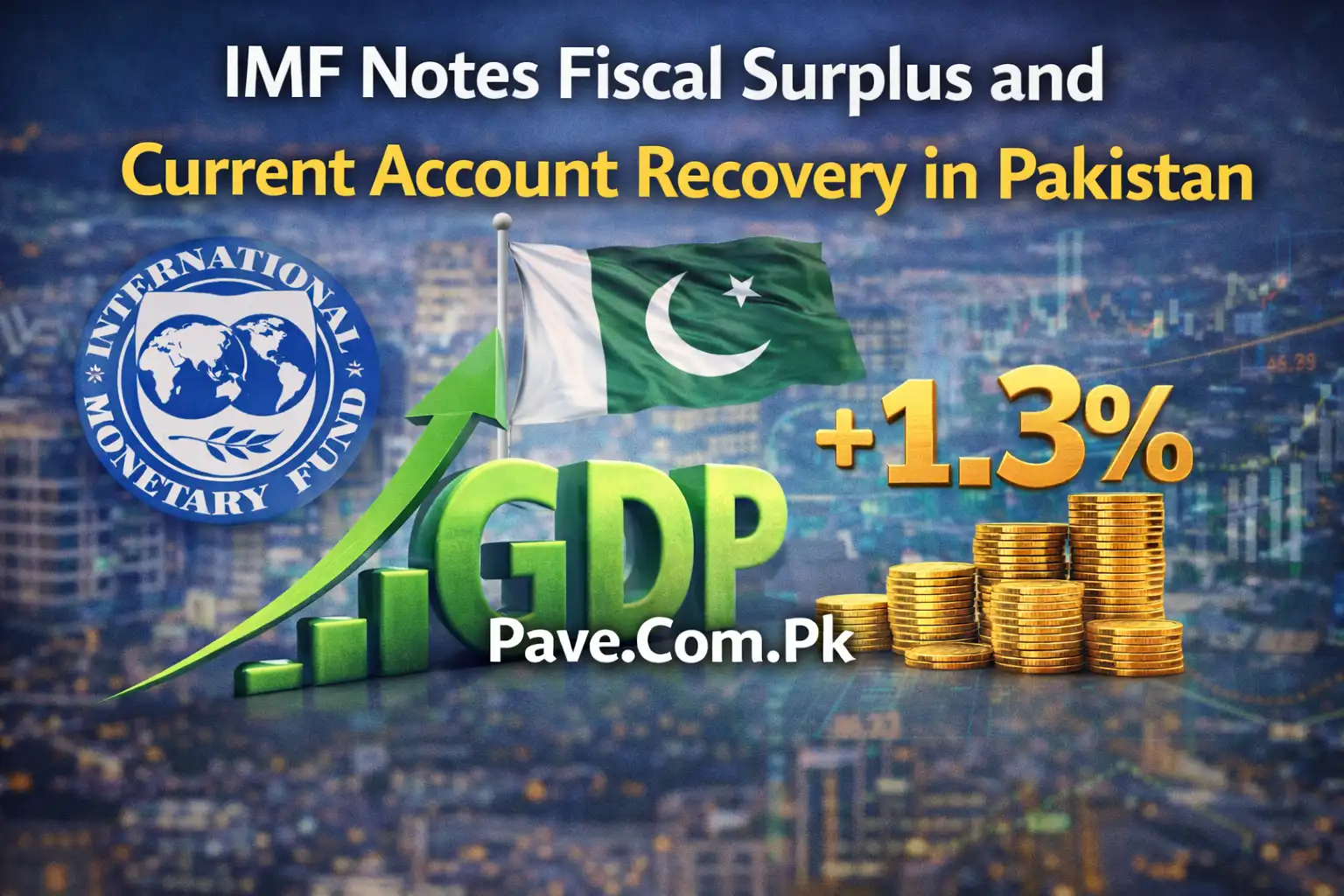
Pakistan achieved a primary fiscal surplus of 1.3% of GDP in fiscal year 2025.
A primary surplus means:
Government revenue (excluding interest payments) exceeded its non-interest expenditures.
This indicates:
✔ Improved fiscal discipline
✔ Better revenue collection
✔ Controlled government spending
Why Fiscal Discipline Matters
Strong fiscal discipline:
- Reduces borrowing needs
- Improves investor confidence
- Strengthens credit ratings
- Supports macroeconomic stability
For Pakistan, fiscal reform is key to long-term recovery.
Inflation Remained Under Control
IMF noted that inflation was under control during FY2025.
Lower inflation helps:
✔ Protect purchasing power
✔ Improve household stability
✔ Encourage business activity
✔ Reduce economic uncertainty
Controlling inflation is crucial after recent price shocks.
Current Account Surplus – First in 14 Years
One of the most important developments is that Pakistan recorded a current account surplus in fiscal year 2025.
This is the first surplus in 14 years.
Current account surplus means:
The country earned more from exports and remittances than it spent on imports and external payments.
This improves:
✔ Foreign exchange reserves
✔ Exchange rate stability
✔ External debt sustainability
Why External Balance Is Important
Pakistan has historically struggled with:
- Trade deficits
- Currency depreciation
- Reserve shortages
A surplus signals improved external stability.
What Will the IMF Review Assess?
The upcoming IMF mission will evaluate:
- Fiscal targets
- Revenue collection
- Monetary policy
- Structural reforms
- Governance improvements
Successful review may unlock further IMF disbursements.
Importance of IMF Support
IMF support helps Pakistan:
✔ Secure foreign funding
✔ Stabilize currency markets
✔ Restore investor confidence
✔ Maintain reform momentum
It also encourages support from other lenders.
Economic Recovery Momentum
The IMF acknowledged that reform implementation has strengthened economic indicators.
Key improvements include:
- Controlled fiscal deficit
- Improved tax collection
- Better external account management
- Stabilized inflation trends
However, challenges remain.
Challenges Ahead
Despite improvement, Pakistan still faces:
- High public debt
- Structural weaknesses
- Energy sector issues
- Low export diversification
- Political uncertainties
Continued reform implementation is essential.
Impact on Investors & Markets
✔ Improve stock market sentiment
✔ Strengthen rupee stability
✔ Increase foreign investment interest
✔ Improve sovereign credit outlook
Markets closely monitor IMF reviews.
Public Impact
Economic stabilization can lead to:
- Improved business confidence
- Job creation
- Better price stability
- Reduced financial uncertainty
However, reform measures sometimes include difficult policy decisions.
Final Thoughts
The IMF’s acknowledgment of economic improvement is a positive signal for Pakistan ahead of its key review mission.
With a primary fiscal surplus of 1.3% of GDP, controlled inflation, and the first current account surplus in 14 years, Pakistan has demonstrated progress under the Extended Fund Facility.
However, sustaining this momentum requires continued reforms, fiscal discipline, and structural adjustments.
The upcoming IMF review will be a critical test of Pakistan’s reform trajectory and economic resilience.
If progress continues, it may strengthen investor confidence and support long-term economic stability.