FBR Makes E-Invoicing Mandatory for Schools, Hospitals and Retail Sector
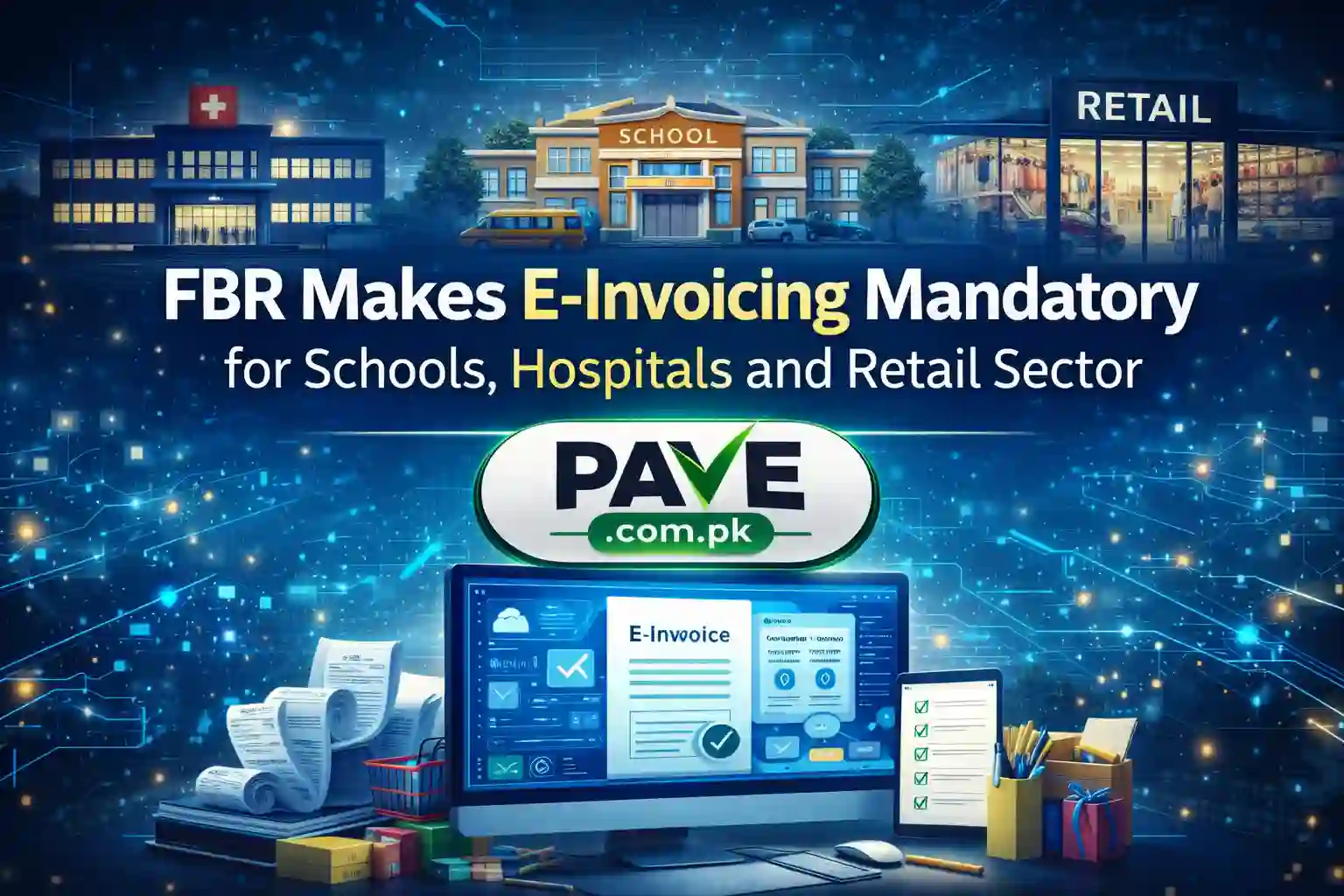
In a major step toward a fully documented and cashless economy, the Federal Board of Revenue (FBR) has made electronic invoicing (e-invoicing) mandatory for key service sectors starting February 2026.
This reform is designed to eliminate manual billing practices, ensure real-time tax reporting, and improve compliance under the Sales Tax Act.
The initiative directly impacts private education, healthcare, retail chains, and high-revenue service providers across Pakistan.
Who Is Affected by the February 2026 Mandate?
The following sectors must now integrate with FBR’s Digital Invoicing Monitoring System (DIMS):
1️⃣ Private Educational Institutions
- Schools and colleges above defined fee thresholds
- Large private chains
- Elite and mid-tier educational networks
2️⃣ Hospitals & Medical Centers
- Large private hospitals
- Diagnostic labs
- Specialized clinics
3️⃣ Tier-1 Retailers
- Supermarkets
- National retail chains
- POS-integrated outlets
4️⃣ Other Service Providers
- High-end restaurants
- Health clubs and gyms
- Large service-based enterprises

Core Compliance Requirements
Businesses falling under the mandate must:
✔ Integrate Billing Software with FBR DIMS
Their invoicing system must connect directly to FBR servers.
✔ Generate FBR-Verified QR Codes
Every invoice must contain a scannable QR code allowing real-time verification.
✔ Real-Time Data Transmission
Each sale or service transaction must be digitally reported at the time of issuance.
Failure to comply can lead to severe penalties.
FBR Digital Invoice Format – What It Includes
The standardized digital invoice format typically contains:
- NTN / STRN number
- Invoice number
- Date & time stamp
- Buyer details (where required)
- Itemized goods/services
- Sales tax amount
- Total invoice value
- FBR-generated QR verification code
- Digital signature hash
The QR code enables customers and auditors to verify authenticity instantly.

FBR Digital Invoicing User Manual – Key Guidance
The official user manual outlines:
- API integration procedures
- JSON data format structure
- Server authentication protocols
- Error handling guidelines
- Sandbox testing instructions
- POS integration workflow
Businesses are required to test their systems in a staging environment before going live.

FBR Invoice Management System (IMS)
The FBR’s Invoice Management System allows:
- Monitoring of issued invoices
- Tax reconciliation
- Error correction
- Audit trail review
- Sales analytics
Authorized users can access invoice dashboards through FBR’s online portal.

Digital Invoice FBR Software Options
Businesses can comply through:
- FBR-certified software vendors
- In-house ERP integration
- Third-party POS systems
- Cloud-based billing software
Only licensed vendors meeting FBR API standards are permitted for live integration.
SRO for Digital Invoicing
The e-invoicing mandate is backed by official SROs (Statutory Regulatory Orders) issued under the Sales Tax Act.
These SROs specify:
- Sector applicability
- Threshold criteria
- Compliance deadlines
- Penalty framework
- Technical standards
Businesses must review the relevant SRO to determine category-specific obligations.
E-Invoicing Due Date & Integration Timeline
Effective Date
February 2026
Grace Period
A short technical transition window has been allowed for:
- Software integration
- Testing
- Vendor onboarding
Deadline Risk
Failure to integrate by the designated deadline may result in:
- Heavy monetary penalties
- Sealing of business premises
- Suspension of Active Taxpayer status
- Higher withholding tax rates
Has There Been an Extension?
As of now:
- No official nationwide extension has been announced.
- Sector-specific relief may be granted based on compliance progress.
Businesses should regularly monitor FBR circulars for updates.
Consumer Incentives & Benefits
To encourage public adoption:
- 5% to 11% sales tax reduction in certain provinces for digital payments
- Increased transparency for parents and patients
- Reduced under-reporting of revenue
Provincial authorities like the Punjab Revenue Authority are coordinating with FBR for unified enforcement.
Audit & Compliance Advantages
Fully integrated businesses may benefit from:
- Reduced physical inspections
- Automated tax reconciliation
- Improved compliance score
- Lower audit frequency
Digitization aims to reduce harassment while increasing transparency.
Technical Integration Overview for Developers
Integration Flow
- Business generates invoice
- Data formatted in FBR-compliant JSON
- Sent via secure API
- FBR server validates data
- QR code generated
- Invoice finalized and printed
Required Infrastructure
- Secure API credentials
- SSL encryption
- Real-time internet connectivity
- Backup system for offline issuance
Strategic Impact on Pakistan’s Economy
The February 2026 mandate aligns with:
- Digital payment reforms
- POS integration enforcement
- Cashless economy initiatives
- Documentation drive
- Reduction of informal economy
High-revenue sectors are now under real-time digital monitoring.
Final Compliance Checklist
Businesses should:
- Confirm eligibility category
- Review relevant SRO
- Select licensed software vendor
- Complete API integration
- Test in sandbox environment
- Go live before deadline
- Train billing staff
Delays can significantly increase operational risk.
Conclusion
The FBR’s mandatory e-invoicing rollout in February 2026 represents one of Pakistan’s most aggressive tax digitization reforms. By integrating private schools, hospitals, retail chains, and service providers into a centralized digital reporting system, the government aims to improve transparency, reduce tax evasion, and modernize revenue collection.