Punjab Government Orders Businesses to Shift to Digital Payments
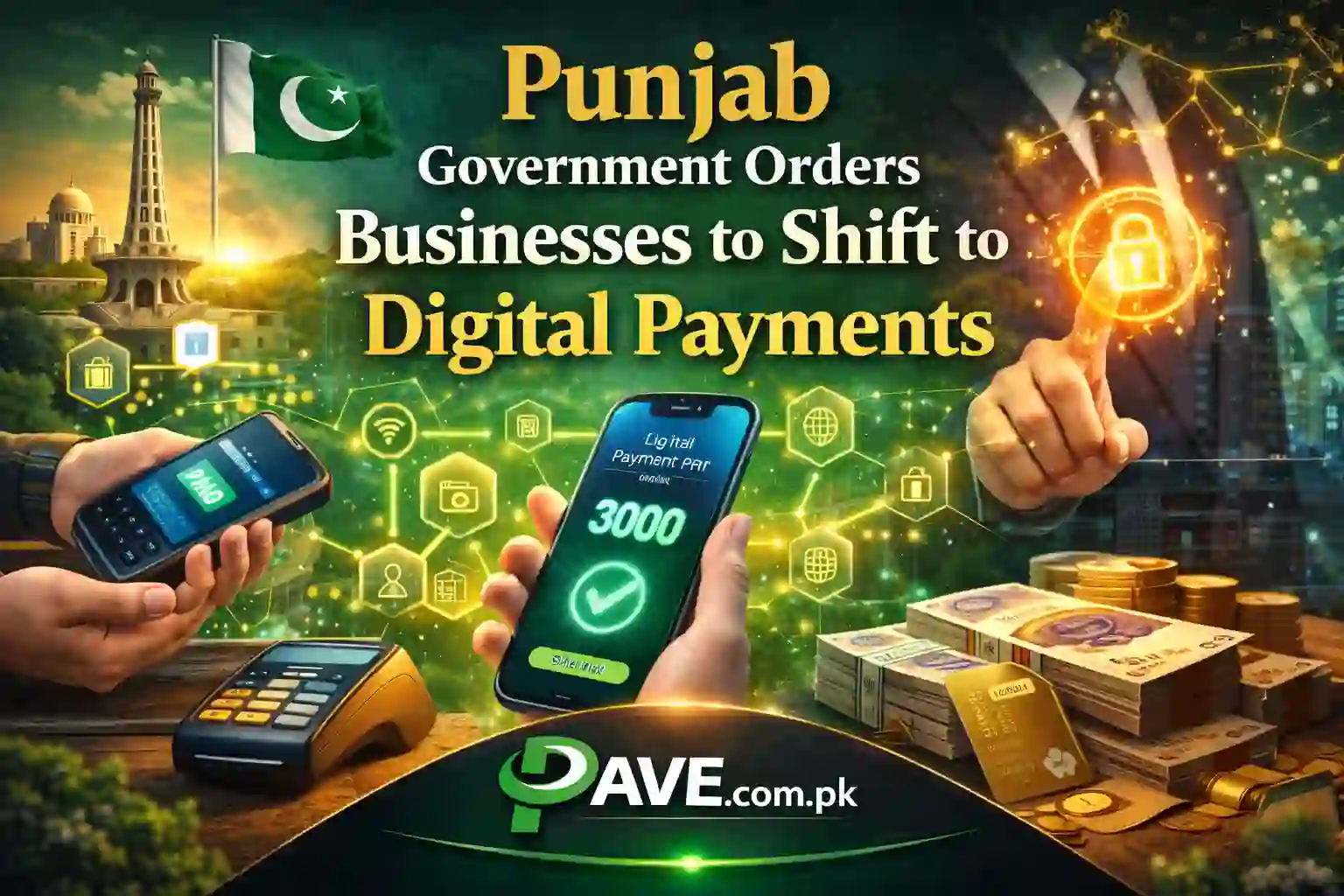
In a decisive move toward a cashless economy, the Punjab government issued an official directive on February 18, 2026, requiring all commercial businesses across the province to transition to digital payment systems.
The policy aims to:
- Improve financial transparency
- Reduce tax evasion
- Digitize public transactions
- Strengthen documentation of the economy
The shift aligns with federal financial reforms and the broader digitalization roadmap supported by regulators and international partners.
Mandatory QR Codes & Raast Integration
At the core of the directive is the nationwide instant payment system developed by the State Bank of Pakistan.
What Businesses Must Do
- Display Raast QR codes prominently.
- Enable mobile banking payments.
- Accept instant bank-to-bank transfers.
- Integrate with approved digital wallets.
What Is Raast?
Raast is Pakistan’s real-time payment system that allows:
- Instant transfers
- Zero or minimal transaction fees
- Secure merchant QR-based payments
- 24/7 settlement
Many businesses are searching for:
- SBP Raast QR merchant subsidy
- Islamabad cashless digital payments
- Cashless economy Pakistan
Under current policies, small merchants are being encouraged to adopt Raast through fee waivers and simplified onboarding.

Petrol Pumps & OGRA Digital Compliance
All petrol stations are now required to implement digital payment systems as a condition for licensing.
Regulatory oversight includes coordination with:
Oil and Gas Regulatory Authority (OGRA)
Key Petrol Pump Requirements
- Mandatory mobile payment acceptance
- Online booking integration (where applicable)
- QR code display
- POS machine installation
License issuance and renewal are now conditional upon digital payment compliance.
PRA E-Invoicing & Tax Monitoring
The Punjab Revenue Authority (PRA) is accelerating the rollout of its:
E-Invoicing Monitoring System (EIMS)
Under this system:
- Service providers must digitally register invoices.
- Real-time transaction reporting is required.
- Restaurants and hotels must integrate POS systems with PRA.
This is particularly impactful in the hospitality sector.

Deadline for Full Digitization – June 2026
Both the State Bank of Pakistan and the Punjab government have set:
June 2026 as the final deadline for:
- Complete digitization of government-related payments
- Full merchant compliance
- Integration of tax monitoring systems
Government departments are already shifting to digital-first payment models.

Incentives for Businesses & Consumers
To accelerate adoption, several support mechanisms have been introduced.
1. Consumer Tax Relief
Consumers paying via debit or credit cards in restaurants and hotels are receiving:
- Up to 11% tax relief
This incentive promotes documented transactions.
2. CM Punjab Aasaan Karobaar Program 2026
Small and medium enterprises struggling with modernization can apply under the provincial support scheme.
The program provides:
- Interest-free or low-markup loans
- Financing between PKR 10 million to 30 million
- Support for POS systems, IT upgrades, infrastructure improvements
This reduces resistance among smaller traders.
3. EPADS Version 2.0 – Fully Digital Procurement
As of February 15, 2026:
- All new government procurement must be conducted via EPADS Version 2.0
- Manual bidding processes are being phased out
- Vendor payments are processed digitally
This ensures transparency in public sector spending.
Sector-Wise Impact Breakdown
| Sector | Mandate |
|---|---|
| Retail & Shops | Must display QR codes for customers |
| Petrol Pumps | Digital payments mandatory for license renewal |
| Municipal Services | Digital-first payments for certificates |
| Restaurants | Integration with PRA E-Invoicing |
Cashless Economy Pakistan – Why This Matters
Pakistan’s informal economy has historically been large. A digital payment ecosystem:
- Expands the tax base
- Reduces undocumented cash flow
- Enhances revenue collection
- Improves audit trails
- Encourages fintech innovation
Cities like Islamabad are rapidly adopting cashless digital payment systems, setting a model for provincial implementation.
SBP Raast QR Merchant Subsidy – What to Know
For small merchants concerned about transaction costs:
- Raast QR payments typically carry minimal charges.
- Banks may offer free onboarding.
- Some fintech partners subsidize initial POS costs.
Merchants are advised to contact their commercial bank for Raast QR registration.
Global Backing & World Bank Integration
These reforms are supported under a joint plan between:
- Punjab Revenue Authority
- Provincial Government
- The World Bank
The objective is full financial integration by the end of the 2026 fiscal year.
Challenges Businesses May Face
While the transition offers benefits, challenges include:
- Initial setup costs
- Digital literacy gaps
- Resistance from cash-based traders
- Internet connectivity in rural areas
Government financing programs aim to reduce these barriers.
What Businesses Should Do Immediately
- Register for Raast QR through your bank.
- Install a POS or mobile payment solution.
- Register with PRA EIMS if in the service sector.
- Train staff on digital transaction handling.
- Display QR codes prominently.
Failure to comply may impact licensing and tax status.
Final Outlook – Toward a Digital Punjab
Punjab’s 2026 directive marks one of the most aggressive digital payment reforms in Pakistan’s history. By combining regulatory enforcement, financial incentives, merchant support, and real-time monitoring, the province is moving steadily toward a structured, transparent, and digitally documented economy.