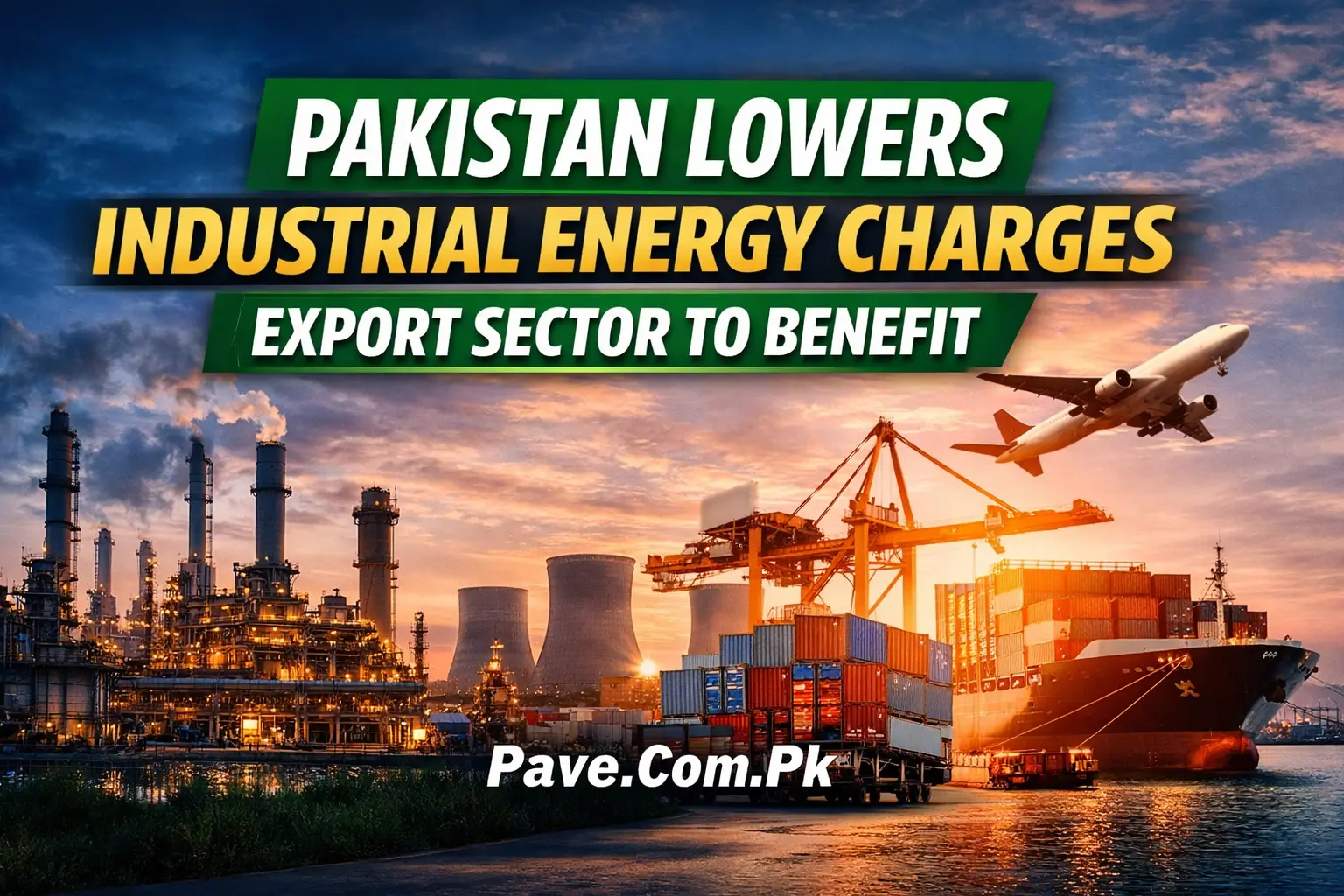
Pakistan Lowers Industrial Energy Charges – Export Sector to Benefit
Pakistan has officially reduced electricity tariffs for industrial consumers by up to Rs. 4.58 per unit, bringing much-needed relief to factories, exporters, and manufacturing businesses struggling with high energy costs.
The decision was formally notified by the federal government through the Power Division following a ruling by the National Electric Power Regulatory Authority (NEPRA) dated February 11, 2026. The revised electricity rates are effective from February 2026 and will remain applicable until December 2026.
This major development is being widely searched online under terms such as:
- Pakistan industrial electricity tariff 2026
- New electricity rates February 2026 Pakistan
- NEPRA tariff notification
- Power tariff reduction for industries
- K-Electric industrial rates update
In this detailed article, we will explain:
- Why the government reduced industrial power tariffs
- Complete breakdown of new electricity rates
- Impact on factories and exporters
- Domestic consumer changes
- What this means for inflation and economic growth
- Frequently Asked Questions (FAQs)
Why Pakistan Reduced Industrial Electricity Tariffs
Pakistan has been facing high industrial electricity prices compared to regional competitors like Bangladesh, India, and Vietnam. High energy costs have:
- Reduced export competitiveness
- Increased production costs
- Forced some industries to shut down
- Slowed economic growth
Industrial bodies and business chambers repeatedly demanded tariff rationalization. After reviewing cost structures, fuel adjustments, and sector sustainability, NEPRA approved reductions across multiple industrial categories.
The objective of this decision includes:
- Boosting exports
- Supporting manufacturing revival
- Reducing cost of doing business
- Improving industrial productivity
- Encouraging investment
Industrial Tariff Reductions – Complete Category Wise Breakdown
The revised framework covers all major industrial categories from B1 to B4.

B1 Category – Small Industrial Consumers (Up to 25 kW)
Small industries operating on low-tension supply (up to 25 kilowatts) fall under the B1 category.
🔹 New Energy Charges
- Old Rate: Rs. 30.80 per unit
- New Rate: Rs. 26.23 per unit
- Reduction: Rs. 4.57 per unit
🔹 Peak & Off-Peak Rates
- Peak: Reduced from Rs. 36.74 to Rs. 35.74
- Off-Peak: Reduced from Rs. 30.05 to Rs. 25.48
This sharp cut in off-peak rates benefits small factories operating night shifts.
🔹 New Fixed Charge
For the first time, B1 consumers will pay:
- Rs. 1,250 per consumer per month
This fixed charge slightly offsets benefits for very small units but overall relief remains significant.

B2 Category – Medium Industries (25–500 kW)
Medium-sized industries fall under B2.
🔹 Energy Charges
- Old: Rs. 30.73
- New: Rs. 26.16
- Reduction: Rs. 4.57 per unit
🔹 Peak & Off-Peak
- Peak: Rs. 36.68 → Rs. 35.68
- Off-Peak: Rs. 27.41 → Rs. 22.83
Off-peak reduction is especially beneficial for textile and export sectors.
🔹 Fixed Charges
- Remains at Rs. 1,250 per kilowatt per month

B3 Category – High-Tension Industrial Users (11–33 kV)
These are large-scale manufacturers.
🔹 Energy Charges
- Old: Rs. 31
- New: Rs. 27
- Reduction: Rs. 4 per unit
🔹 Peak & Off-Peak
- Peak: Rs. 36.68 → Rs. 35.68
- Off-Peak: Rs. 28.24 → Rs. 23.67
🔹 Fixed Charges
- Rs. 1,250 per kW (unchanged)
This category includes steel mills, cement plants, and large production units.
B4 Category – Extra High Voltage Industries (66–132 kV and Above)
These are the largest industrial consumers in Pakistan.
🔹 Energy Charges
- Old: Rs. 30.43
- New: Rs. 26.43
- Reduction: Rs. 4 per unit
🔹 Peak & Off-Peak
- Peak: Rs. 36.68 → Rs. 35.68
- Off-Peak: Rs. 27.96 → Rs. 23.38
🔹 Fixed Charges
Large export-based industries benefit significantly from these reductions.
Key Benefit: Major Off-Peak Relief for Export Industries
The most important feature of this revision is the reduction in off-peak rates, which directly benefits:
- Textile exporters
- Continuous-process industries
- Steel manufacturers
- Cement sector
- Large-scale manufacturers
Industries running 24/7 operations will see substantial cost savings.
Impact on K-Electric and DISCOs
The revised tariffs apply to:
- All Distribution Companies (DISCOs)
- K-Electric
This ensures uniform industrial relief across Pakistan, including Karachi’s industrial zones.
Domestic Consumers – What Changed?
While the focus is industrial relief, some changes also apply to domestic electricity consumers.
Lifeline Consumers (No Change)
- Up to 50 units: Rs. 3.95 per unit
- 51–100 units: Rs. 7.74 per unit
- No fixed charges
Low-income households remain protected.
Protected Consumers (New Fixed Charges Introduced)
- 1–100 units: Rs. 200 per kW/month
- 101–200 units: Rs. 300 per kW/month
Energy charges mostly remain stable.
Non-Protected Consumers
Fixed charges now range between:
- Rs. 275 per kW
- Rs. 675 per kW (higher slabs)
Tariff Reductions in Higher Slabs
- 301–400 units: Reduced by Rs. 1.53 → Rs. 36.46
- 401–500 units: Reduced by Rs. 1.27 → Rs. 38.95
- 501–600 units: Reduced by Rs. 1.40 → Rs. 40.22
- Above 700 units: Reduced by Rs. 0.49 → Rs. 47.20
Lower-usage consumers see little to no change.
How This Will Impact Pakistan’s Economy
This electricity tariff reduction may positively affect:
1️⃣ Exports
Lower power cost improves Pakistan’s global competitiveness.
2️⃣ Industrial Growth
Factories can expand operations and increase production.
3️⃣ Inflation Control
Lower production cost may reduce price pressure on goods.
4️⃣ Employment
More industrial activity can create new jobs.
5️⃣ Investment Climate
Investors see policy stability and business support.
Challenges & Concerns
Despite relief, some concerns remain:
- Fixed charges may increase burden on small users
- Government subsidy burden could rise
- Circular debt issue still unresolved
- Fuel price fluctuations may impact future tariffs
What Businesses Should Do Now
Industries should:
- Review updated electricity bills
- Optimize off-peak operations
- Improve energy efficiency
- Calculate cost savings impact
- Plan production increase accordingly
Conclusion – A Big Relief for Pakistan’s Industrial Sector
The reduction in industrial electricity tariffs by up to Rs. 4.58 per unit marks a significant step toward improving Pakistan’s business environment. With lower off-peak rates and reduced energy charges, factories and exporters can now operate more competitively.
While fixed charges and structural energy sector issues remain, this move sends a positive signal to the industrial community. If supported with further reforms, this policy may help revive manufacturing, boost exports, and stabilize the economy in 2026.