BISP Payment Cut Complaints Increase – Official Response
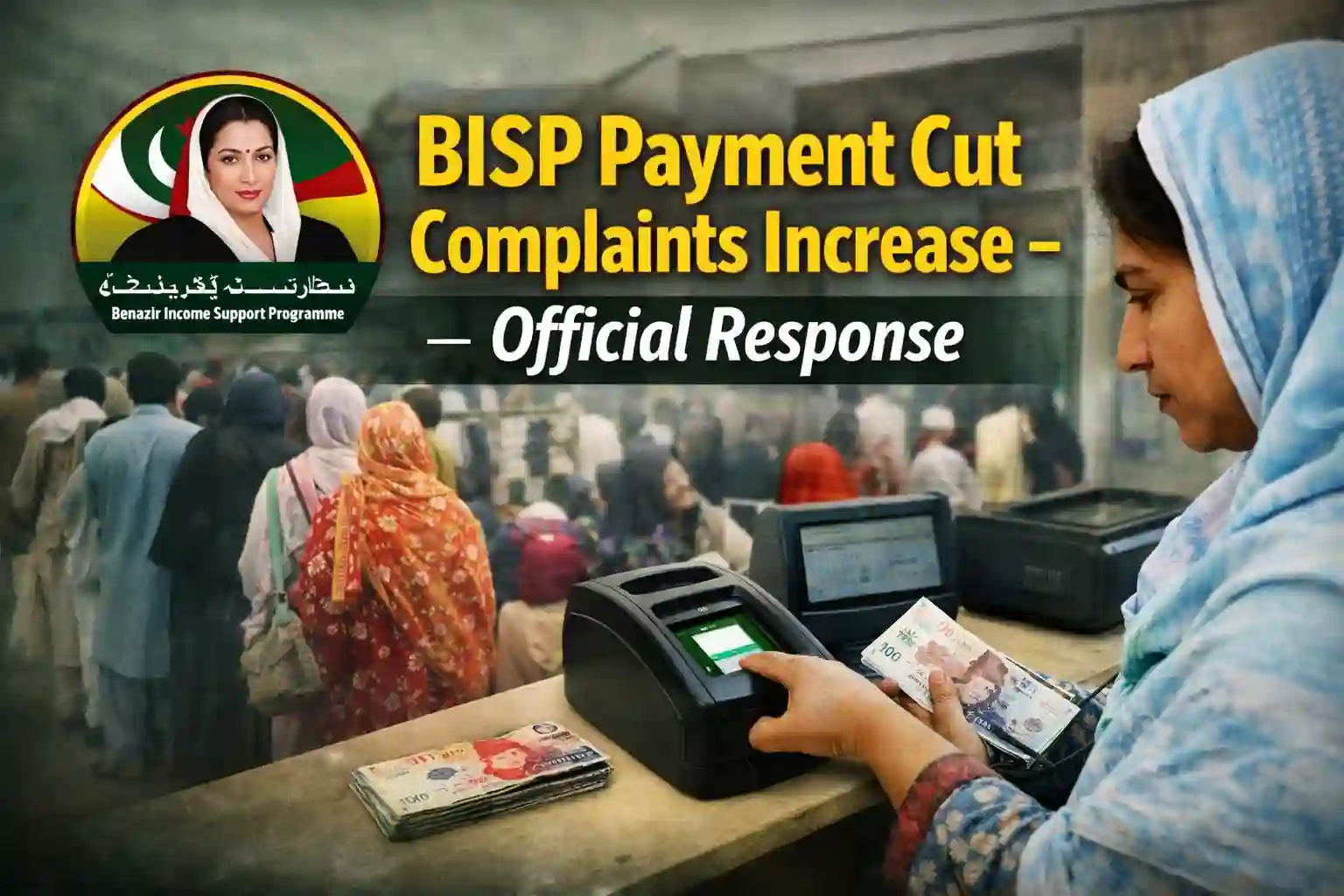
Complaints related to payment deductions under the Benazir Income Support Programme (BISP) have increased in different parts of Pakistan over the past few months. Many beneficiaries have reported receiving less money than the announced installment, while others claim they were asked to pay unauthorized charges at payment centers.
Since BISP is a key support program for millions of low-income families, any issue related to payment creates serious concern. Many households rely on this financial support to manage food, healthcare, and education expenses.
Due to rising complaints, BISP authorities have issued an official response explaining why some beneficiaries are facing payment issues and what steps are being taken to solve the problem. Here is a detailed look at the situation.
Why Are BISP Payment Complaints Increasing?
Across Punjab, Sindh, Khyber Pakhtunkhwa, and Balochistan, beneficiaries have shared similar problems regarding payment collection.
Common complaints include:
- Receiving less amount than expected
- Agents asking for service charges
- Biometric verification failures
- Payment showing completed but cash not received
- Long delays in payment release
- Installments stopped without explanation
In many cases, beneficiaries travel long distances to payment centers, wait in queues, and still face problems collecting funds. For families already under financial pressure, such situations become extremely difficult.
Social media and local complaint offices have also recorded a sharp rise in complaints about payment deductions.

Official Response From BISP Authorities
BISP officials have clarified that the program does not deduct any amount from beneficiaries’ installments. According to authorities, every registered beneficiary is entitled to receive the full payment without any service charge.
Officials explained that payment problems usually happen due to:
- Technical or biometric verification issues
- Incorrect family data records
- Eligibility review updates
- Unauthorized deductions by agents
- Network or transaction system errors
The organization stressed that if anyone is charging money for releasing payments, it is illegal and strict action will be taken against such individuals.
Monitoring teams have reportedly been sent to several districts to check payment centers and prevent fraud or unauthorized deductions.

Role of Payment Agents and Retailers
One major issue identified is the role of unauthorized agents or retailers working near payment centers. Some beneficiaries reported that agents asked them to pay small fees in exchange for faster payment processing.
Many poor families, unaware of official procedures, agree to pay such fees to avoid delays.
BISP authorities have made it clear that:
- No service fee is allowed
- Payments are completely free
- Agents cannot deduct any amount
- Beneficiaries must receive the full installment
Authorities are now monitoring retailers more closely, and licenses of agents found guilty may be canceled.

Biometric Verification Problems
Another major reason behind payment complaints is biometric verification failure.
Payments under BISP require fingerprint verification to ensure funds go to the correct person. However, many beneficiaries, especially elderly women and labor workers, face fingerprint mismatch problems.
Common causes include:
- Worn fingerprints due to manual labor
- Aging-related fingerprint changes
- Machine errors
- Poor network connection
When biometric verification fails, payments cannot be released immediately, causing frustration among beneficiaries.
BISP officials advise affected individuals to visit NADRA centers to update biometric data or seek alternative verification methods where available.

Payment Reduction Due to Eligibility Review
In some cases, payments stop or are reduced due to updated eligibility data.
BISP regularly reviews beneficiary information through surveys and government databases to ensure that only deserving families receive financial assistance.
Payments may stop if:
- Household income increases
- Family members obtain government employment
- Property ownership data changes
- Incorrect information was provided earlier
- Records show improved financial status
Officials claim this step is necessary to prevent misuse of public funds and to include new deserving families.
However, many families claim they were removed without clear communication, adding to confusion.
Complaint Filing Process for Beneficiaries
To solve rising concerns, BISP authorities have encouraged beneficiaries to use official complaint channels instead of relying on middlemen.
Beneficiaries facing payment deductions or issues can:
Visit BISP Tehsil Office
Local BISP offices accept complaints and guide beneficiaries through resolution procedures.
Call Official Helpline
Beneficiaries can contact BISP helplines to register payment complaints.
Online Complaint Portal
Complaints can also be submitted online through official channels.
Keep Transaction Receipts
Officials advise beneficiaries to keep payment receipts or SMS confirmation messages as proof when filing complaints.
Authorities claim complaint resolution time has improved and refunds are issued if illegal deductions are proven.
Government Measures to Improve Transparency
Following growing complaints, the government has reportedly started implementing new monitoring and accountability measures.
These steps include:
- Increased inspections of payment centers
- Digital tracking of transactions
- Stricter action against fraudulent agents
- Public awareness campaigns
- Improved complaint resolution systems
Authorities say future payment cycles will be smoother due to improved oversight.
Awareness Gap Among Beneficiaries
Experts believe many problems occur due to lack of awareness among beneficiaries about their rights and payment procedures.
Some families do not know:
- Payments are free
- No agent can charge fees
- Complaints can be officially registered
- Eligibility rules and updates
- Payment verification methods
Due to this gap, beneficiaries sometimes trust unofficial agents and fall victim to fraud.
Community awareness programs and clearer instructions at payment centers can help reduce misunderstandings.
Impact of Payment Issues on Poor Families
Payment delays or deductions hit poor families the hardest.
For many households, BISP installments help cover:
- Food expenses
- Children’s school fees
- Medical costs
- Utility bills
- Daily living expenses
When payments are reduced or delayed, families struggle to manage essential needs.
This is why payment transparency and reliability remain critical for millions of people across the country.
What Beneficiaries Should Do Now
Officials advise beneficiaries to follow these steps to avoid payment problems:
- Visit only official payment centers
- Never pay service charges
- Verify payment amount before leaving center
- Keep receipts and SMS confirmations
- Report deductions immediately
- Update personal data regularly
- Complete surveys or verification requests
Staying informed can help families secure their full payments without trouble.
Expected Improvements in Upcoming Installments
BISP authorities say new monitoring and complaint systems will improve payment transparency in upcoming cycles.
Efforts are being made to:
- Reduce biometric errors
- Eliminate unauthorized deductions
- Speed up complaint handling
- Improve payment center management
- Expand beneficiary awareness programs
If these measures work effectively, payment complaints are expected to decline in future installments.
Conclusion – BISP Payment Cut Complaints Increase
The increase in complaints about BISP payment deductions has raised concerns among beneficiaries across Pakistan. While officials insist that no official deduction policy exists, ground realities show that technical problems, unauthorized agents, and data verification issues have caused difficulties for many families.
Authorities claim strict action is being taken against fraud and improvements are underway to ensure full payments reach deserving beneficiaries.
For now, beneficiaries are advised to stay informed, use official complaint channels, and avoid relying on middlemen. With better awareness and monitoring, future payment cycles may become smoother, restoring trust in a program that supports millions of vulnerable households nationwide.
As investigations and reforms continue, families hope that upcoming installments will arrive without deductions or delays, ensuring the financial relief reaches those who need it most.