BISP Payment Rejected by Retailer – New Complaints Emerge
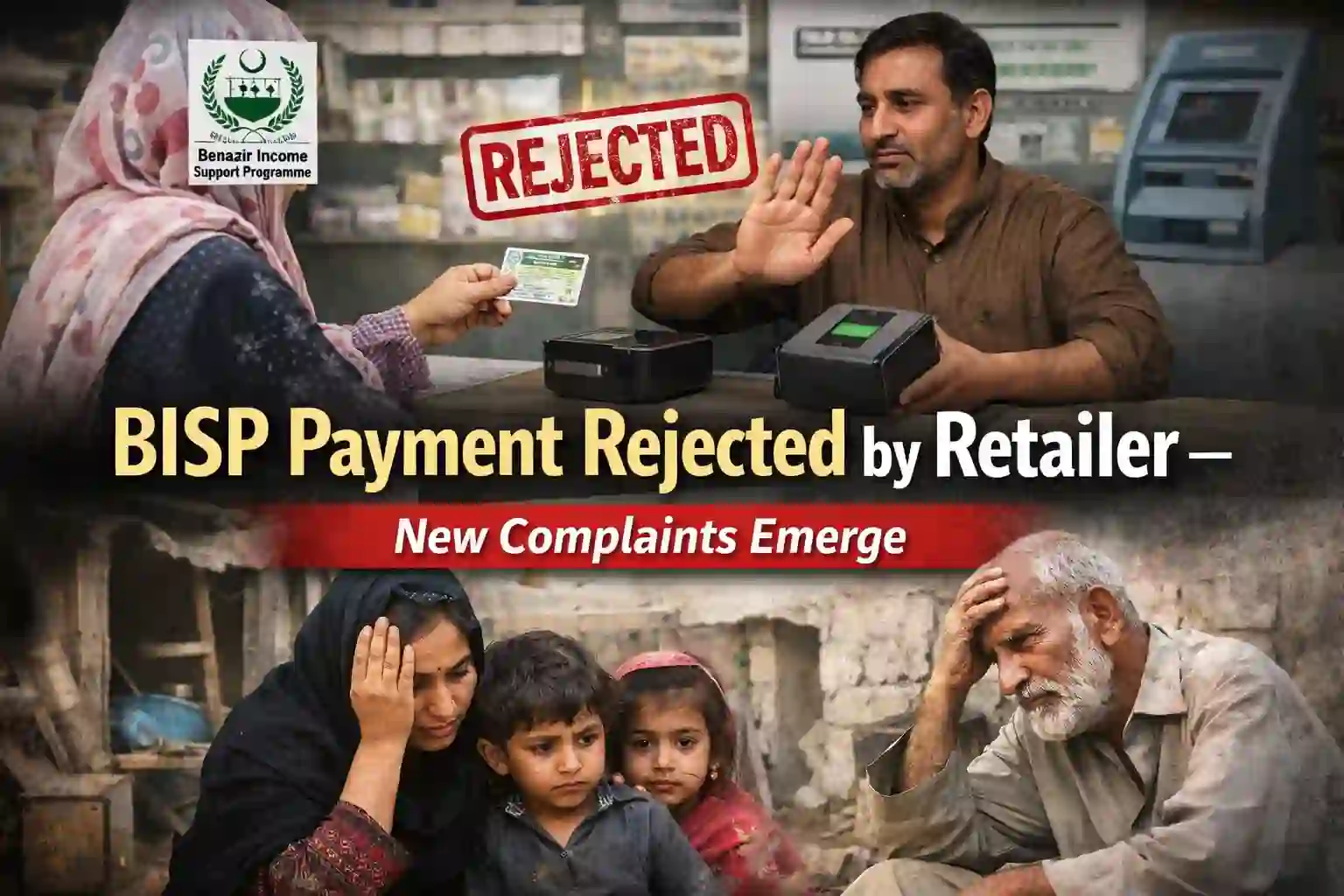
Fresh complaints are emerging from different parts of Pakistan where beneficiaries of the Benazir Income Support Programme (BISP) claim that retailers are rejecting their payments despite confirmation messages showing funds have been released.
Over the past few weeks, social media platforms, local news outlets, and community representatives have highlighted growing frustration among deserving families who depend on BISP assistance for daily survival. Many beneficiaries report that retailers tell them payments are not available in the system or ask them to return later, even when official SMS alerts confirm payment release.
For poor households already facing inflation, unemployment, and rising living costs, payment delays or refusals create serious hardships.
This article explains why payments are being rejected, what problems beneficiaries are facing, and what steps families can take to resolve the issue.
Rising Complaints from BISP Beneficiaries
According to multiple reports gathered from urban and rural districts, beneficiaries are facing several issues when visiting retailers or payment centers.
Common complaints include:
- Retailers saying payment is unavailable despite SMS confirmation.
- Biometric verification failure.
- Retailers asking beneficiaries to come back another day.
- Unauthorized deductions before payment.
- Retailers claiming system errors.
- Network or fingerprint mismatch issues.
In some areas, beneficiaries wait in long queues only to be told the payment cannot be processed.
For families relying on BISP support for food, rent, and medicine, repeated visits mean extra travel costs and lost work opportunities.

Why Are Retailers Rejecting BISP Payments?
Several reasons are being reported behind payment rejections.
System Synchronization Delays
Sometimes, payment approval appears in SMS alerts before retailer systems update fully. When beneficiaries visit too early, retailers cannot process payments.
Biometric Verification Problems
Fingerprint verification failures are common among elderly beneficiaries and labor workers whose fingerprints become faded or damaged.
When biometric verification fails repeatedly, retailers cannot release funds.
Network Connectivity Issues
Many rural payment points suffer from poor internet connectivity. Without stable network access, payment verification systems do not function properly.
Retailer Payment Limits
Some retailers receive limited daily payment quotas. Once the limit is reached, they refuse payments and ask beneficiaries to return later.
Retailer Misconduct
In certain complaints, beneficiaries accuse retailers of deliberately delaying payments or asking for illegal deductions before releasing funds.
Authorities continue investigating such cases.

Impact on Poor Families
For families living below the poverty line, delayed or rejected payments create serious financial stress.
Common impacts include:
- Difficulty purchasing food and household items.
- Delay in paying school fees.
- Inability to buy medicines.
- Borrowing money from neighbors or relatives.
- Increased household tensions.
Many beneficiaries say BISP assistance is their only reliable income source, especially for widows, disabled individuals, and elderly citizens.

Government Response and Monitoring Efforts
Officials responsible for social protection programs say monitoring of payment distribution is ongoing.
Actions reportedly being taken include:
- Monitoring retailers involved in complaints.
- Expanding payment centers to reduce crowd pressure.
- Improving system updates between payment approval and retailer access.
- Introducing complaint tracking mechanisms.
- Encouraging beneficiaries to report payment problems.
Authorities say strict action will be taken against retailers proven guilty of misconduct.

Beneficiaries Share Their Experiences
Beneficiaries from different provinces have shared similar experiences.
A widow from Punjab stated she visited a retailer three times after receiving the payment SMS, but payment was denied due to biometric mismatch.
A labor worker in Sindh claimed a retailer demanded a small deduction before payment release.
Another beneficiary in Khyber Pakhtunkhwa said the retailer’s system was offline for two days.
Such stories are becoming common, highlighting gaps in payment delivery.
Short News Summary of the Issue
- Beneficiaries across Pakistan report payment rejection by retailers.
- Biometric and system errors are major causes.
- Some retailers accused of misconduct.
- Government monitoring payment distribution.
- Beneficiaries advised to file official complaints.
Steps Beneficiaries Should Take If Payment Is Rejected
If your payment is refused despite confirmation, follow these steps:
1. Confirm SMS Details
Check the official SMS message carefully to ensure payment has actually been released.
2. Visit Another Authorized Retailer
Sometimes systems differ between retailers. Visiting another payment point may resolve the issue.
3. Try Biometric Verification Again
Wash hands and retry fingerprint verification. Elderly beneficiaries may need assistance.
4. File a Complaint
Report the issue through official complaint channels or BISP offices.
5. Avoid Paying Illegal Charges
Payments are free. Retailers cannot deduct money without authorization.
Common Mistakes Beneficiaries Make
Some payment problems occur due to misunderstandings.
Mistakes include:
- Visiting payment centers before funds are fully available.
- Sharing CNIC or personal details with unauthorized agents.
- Using expired CNIC cards.
- Not updating family information records.
Beneficiaries should ensure personal information remains updated in official records.
Role of Retailers in Payment Distribution
Retailers play a key role in payment delivery, especially in remote areas without bank branches.
However, heavy crowds and technical limitations sometimes create operational challenges.
Experts suggest training retailers better and improving technical infrastructure to reduce payment problems.
Payment System Needs Further Improvement
Analysts believe Pakistan’s social protection payment system has improved over time but still faces challenges.
Improvements needed include:
- Faster system synchronization.
- Alternative verification options beyond fingerprints.
- More payment centers in rural areas.
- Strict monitoring against corruption.
- Digital payment expansion through mobile wallets.
Modernizing payment delivery can reduce dependency on physical retailers.
Advice for Families Waiting for Payments
Families waiting for assistance should:
- Stay calm and avoid paying agents.
- Verify payment status through official channels.
- Visit payment centers during less crowded hours.
- Keep CNIC updated.
- File complaints if treated unfairly.
Awareness and patience can help beneficiaries navigate system delays.
Possible Future Changes in Payment Method
Government sources indicate that digital payment options and bank transfers may increase in the future to reduce retailer dependency.
Such methods could include:
- Direct bank transfers.
- Mobile wallet payments.
- ATM withdrawals.
- Branchless banking options.
Digital solutions may reduce crowding and payment manipulation risks.
Conclusion – BISP Payment Rejected Retailer Complaints 2026
Complaints about rejected BISP payments at retailer points reveal ongoing challenges in payment delivery for vulnerable families.
While technical issues like biometric verification and network failures contribute to the problem, reports of retailer misconduct also raise concerns.
Authorities must continue improving monitoring, infrastructure, and payment technology to ensure deserving families receive assistance without stress or delay.
Beneficiaries, on the other hand, should remain informed, use official complaint channels, and avoid unauthorized agents.
As the government works to improve social protection systems, ensuring smooth payment distribution remains critical for millions of households relying on this support for survival.